
Implementing IPC Standards for Reliable PCB Manufacturing

Key Takeaways
When PCB manufacturing adheres to IPC standards, you ensure reliability by aligning with globally recognized benchmarks. For PCB manufacturing companies, compliance minimizes design flaws, reduces rework, and strengthens customer trust. A critical factor in controlling PCB manufacturing cost is optimizing material selection and process efficiency—both guided by IPC specifications like IPC-2221B for conductor spacing and insulation.
Tip: Always validate thermal management strategies against IPC guidelines during prototyping to avoid costly redesigns in high-volume production.
By integrating IPC standards early, your PCB manufacturing business can streamline quality assurance, meet regulatory demands, and avoid delays. For instance, adhering to creepage and clearance requirements prevents electrical failures in high-voltage applications, directly impacting product longevity. Transitioning between design and production becomes seamless when design-for-manufacturability (DFM) principles are IPC-aligned, ensuring that your processes remain scalable and cost-effective.
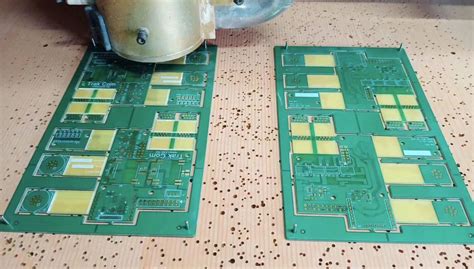
Implementing IPC Standards in PCB Reliability
When building reliable printed circuit boards, adhering to IPC standards ensures consistency across design, material selection, and assembly processes. For PCB manufacturing companies, these guidelines act as a blueprint to minimize defects and enhance product longevity. By integrating standards like IPC-2221B for conductor spacing and insulation, you directly address risks such as electrical leakage or thermal stress, which are critical in high-voltage applications.
A key advantage of following IPC protocols lies in balancing PCB manufacturing cost with quality. For instance, specifying materials with appropriate glass transition temperatures (Tg) and thermal expansion coefficients prevents delamination during reflow soldering—a common failure point in non-compliant designs. This alignment between standards and material science reduces rework rates, ultimately benefiting your PCB manufacturing business by improving yield and customer trust.
| IPC Guideline | Impact on Reliability |
|---|---|
| Conductor Spacing (IPC-2221B) | Prevents arcing in high-voltage environments |
| Material Selection (IPC-4101) | Ensures thermal and mechanical stability |
| Assembly Tolerances (IPC-A-610) | Reduces solder joint failures |
Transitioning from design to production, IPC standards provide a shared language between engineers and manufacturers. By adopting these practices early, you mitigate risks that escalate PCB manufacturing cost downstream, such as unplanned material substitutions or compliance-related delays. For deeper insights into IPC-2221B requirements, refer to this comprehensive guide.
Ultimately, reliability stems from systematic adherence to IPC frameworks—whether optimizing creepage distances or validating thermal management strategies. This disciplined approach not only meets industry benchmarks but also positions your PCB manufacturing workflows for scalability in competitive markets.

Material Selection for IPC-Compliant PCB Design
When designing circuit boards that meet IPC standards, your choice of materials directly impacts reliability, performance, and pcb manufacturing cost. Start by selecting substrates aligned with IPC-4101 specifications, which define critical parameters like dielectric constant (Dk) and thermal expansion rates. For high-frequency applications, low-loss laminates such as Rogers or Taconic materials reduce signal degradation, while FR-4 remains a cost-effective option for standard designs.
Pcb manufacturing companies often prioritize materials with verified thermal stability to prevent delamination during soldering cycles. Copper foil weight and finish (e.g., HASL, ENIG) must align with IPC-4562 for consistent conductivity and solderability. For instance, thicker copper layers (2 oz+) improve current handling but require adjustments in etching processes, affecting pcb manufacturing business workflows.
Adhesives and prepregs should meet IPC-4103 requirements to ensure proper bonding between layers. Ignoring these guidelines risks voids or resin starvation, compromising insulation integrity. Pro tip: Collaborate with suppliers to validate material certifications (UL94-V0 for flammability, RoHS compliance) early in the design phase. This minimizes rework and keeps pcb manufacturing timelines on track.
By balancing material performance with cost constraints, you create designs that satisfy IPC criteria without overengineering—a critical strategy for optimizing both quality and profitability in competitive markets.

Thermal Management Best Practices Under IPC
Effective thermal management is critical for ensuring long-term reliability in PCB manufacturing, particularly when adhering to IPC standards. When designing boards, you must prioritize heat dissipation strategies that align with guidelines like IPC-2221B and IPC-2152, which define acceptable temperature rise limits and trace width requirements. For PCB manufacturing companies, this means selecting materials with high thermal conductivity—such as metal-core substrates or advanced dielectric laminates—while balancing PCB manufacturing cost constraints.
To mitigate thermal stress, focus on optimizing copper weight and layer stack-ups. Thicker copper traces improve heat distribution, but they also require careful planning to avoid compromising creepage and clearance rules. Thermal vias and heatsinks are indispensable for high-power applications, though their placement must follow IPC-recommended spacing to prevent hotspots. Additionally, thermal relief pads should be integrated into designs to minimize soldering defects during assembly, a common pain point in the PCB manufacturing business.
Proactive simulation tools, like finite element analysis (FEA), help validate thermal performance before production. Pairing these tools with IPC-compliant testing—such as thermal cycling and thermal shock assessments—ensures boards withstand real-world operating conditions. By embedding these practices early in the design phase, you reduce rework risks and uphold reliability without inflating PCB manufacturing cost, ultimately delivering products that meet both technical and commercial demands.

IPC-2221B Compliance for Conductor Spacing
When designing printed circuit boards, adhering to IPC-2221B guidelines for conductor spacing is critical to ensuring reliability in PCB manufacturing. This standard specifies minimum clearances between conductive elements to prevent electrical leakage, arc faults, and short circuits—common failures that escalate PCB manufacturing costs due to rework or field returns. For PCB manufacturing companies, compliance starts with understanding voltage thresholds: higher potentials require wider spacing to account for environmental factors like humidity or contamination.
You’ll need to balance these requirements with layout efficiency. For instance, tighter spacing might reduce board size but risk violating IPC-2221B thresholds, especially in high-voltage applications. Tools like automated design rule checks (DRCs) streamline this process, flagging violations before prototyping. However, manual verification remains essential for complex designs where thermal expansion or mechanical stress could alter spacing post-production.
Integrating these standards early in the design phase helps PCB manufacturing businesses avoid delays. Non-compliance often leads to costly redesigns, whereas proactive adherence supports smoother scaling from prototypes to mass production. By prioritizing IPC-2221B guidelines, you ensure consistent performance across varying operating conditions—a key differentiator in competitive PCB manufacturing markets.
Creepage and Insulation Standards in PCBs
When designing printed circuit boards, maintaining proper creepage and insulation distances is critical to prevent electrical failures, especially in high-voltage or humid environments. The IPC-2221B standard defines clear guidelines for these parameters, ensuring your PCB manufacturing process aligns with industry-recognized safety benchmarks. Creepage—the shortest path between conductors along a surface—must account for environmental contaminants, while insulation—the through-air distance—relies on material dielectric strength.
For PCB manufacturing companies, adhering to these standards minimizes risks like arcing or leakage currents, which can escalate PCB manufacturing cost due to rework or field failures. You’ll need to carefully select substrate materials and conformal coatings that meet IPC requirements, balancing performance with affordability. In high-density layouts, optimizing conductor spacing without compromising insulation integrity becomes a key challenge. Tools like 3D field solvers can simulate electric field distribution, helping validate designs before production.
Integrating these practices into your PCB manufacturing business not only ensures compliance but also builds trust with clients who prioritize reliability. Remember, deviations from IPC standards might save short-term costs but could lead to long-term liabilities—a trade-off rarely worth the risk.
Quality Assurance via IPC Manufacturing Guidelines
Adhering to IPC manufacturing guidelines ensures consistent quality across every stage of PCB manufacturing, from prototyping to mass production. By integrating these standards, you establish rigorous inspection checkpoints that validate traceability, solderability, and mechanical integrity. For PCB manufacturing companies, this means aligning with globally recognized benchmarks like IPC-A-600 for acceptability criteria and IPC-6012 for performance specifications, which minimize defects and rework.
When managing PCB manufacturing cost, following IPC protocols reduces material waste and assembly errors. For instance, defining acceptable annular ring widths and plating thicknesses prevents costly failures during thermal cycling or vibration tests. Your ability to meet these requirements not only strengthens product reliability but also enhances trust with clients in the PCB manufacturing business, particularly for high-reliability industries like aerospace or medical devices.
Transitioning from design to production, IPC guidelines bridge gaps between your engineering and manufacturing teams. Automated optical inspection (AOI) systems, calibrated to IPC tolerances, ensure alignment with conductor spacing and solder mask requirements. This systematic approach safeguards against deviations that could compromise performance, ensuring your processes remain scalable and compliant—even as project complexity grows.
By embedding IPC standards into quality workflows, you create a foundation for repeatable success in PCB manufacturing, balancing precision with operational efficiency.

DFM/DFA Integration with IPC Standards
When integrating Design for Manufacturability (DFM) and Design for Assembly (DFA) principles with IPC standards, you ensure that your PCB manufacturing process aligns with industry-proven guidelines for reliability and efficiency. By aligning DFM practices with standards like IPC-2222 (material selection) and IPC-7351 (land pattern design), you minimize fabrication errors and optimize component placement. For PCB manufacturing companies, this translates to reduced PCB manufacturing cost by avoiding rework caused by non-compliant designs, such as insufficient pad sizes or mismatched thermal reliefs.
DFA integration focuses on simplifying assembly processes while adhering to IPC-2221B spacing rules and IPC-A-610 acceptability criteria. For instance, maintaining proper creepage distances and solder mask clearances ensures automated assembly equipment functions smoothly. This proactive approach not only accelerates production timelines but also strengthens your PCB manufacturing business by delivering boards that meet both functional and regulatory expectations.
Transitioning between design and production phases becomes seamless when IPC standards guide your DFM/DFA workflows. Whether you’re addressing copper balancing for warpage control or specifying finish types for solderability, these practices create a unified framework for quality. By embedding IPC compliance into every design decision, you build a foundation for repeatable success in competitive PCB manufacturing markets.
High-Voltage PCB Safety Through IPC-2221B
When designing high-voltage circuits, adhering to IPC-2221B ensures your PCB manufacturing process prioritizes safety and reliability. This standard defines critical parameters like minimum conductor spacing and creepage distances to prevent electrical arcing or short circuits, which are especially vital in high-voltage applications. For instance, conductor spacing requirements scale with voltage levels, environmental factors, and material properties—directly influencing how PCB manufacturing companies plan layer stacking and routing.
The standard also mandates rigorous insulation standards, requiring materials with higher dielectric strength to withstand elevated voltages. This impacts PCB manufacturing cost, as specialized substrates or conformal coatings may be necessary. However, compromising on these specifications risks catastrophic failures, making compliance non-negotiable for high-voltage systems. Additionally, thermal management practices under IPC-2221B ensure heat generated by high currents doesn’t degrade insulation over time.
By integrating these guidelines early in your PCB manufacturing business, you avoid costly redesigns and ensure boards meet safety certifications. Transitioning from design to production becomes smoother when IPC-2221B’s requirements for spacing, insulation, and material compatibility are validated during prototyping—a critical step for maintaining consistency in high-voltage applications.
Conclusion
Adhering to IPC standards in PCB manufacturing is not just a regulatory checkbox—it’s a strategic investment in product reliability and long-term business success. By integrating these guidelines, you ensure that material choices, thermal controls, and spacing requirements align with globally recognized benchmarks like IPC-2221B, minimizing risks of failure in high-stress environments. For PCB manufacturing companies, this translates to fewer defects, reduced PCB manufacturing cost over time, and stronger client trust.
While upfront compliance may demand rigorous process adjustments, the payoff lies in streamlined production, fewer redesign cycles, and enhanced market competitiveness. Whether you’re optimizing a PCB manufacturing business for high-voltage applications or refining designs for mass production, prioritizing IPC standards creates a foundation for repeatable quality. Ultimately, it’s about balancing precision with practicality—delivering boards that perform reliably while keeping operational efficiency intact.
Frequently Asked Questions
How do IPC standards impact pcb manufacturing cost?
While implementing IPC requirements may increase initial design expenses, they reduce long-term costs by minimizing defects and rework. Compliance with thermal management and creepage standards prevents field failures, optimizing your pcb manufacturing business ROI.
Why should pcb manufacturing companies prioritize IPC-2221B compliance?
IPC-2221B defines critical parameters for conductor spacing and insulation requirements, ensuring designs meet safety margins for high-voltage applications. Non-compliant boards risk premature failure, damaging client trust and increasing liability.
Can IPC standards streamline pcb manufacturing workflows?
Yes. Integrating DFM/DFA principles with IPC guidelines reduces production bottlenecks. For example, adhering to material selection rules minimizes compatibility issues during assembly, accelerating time-to-market.
Do IPC requirements vary for low-volume vs. high-volume pcb manufacturing?
Core standards like IPC-2221B apply universally, but high-volume production demands stricter quality assurance checks. Automated optical inspection (AOI) and testing frequency often scale with batch sizes to maintain compliance.
Ready to Optimize Your PCB Production?
For IPC-compliant pcb manufacturing solutions that balance cost and reliability, please click here to explore tailored services from industry experts.