
Flexible PCB Oven: Revolutionizing Electronics Manufacturing
Introduction
The electronics manufacturing industry has seen significant advancements in recent years, with flexible printed circuit boards (PCBs) becoming increasingly popular due to their lightweight, compact, and bendable nature. As demand for flexible electronics grows, so does the need for specialized manufacturing equipment, including flexible PCB ovens. These ovens play a critical role in the curing, soldering, and thermal processing of flexible PCBs, ensuring high-quality production.
This article explores the importance of flexible PCB ovens, their working principles, key features, advantages, applications, and future trends in the industry.
What is a Flexible PCB Oven?
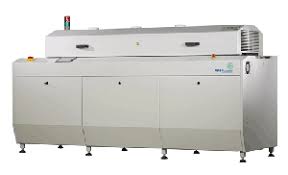
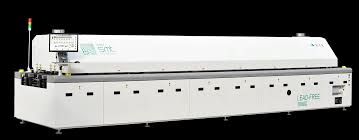
A flexible PCB oven is a specialized thermal processing system designed to handle the unique requirements of flexible printed circuit boards. Unlike traditional rigid PCBs, flexible circuits are made from materials like polyimide or polyester, which require precise temperature control to avoid warping or damage during soldering, curing, or annealing processes.
These ovens are engineered to provide uniform heat distribution, controlled ramp-up and cool-down rates, and customizable thermal profiles to accommodate various flexible PCB manufacturing stages.
Working Principle of Flexible PCB Ovens
Flexible PCB ovens operate using convection heating, infrared (IR) heating, or a combination of both to ensure even temperature distribution. The key stages in their operation include:
- Preheating Zone – Gradually raises the temperature to prevent thermal shock.
- Soaking Zone – Maintains a stable temperature to ensure proper curing or soldering.
- Reflow Zone – Reaches peak temperature to melt solder paste (for reflow soldering).
- Cooling Zone – Slowly reduces temperature to solidify solder joints and prevent defects.
Advanced ovens incorporate real-time temperature monitoring and feedback systems to adjust heating parameters dynamically, ensuring optimal results for flexible substrates.
Key Features of Flexible PCB Ovens
1. Precise Temperature Control
Flexible PCBs are sensitive to overheating, so ovens must maintain tight temperature tolerances (±1°C to ±5°C) to prevent delamination or warping.
2. Adjustable Conveyor Speed
The speed at which PCBs move through the oven affects exposure time. Adjustable conveyor belts allow manufacturers to optimize throughput and quality.
3. Multiple Heating Zones
Modern ovens feature 5 to 12 heating zones, each independently controlled, to accommodate different thermal requirements.
4. Inert Atmosphere Capability
Some ovens support nitrogen (N₂) or other inert gases to minimize oxidation during soldering, improving joint reliability.
5. Compatibility with Lead-Free Soldering
With RoHS compliance requirements, flexible PCB ovens must support lead-free soldering processes, which require higher peak temperatures.
6. Energy Efficiency
Advanced insulation and heating mechanisms reduce power consumption while maintaining performance.
Advantages of Using Flexible PCB Ovens
1. Enhanced Product Quality
Uniform heating prevents defects like cold solder joints, delamination, or uneven curing.
2. Higher Production Efficiency
Automated conveyor systems enable continuous processing, reducing manual handling and increasing throughput.
3. Versatility
Can handle various flexible PCB materials (polyimide, PET, PEN) and different assembly processes (soldering, curing, annealing).
4. Reduced Thermal Stress
Controlled heating and cooling minimize mechanical stress on delicate flexible circuits.
5. Compliance with Industry Standards
Meets IPC, JEDEC, and RoHS standards for reliable and safe electronics manufacturing.
Applications of Flexible PCB Ovens
Flexible PCB ovens are used across multiple industries, including:
1. Consumer Electronics
- Smartphones, wearables, foldable displays.
- Flexible circuits in IoT devices.
2. Automotive Electronics
- Flexible PCBs in dashboard displays, sensors, and lighting systems.
3. Medical Devices
- Wearable health monitors, flexible sensors, and implantable electronics.
4. Aerospace & Defense
- Lightweight, high-reliability circuits for satellites, drones, and avionics.
5. Industrial Automation
- Flexible PCBs in robotics, control systems, and HMI (human-machine interface) devices.
Future Trends in Flexible PCB Oven Technology
1. AI-Driven Thermal Profiling
Machine learning algorithms will optimize heating profiles in real-time, reducing defects and improving yield.
2. Hybrid Heating Systems
Combining convection, IR, and laser heating for ultra-precise thermal management.
3. Miniaturization & Modular Ovens
Compact, modular designs for small-batch and prototyping applications.
4. Sustainable Manufacturing
Energy-efficient designs and reduced gas consumption for eco-friendly production.
5. Integration with Industry 4.0
Smart ovens connected to IoT networks for remote monitoring and predictive maintenance.
Conclusion
Flexible PCB ovens are indispensable in modern electronics manufacturing, enabling the production of high-quality, reliable flexible circuits. With advancements in temperature control, automation, and energy efficiency, these ovens are evolving to meet the demands of next-generation flexible electronics. As industries continue to adopt flexible PCBs in innovative applications, the role of specialized thermal processing equipment will only grow in importance.
Investing in advanced flexible PCB ovens ensures manufacturers stay competitive, delivering cutting-edge products with superior performance and durability. The future of flexible electronics lies in smarter, more efficient thermal processing solutions—making flexible PCB ovens a cornerstone of tomorrow’s electronics industry.