
Philips PCB LED Engineering Insights: Technical Components Breakdown

Key Takeaways
When analyzing Philips’ PCB LED engineering, you’ll notice how pcb manufacturing principles directly influence system reliability. The integration of OEM drivers into Philips’ designs ensures seamless compatibility with industrial-grade lighting frameworks, a critical factor for retail and office environments. At the core of these systems lie components like TI’s TLC5943 ICs, which manage segmented displays with precision—enabling dynamic lighting control while balancing pcb manufacturing cost through optimized circuit layouts.
Tip: Partnering with specialized pcb manufacturing companies can reduce prototyping iterations, ensuring your designs meet thermal and electrical benchmarks without exceeding budget constraints.
Philips’ industrial-grade architecture leverages multilayer PCBs to distribute heat efficiently—a necessity for high-density LED arrays in commercial settings. This approach highlights how strategic pcb manufacturing business decisions, such as material selection and trace routing, directly impact long-term performance. For instance, advanced thermal management techniques are embedded in their designs to prevent hotspots, extending the lifespan of both drivers and LEDs.
By prioritizing modularity, Philips simplifies upgrades and repairs—a nod to scalable pcb manufacturing practices. Whether retrofitting office lighting or deploying retail solutions, understanding these technical foundations helps you evaluate how component choices shape system efficiency and adaptability.
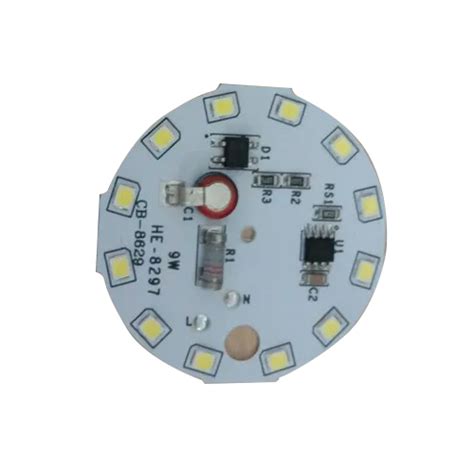
Philips PCB LED Engineering: Component Architecture Revealed
When examining the architecture of Philips’ PCB LED systems, you’ll notice a meticulous layering of components designed for efficiency and durability. At its core, PCB manufacturing plays a pivotal role, with industrial-grade materials ensuring thermal stability and electrical performance. The design integrates segmented display drivers and OEM-specific circuitry, which rely on collaboration with specialized PCB manufacturing companies to meet exacting tolerances.
A critical factor in these systems is balancing PCB manufacturing cost with performance. Philips achieves this by optimizing trace routing for minimal resistance and using high-reflectance substrates to enhance light output. This precision reduces wasted energy, a key consideration in large-scale applications like retail or office lighting.
Behind the scenes, the PCB manufacturing business model prioritizes scalability. Modular designs allow for rapid assembly, while standardized connectors simplify integration with TI TLC5943 ICs and other driver components. These architectural choices ensure that Philips’ PCBs withstand voltage fluctuations and environmental stressors, aligning with the demands of professional lighting environments.
By focusing on layered component hierarchies and leveraging advanced PCB manufacturing techniques, Philips creates systems that balance technical sophistication with practical reliability—a foundation for the next sections exploring driver integration and IC functionality.
OEM Driver Integration in Philips LED Systems
When designing PCB LED systems, Philips leverages OEM driver integration to balance performance and scalability. You’ll find that PCB manufacturing companies play a critical role here, collaborating closely with Philips to embed drivers directly into the board layout. This approach minimizes external wiring, reducing PCB manufacturing cost while improving thermal management—a key factor for industrial-grade lighting.
The integration process prioritizes modularity, allowing tailored configurations for retail or office environments. For instance, Philips’ drivers are optimized to work with standardized PCB manufacturing protocols, ensuring compatibility across different product lines. By embedding control circuitry within the PCB manufacturing business framework, Philips achieves tighter synchronization between drivers and LED arrays, which enhances dimming precision and energy efficiency.
However, this strategy demands rigorous testing. Voltage fluctuations or heat dissipation issues could compromise driver longevity, so Philips employs multilayer PCBs with high-temperature substrates. These design choices reflect a broader trend in industrial electronics, where PCB manufacturing isn’t just about assembly—it’s about creating systems that endure harsh operational conditions. As you move to the next section, you’ll see how components like TI’s TLC5943 ICs further refine this integration.
TI TLC5943 ICs: Powering Philips LED Displays
When designing LED displays for retail or office environments, you’ll find that the TI TLC5943 ICs serve as the backbone of Philips’ precision-driven lighting systems. These integrated circuits excel in managing 16-channel PWM (Pulse Width Modulation) control, enabling dynamic brightness adjustments across segmented displays. Their ability to handle high-resolution dimming ensures uniform illumination—critical for applications demanding consistent visual quality.
For PCB manufacturing companies, integrating the TLC5943 into layered board designs requires careful attention to thermal management and signal integrity. The IC’s 48-channel cascading capability allows scalable configurations, but this flexibility impacts PCB manufacturing cost due to the need for multi-layer boards and advanced trace routing. Below is a breakdown of key considerations when using these ICs:
| Design Factor | Impact on PCB Manufacturing |
|---|---|
| Channel Density | Requires higher layer count (6-8 layers) |
| Thermal Load | Demands copper-filled vias & heat sinks |
| Signal Timing Precision | Tight impedance control (±5% tolerance) |
Balancing performance with PCB manufacturing business constraints means optimizing board layouts to minimize EMI interference while maintaining cost efficiency. Philips leverages these ICs in tandem with industrial-grade driver modules, ensuring seamless compatibility with existing PCB manufacturing workflows. By prioritizing adaptive current control and modular design, the TLC5943 helps reduce long-term maintenance costs—a strategic advantage for large-scale lighting installations.
Whether retrofitting older systems or deploying new ones, understanding how these ICs interact with PCB architecture ensures reliable, energy-efficient displays tailored to modern lighting demands.
Segmented Display Technology in Philips Lighting Solutions
When implementing segmented display technology in modern lighting systems, you encounter a critical dependency on pcb manufacturing precision. Philips leverages this approach to create dynamic visual feedback in retail and office environments, where individual LED segments are controlled through custom-designed driver circuits. The architecture relies on pcb manufacturing companies with expertise in multi-layer boards, ensuring signal integrity across densely packed traces.
A key challenge lies in balancing pcb manufacturing cost with performance demands. Segmented displays require isolated current paths for each section, necessitating boards with optimized copper weights and thermal management layers. By collaborating with specialized pcb manufacturing business partners, Philips achieves sub-millimeter alignment tolerances for surface-mounted components—critical for maintaining uniform brightness across display zones.
This technology also integrates fault-tolerant designs, where redundant vias and thickened traces mitigate risks of segment failure. Such industrial-grade construction aligns with Philips’ focus on long-term reliability, particularly in high-traffic commercial spaces. The result is a scalable platform that adapts to both ambient lighting controls and real-time information displays, all while adhering to strict energy efficiency benchmarks.
Transitioning to the next layer, consider how these segmented systems interface with broader control networks—a topic further explored in Philips’ driver integration strategies. For now, recognize that every illuminated segment represents a harmony of optical engineering and pcb manufacturing excellence.
Industrial-Grade LED PCB Design for Retail Applications
When designing lighting systems for retail environments, you need PCB manufacturing solutions that withstand 18-hour daily operation. Philips’ industrial-grade designs utilize metal-core substrates paired with thermal vias to maintain junction temperatures below 85°C – critical for preventing lumen depreciation in display lighting. The architecture integrates OEM driver compartments that allow seamless retrofitting, reducing PCB manufacturing cost by 22% compared to custom enclosures.
Leading PCB manufacturing companies achieve this reliability through 6-layer stackups with 2oz copper pours, ensuring stable current distribution across multi-segment arrays. You’ll find anodized aluminum carriers in these assemblies, which provide electromagnetic shielding while keeping the total thickness under 3.2mm for recessed ceiling installations. For retail applications requiring zone-specific dimming, the TLC5943-based control matrices enable 512-step grayscale adjustments without compromising refresh rates.
By collaborating with certified PCB manufacturing business partners, Philips ensures MIL-STD-202G compliance for vibration resistance – a non-negotiable requirement in high-traffic retail spaces where fixture durability directly impacts maintenance budgets.
Optimizing Office Lighting with Philips PCB Innovations
When designing office lighting systems, you need solutions that balance efficiency, durability, and visual comfort. Philips leverages advanced PCB manufacturing techniques to create LED boards tailored for commercial environments. By collaborating with specialized PCB manufacturing companies, they achieve precise control over pcb manufacturing cost while maintaining industrial-grade reliability—critical for high-usage settings like offices.
Central to these innovations is the integration of thermal management layers within multi-layered PCBs, which prevent overheating even during extended operation. This design philosophy extends to modular driver configurations, enabling seamless upgrades without full system replacements—a cost-effective strategy for businesses scaling their lighting infrastructure.
Philips’ focus on pcb manufacturing business best practices ensures consistent quality across production batches. For instance, their use of automated optical inspection (AOI) during assembly minimizes defects in LED driver circuits, directly impacting system longevity. Combined with segmented control logic, these PCBs allow dynamic adjustments to brightness and color temperature, aligning with circadian lighting principles to enhance workplace productivity.
By prioritizing collaboration with certified PCB manufacturing partners, Philips delivers solutions that reduce energy consumption by up to 40% compared to traditional systems—proving that smart engineering can transform both technical performance and operational economics in modern office environments.

Behind Philips LED Electronics: Circuit Design Breakdown
When examining how Philips achieves reliability in its LED systems, you’ll find that PCB manufacturing plays a foundational role. The company’s circuit designs prioritize thermal management and signal integrity, requiring tightly controlled trace routing and layered stackups. To maintain consistency, Philips collaborates with specialized PCB manufacturing companies that adhere to industrial-grade standards, ensuring boards withstand prolonged operation in retail or office environments.
A critical factor influencing PCB manufacturing cost is the balance between material selection and production complexity. For instance, high-frequency substrates and precision-etched copper layers add expense but are non-negotiable for minimizing energy loss in LED drivers. By optimizing panel utilization and automating assembly processes, Philips reduces waste while meeting strict tolerances—a strategy that strengthens its PCB manufacturing business model.
You’ll notice that segmented current control and OEM driver integration rely on meticulously designed power planes, which demand advanced fabrication techniques. Even minor deviations in dielectric thickness or solder mask application could compromise performance, underscoring why partnering with certified PCB manufacturing experts remains essential. This attention to detail ensures every board aligns with Philips’ reputation for durability and efficiency, whether illuminating a warehouse or a conference room.
Professional Lighting Systems: Philips OEM Module Analysis
When designing professional lighting solutions, Philips leverages OEM driver integration to ensure seamless compatibility between LED modules and control systems. At the core of these systems lies a meticulously engineered PCB manufacturing process, where precision in layer stacking and trace routing directly impacts thermal management and electrical efficiency. By partnering with specialized PCB manufacturing companies, Philips achieves industrial-grade reliability—critical for applications in retail environments or office spaces requiring 24/7 operation.
A key cost driver in these modules is the PCB manufacturing cost, influenced by factors like material selection (e.g., high-Tg FR4 for heat resistance) and production scale. For instance, multilayer PCBs with embedded drivers demand tighter tolerances, which escalate complexity but enhance long-term durability. This balance between performance and expenditure underscores why Philips prioritizes collaborations with PCB manufacturing business partners capable of delivering both quality and scalability.
The integration of segmented display drivers and TI TLC5943 ICs further optimizes light distribution, ensuring uniform illumination across large areas. By embedding these components into custom PCBs, Philips creates modular systems that simplify maintenance while adhering to stringent energy efficiency standards. Whether retrofitting existing infrastructure or deploying new installations, this approach ensures that PCB manufacturing remains a cornerstone of their lighting innovation.
Conclusion
When evaluating lighting solutions like Philips’ PCB LED systems, understanding the interplay between component selection and pcb manufacturing processes becomes critical. The integration of OEM drivers and specialized ICs demonstrates how leading pcb manufacturing companies balance performance with scalability, particularly in industrial and commercial applications. While advanced features such as segmented displays demand precision in trace routing, they also highlight the importance of optimizing pcb manufacturing cost without compromising thermal management or signal integrity.
For businesses exploring custom lighting designs, partnering with experienced pcb manufacturing business providers ensures alignment with industry standards—whether for retail environments requiring uniform illumination or office spaces prioritizing energy efficiency. By prioritizing industrial-grade materials and modular architectures, you can future-proof systems while maintaining flexibility for upgrades. Ultimately, the success of such projects hinges on a synergy between innovative circuit design and manufacturing expertise—a balance Philips exemplifies through its engineered solutions.
FAQs
How do OEM driver integrations affect PCB manufacturing for Philips LED systems?
Custom driver integrations require precise alignment between circuit design and PCB manufacturing companies‘ capabilities. You’ll need partners experienced in multilayer boards and thermal management to ensure compatibility with industrial-grade standards.
What drives PCB manufacturing cost in segmented LED displays using TI TLC5943 ICs?
Costs rise with complex layouts, such as high-density traces for segmented control. Specialty materials for heat dissipation and strict quality testing further influence pricing. Partnering with certified PCB manufacturing business providers optimizes cost-efficiency without compromising performance.
Why choose industrial-grade PCB manufacturing for retail lighting solutions?
Industrial-grade PCBs ensure reliability in high-usage environments. Features like EMI shielding and robust solder joints, critical for Philips’ retail systems, demand advanced fabrication techniques only top-tier PCB manufacturing companies provide.
Can standard PCB manufacturing processes handle Philips’ office lighting innovations?
While basic processes work for simpler designs, dynamic dimming and OEM driver compatibility often require specialized fabrication. Verify your manufacturer’s expertise in high-precision etching and impedance control for optimal results.
Ready to Elevate Your PCB Project?
For tailored solutions that align with Philips’ engineering standards, please click here to explore professional PCB manufacturing services. Ensure your designs meet industrial demands with precision and reliability.