Choosing a PCB substrate?
Choosing the right surface treatment and optimizing the design are important steps to ensure excellent product performance, but does that stop there? No, you must also ensure that the factory has the specified material and that the factory is UL certified to use the material.
Rigid materials
How should materials be specified?
Our advice is to try not to specify a specific brand or type of material, so as not to limit your choices when you finally choose a factory. The reason for this is that while many well-known brand materials are widely used in our factories, some factories have several brands of materials that can meet the required material specifications. At this time, availability and price may become the deciding factors in which brand to use.
This does not mean that you cannot specify materials you know about, far from it. If you know from experience that a certain material is suitable for your product, then you can list this product with the comment “or equivalent material” and NCAB’s technical staff and procurement team will review the various materials and provide you with an alternative product that meets the functional needs without compromising performance.
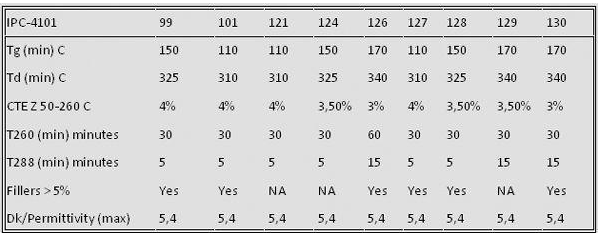
Every reputable material manufacturer classifies their products according to IPC 4101 (Specification for Base Materials for Rigid and Multilayer Printed Circuit Boards) so that performance characteristics are determined and classified using this specification. While the characteristics of the base materials are defined in detail, following the IPC-4101-xxx classification allows the factory to make an informed choice and ensure that the performance meets the expected requirements.
When considering the performance characteristics of the base material, the relevant mechanical properties (especially the relevant performance of the material during thermal cycling/soldering operations) and electrical properties of the material should be considered. These are generally considered to be the most common factors in the standard product selection process. This is because all materials considered must meet the UL flammability rating V-0.
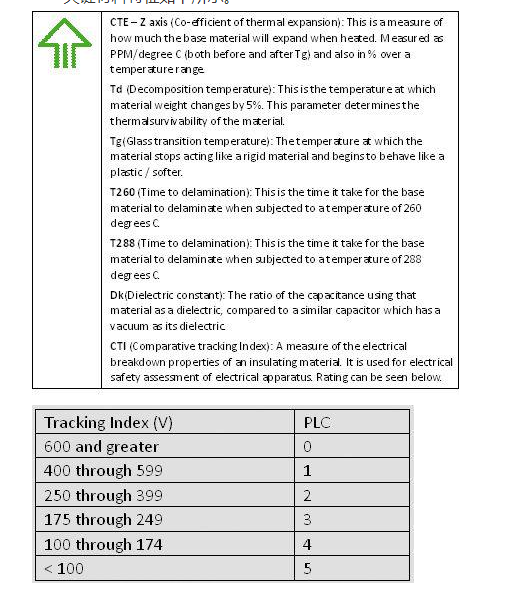
The key material characteristics are shown below.
The table below extracts some of the characteristics of the IPC-4101 classification, highlighting some of the details already mentioned.
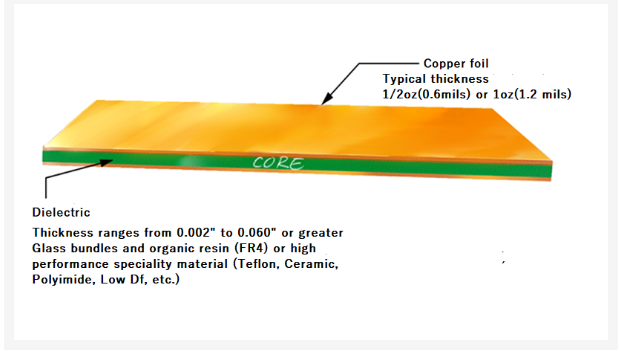
Insulated Metal Substrate (IMS)
IMS – Efficient Heat Dissipation Technology
New Opportunities for Insulated Metal Substrates
To meet larger energy or local heat load requirements, such as in modern buildings with high-intensity LEDs, IMS technology can be used. IMS is the abbreviation for “Insulated Metal Substrate”. This is a PCB made of a special prepreg material applied to a metal plate (usually aluminum), the main characteristics of which are excellent heat dissipation and good insulation properties for high voltages. NCAB, along with EBV and several other companies, participated in the development of demonstration products to attract market attention to the opportunities brought by the combination of high-intensity LEDs and IMS technology.
The most important ingredient is the thermally conductive prepreg, which is a ceramic or boron-filled material with excellent heat dissipation properties. Its thermal conductivity is typically 8-12 times that of FR4. Some well-known manufacturers of this type of material are Bergquist and Laird Technologies.
Bergquist
The Bergquist Company is a world leader in the development and manufacture of thermally conductive interface materials. Thermally laminated Insulated Metal Substrates (IMS) were developed by Bergquist to solve the heat dissipation problems in today’s high-power surface mount applications. In such applications, the mold size is reduced and heat dissipation issues are a concern.
Thermagon Laird Technology
Laird Technology is a world leader in the design and manufacture of thermally conductive materials for electronic applications.
IMS PCB Heat Dissipation Advantages
The thermal resistance of an IMS PCB can be designed to be very low. For example: if you compare a 1.60 mm FR4 PCB to an IMS PCB with 0.15 mm thermal prepreg, you will find that the thermal resistance of the IMS PCB is more than 100 times that of the FR4 PCB. In FR4 products, it is very difficult to dissipate a lot of heat.
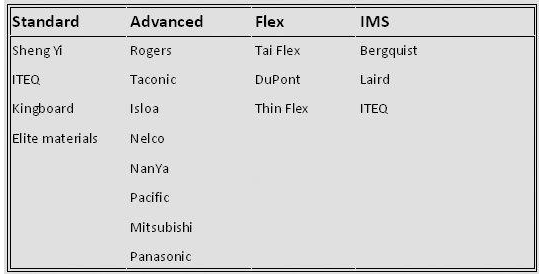
NCAB can provide a variety of materials to meet almost all customer needs, whether it is a specific brand or an equivalent material that meets the IPC-4101 classification/material characteristics. The existing materials are divided into four categories: standard (widely used), advanced (small number of factory-specific), flexible and IMS.
Another option is to combine FR4 materials with vias, such as plugging thermal conductive materials, to improve the thermal performance of the PCB. This approach is more cost-effective than using traditional FR4 technology.