
“Precision Tiling”in the Microscopic World:Unveiling the Secrets of PCB SMT,the Invisible Cornerstone of Modern Electronics
Hold your phone,open your laptop,or glance at your smartwatch-have you ever wondered:How are so many complex functions packed into these increasingly smaller and thinner devices?The answer lies deep within circuit boards,invisible to the naked eye-a sophisticated process called SMT(Surface Mount Technology).
From”threading a needle”to “Surface lamination”:A Revolution in Electionics Assembly
Before the widespread addoption of SMT,electronic component assembly primarily relied on through-hole mounting(THT).
In the THT era.component legs(pins)were long metal wires.Workers drilled densely packed holes in the PCB(printed circuit board),then threaded the component pins through the holes and soldered them onto the back of the board.This process was like threading a needle,with the components”standing”on the board.
Disadvantages:High drilling cost,low board front-side space utilization,large
components,difficulty miniaturizing,and limited automation.In the SMT era,components no longer have long leads;instead,they feature metalized solder terminals bulit into the device body.These are directly mounted on pads on the PCB surface and then cured by heat in a reflow oven.Much like laying kitchen tiles,the components are”glued’to the board surface.
Advantages:No drilling required ,significantly reducing component size and weight.
Components can be mounted on both sides of the PCB,resulting in high assembly density,ease of fully automated production,and improved reliability.
It is the advent of SMT technology that has made the portable,multifunctional electronics we enjoy today possible.
The”Four step”of an SMT Production line:Smooth and Precise Collaboration
A modern SMT production line is like a highly coordinated orchestra,playing a precise manufacturing symphony.It’s core process is typically divided into the following four steps:
Step 1:Solder paste Printing-“Painting the Blueprint” for soldering
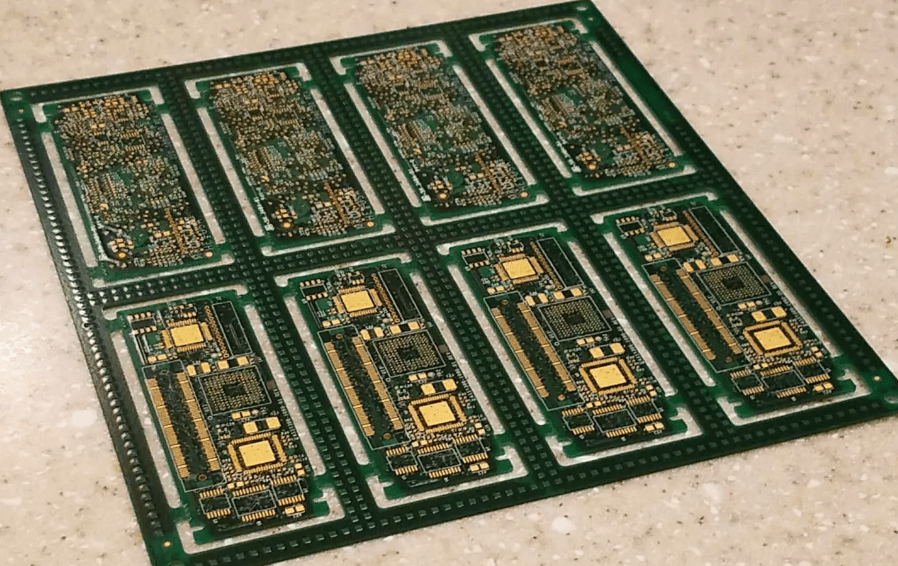
This is the foundation of all work.The locations on the PCB where components need to be soldered are exposed copper pads.First,we need to precisely apply the”glue”-solder paste-to these pads.
Solder paste is a gray,viscous paste composed of a mixture of tiny tin alloy powders and flux.
Process:The operator uses a stencil-a thin steel sheet with laser-cut holes that precisely correspond to the locations of the PCB Pad.The stencil is precisely aligned with the PCB, and a squeegee is used to push the solder paste across the stencil allowing it to leak through the holes and onto the PCB pads.The quality of this step directly determines the success of the final soldering.
Step 2:Component Placement-The microscopic world of “Fast,Accurate,and Stable”
This is the core amd most technologically advanced step in the SMT production line.After the PCB has been printed with solder paste,it travel on a conveyor belt to the placement machine in tapes.tubes or trays.
Process:The placement machine’s nozzle,like a deft hand,pick up components such as resistors,capacitors,and chips from a feeder at a rate of thousands or even tens of thousands of times per minute,following pre-programmed coordinates.It then precisely places them onto corresponding solder-coated pads on the PCB.Its accuracy can reach micrometers.much finer than a strand of human hair.
Step3:Reflow soldering -The magic of “From gluing”to”Fusion”
At this point,the components are only “adhered”to the PCB by solder paste,a very fragile bond.Next,the PCB enters a tunnel-like device called a reflow oven,undergoing a”high-temperature journey”.
Process:The refloe oven has several distinct temperature zones,which create a precisely controlled temperature profile:
Preheating Zone:The temperature is gradually increased to ensure uniform heating of the PCB and components,avoiding thermal shock.
Holding Zone:This activates the flux and removes oxides from the pads and component leads.
Reflow zone:The temperature rapidly rises to a peak(typically typically 30-40°C above the solder paste’s melting point), causing the metal powder in the solder paste to melt and become liquid. Surface tension and flux bind the solder to the component pins, forming a strong metallurgical bond with the solder pads.
Cooling zone:Controlled cooling allows the molten solder to cool and solidify,permanently securing the component to the PCB.
Through this”magic tunnel”,the component and PCB transition from physical contract to a secure electrical connection.
Step 4:Inspection and cleaning-The”last line of Defense”for Quality
After soldering is completed,quality inspection is essential.Modern factories use the follwing:
Automated Optical Inspection(AOI):A high-definition camera captures images of solder joints and compares them to standard images to automatically detect defect such as missing parts ,misaligned parts,offset solder joints,and solder bridging(shorts).
X-Ray Inspection:For component like BGAs (Ball Grid Arrays),whose pins are located on the bottom of the chip and not visible to the naked eye,X-rays are used to inspect the internal solder joints.
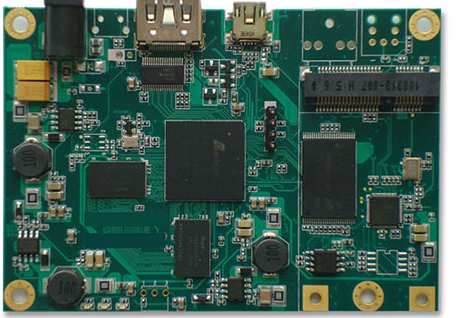
Finally,if necessary,a cleaning machine is used to remove residual flux and other materials from the board,resulting in a smooth,complete SMT circuit board.
Ubiquitous SMT:A Microscopic Bridge Connecting the Digital World,It can be said that almost all modern electronic products utilize SMT technology on their core motherboards.From the precision instruments in aerospace vehicles to our eveyday smartphone,Wi-Fi routers,and smart TVs,to medical devices and automotive electronics,SMT technology,with its high density ,high reliability,and high efficiency,has become the invidible cornerstone of our digital civilization.
Summary
The next time you hold a sleek,light weight electronic device,imagine the whirring pace of a factory production line:the precise solder paste application,the dizzying speed of the placement machine,the microscopic metallurgical reactions in the reflow oven…It is these hidden ,precision processes that organize manner within a tiny space,ultimately converging into the immense computing power that drives our modern lives.SMT is a never-ending ,precise dance in this microscopic world.