
Rigid Flex PCB Assembly Process
Rigid PCBs (Printed Circuit Boards) are made of a solid substrate material that is not flexible.
They are commonly used in applications where the board needs to be sturdy and stable, such as in electronic devices that require a lot of support or in industrial applications where the board needs to withstand harsh environments.
Flex PCBs, on the other hand, are made of a flexible substrate material that can bend and twist. They are commonly used in applications where the board needs to be flexible and conform to a specific shape, such as in wearable technology or in medical devices that need to be worn on the body.
The main differences between rigid and flex PCBs are:
1. Flexibility: Rigid PCBs are not flexible, while flex PCBs can bend and twist.
2. Size and shape: Rigid PCBs are limited in size and shape, while flex PCBs can be made in various shapes and sizes.
3. Cost: Flex PCBs are generally more expensive than rigid PCBs due to the complexity of the manufacturing process.
4. Durability: Rigid PCBs are generally more durable than flex PCBs, as they are less prone to damage from bending or twisting.
In summary, the choice between rigid and flex PCBs depends on the specific application and requirements of the project. Rigid PCBs are best suited for applications that require stability and durability, while flex PCBs are best suited for applications that require flexibility and conformability.
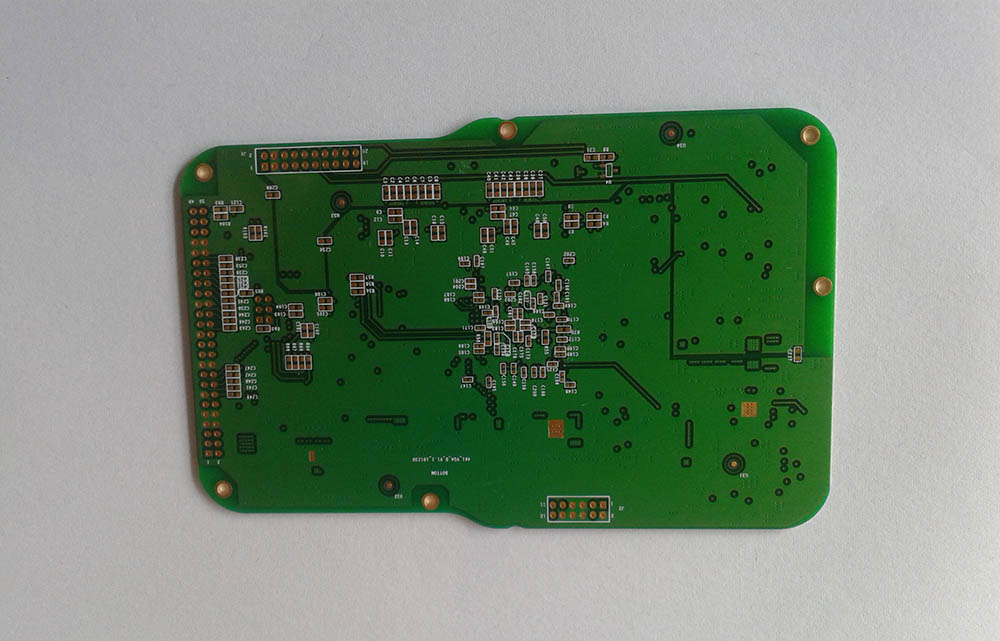
Advantage of rigid PCB
1. Durability: Rigid PCBs are made of solid materials, which makes them more durable and resistant to damage than other types of PCBs. They can withstand high temperatures, vibrations, and mechanical stress, making them ideal for use in harsh environments.
2. High reliability: Rigid PCBs are highly reliable and offer consistent performance over a long period of time. They are less prone to errors, malfunctions, and failures, which makes them suitable for use in critical applications such as aerospace, defense, and medical devices.
3. Better signal integrity: Rigid PCBs offer better signal integrity than flexible PCBs due to their solid construction. They have lower signal loss and noise, which results in better performance and higher data transfer rates.
4. Ease of assembly: Rigid PCBs are easier to assemble and solder than flexible PCBs. They have a flat surface, which makes it easier to mount components and solder them in place.
5. Cost-effective: Rigid PCBs are more cost-effective than flexible PCBs, especially for high-volume production runs. They require less material and labor, which reduces the overall cost of production.
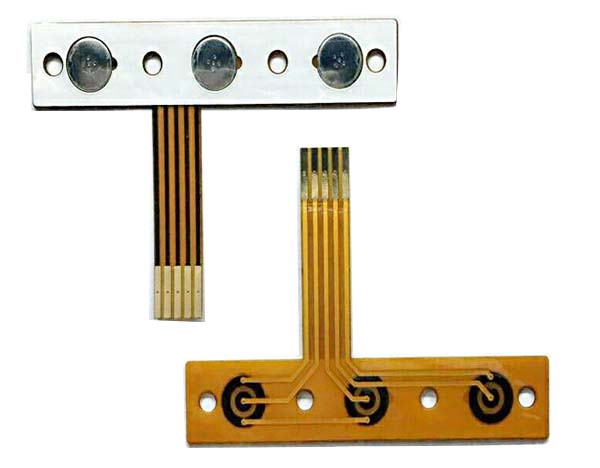
Advantage of flex PCB
1. Space-saving: Flex PCBs can be designed to fit into tight spaces and conform to irregular shapes, allowing for more efficient use of space in electronic devices.
2. Lightweight: Flex PCBs are thinner and lighter than traditional rigid PCBs, making them ideal for applications where weight is a concern.
3. High reliability: Flex PCBs are less prone to mechanical failure due to their ability to bend and flex, making them more reliable in harsh environments.
4. Improved signal integrity: The use of flexible materials in the construction of flex PCBs can help reduce signal loss and interference, leading to improved signal integrity.
5. Cost-effective: Flex PCBs can be manufactured using automated processes, reducing production costs and improving consistency.
6. Easy to assemble: Flex PCBs can be easily assembled and integrated into electronic devices, reducing assembly time and costs.
7. Versatility: Flex PCBs can be used in a wide range of applications, including consumer electronics, medical devices, and aerospace and defense systems.