Advantages of rigid-flex pcb
Rigid-Flex PCB (Rigid-Flex PCB) is becoming more and more popular in modern electronic design, and its design advantages make it the first choice in many applications.
First of all, a significant advantage of rigid-flex PCB is its excellent space utilization.
Due to its unique structure, rigid-flex PCB can be designed and installed in three-dimensional space, which allows it to adapt to complex device shape and size requirements.
This flexibility not only saves space but also reduces connector and cable usage, simplifying design and increasing system reliability.
In addition, rigid-flex PCBs also excel in improving electrical performance.
Because it reduces the use of traditional connectors and cables, the signal transmission path is shorter and signal loss and interference are reduced accordingly. This is especially important for high-frequency applications where signal integrity is critical.
By optimizing the signal transmission path, rigid-flex PCB can provide higher signal quality and faster data transmission speed, thereby meeting the high-performance needs of modern electronic equipment.
Next, the mechanical strength and durability of rigid-flex PCB is also one of its important advantages.
The rigid portion provides a strong support structure, while the flexible portion allows for a certain degree of bending and movement.
This combination not only enhances the stability of the overall structure, but also improves its resistance to earthquakes and impacts, making it perform well in harsh environments.
For example, in aerospace and military applications, equipment needs to withstand extreme temperature changes and mechanical stress. The design of rigid-flex PCB can effectively meet these challenges and ensure long-term reliable operation of the equipment.
In addition, rigid-flex PCBs also offer significant cost benefits.
Although its initial design and manufacturing costs may be higher, the overall cost may actually be lower because it reduces the use of connectors and cables and simplifies the assembly process.
Fewer components and a simpler assembly process not only reduce material and labor costs, but also reduce potential points of failure, thereby lowering maintenance and repair costs. For applications that require high reliability and long life, rigid-flex PCB is undoubtedly a cost-effective choice.
Finally, the design flexibility of rigid-flex PCB also provides more possibilities for innovation. Designers can freely combine rigid and flexible parts according to specific application needs, allowing for more complex and diverse designs.
This flexibility not only promotes the miniaturization and lightweight of electronic products, but also provides broad space for the development of new electronic devices.
In short, rigid-flex PCB has become an indispensable and important part of modern electronic design due to its excellent space utilization, electrical performance, mechanical strength, cost-effectiveness and design flexibility.
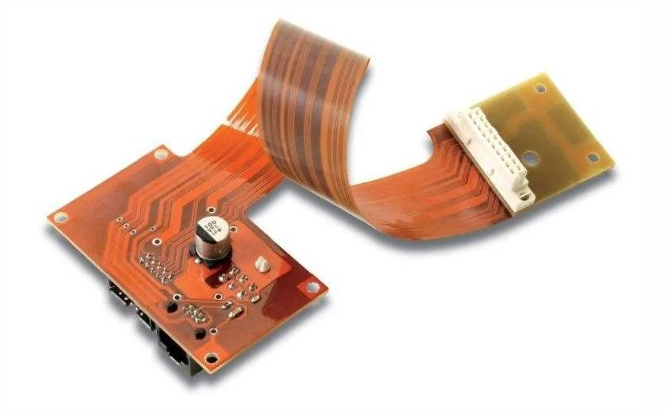
Application of rigid-flexible PCB in consumer electronics
The application of rigid flex PCB in consumer electronics has shown many advantages, which make it an important part of the design of modern electronic equipment.
First, the design flexibility of rigid-flex PCB enables it to adapt to complex three-dimensional structures, which is particularly important in consumer electronics.
As devices become smaller and more complex, traditional rigid PCBs often struggle to meet design needs. Rigid-flex PCB can easily realize multi-layer connections and complex wiring through its unique structure, thus meeting the miniaturization and high-performance requirements of modern consumer electronics products.
In addition, the reliability of rigid-flex PCB is also an important reason for its wide application in consumer electronics. Due to the inclusion of flexible parts in its structure, it exhibits greater durability in the face of mechanical stress and vibration.
In contrast, traditional rigid PCBs are more likely to break or be damaged when impacted by external forces.
Therefore, in devices that require frequent movement or operation, such as smartphones, wearable devices, and portable game consoles, the application of rigid-flex PCB is particularly important.
At the same time, rigid-flex PCBs also have significant space-saving advantages. By combining flexible circuit boards with rigid circuit boards, designers can achieve more functionality in a limited space.
This design not only reduces the size and weight of the device, but also improves the utilization of internal space, making room for more functional modules and larger battery capacity.
This is undoubtedly a huge advantage for consumer electronics products that pursue thinness, lightness and high performance.
Furthermore, the manufacturing process of rigid-flex PCB is also constantly improving, gradually reducing its cost.
Although the initial design and manufacturing costs of rigid-flex PCBs may be higher than traditional rigid PCBs, as technology advances and production scale expands, its cost benefits gradually become apparent.
Especially in the case of mass production, the cost advantage of rigid-flex PCB is more obvious. This makes more consumer electronics manufacturers willing to adopt this technology, thus promoting its popularity in the market.
Finally, the environmentally friendly features of rigid-flex PCB are also worth mentioning.
These materials generally have better recyclability and lower environmental impact due to the inclusion of flexible materials in their construction.
In addition, the high reliability and long life of rigid-flex PCBs also reduce the generation of electronic waste, thereby playing a positive role in environmental protection.
In summary, the application of rigid-flex PCB in consumer electronics not only improves product design flexibility and reliability, but also brings significant space savings and cost-effectiveness, and also has environmental advantages.
These characteristics make it an indispensable and important technology in the design of modern consumer electronics products.
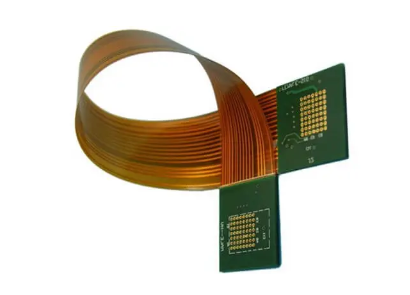
Reliability analysis of rigid-flex PCB
Rigid-flex PCB (Rigid-Flex PCB) is used in modern electronic equipment It plays a vital role in the industry, and its reliability is one of the key factors for its wide application.
First of all, the rigid-flex PCB design enables it to maintain stable performance in extreme environments
Because its structure combines rigid and flexible materials, rigid-flex PCB can maintain its electrical performance and mechanical strength under harsh conditions such as high temperature, low temperature, and high humidity. This environmental resistance makes it widely used in demanding fields such as aerospace, military and medical equipment.
In addition, the reliability of rigid-flex PCB is also reflected in its superior seismic performance.
Traditional rigid PCBs are prone to breakage or desoldering when subjected to vibration or impact, while rigid-flex PCBs effectively absorb and disperse external impact forces through their flexible parts, thereby greatly reducing the risk of damage.
This shock resistance makes it particularly effective in devices that require frequent movement or are subject to external shocks, such as portable electronic devices and automotive electronic systems.
At the same time, the reliability of rigid-flex PCB also benefits from its simplified circuit design. By integrating multiple traditional rigid PCBs and connecting wires into a single rigid-flex PCB, not only the number of connection points is reduced, but also the failure rate of solder joints is reduced. Fewer connection points and solder joints means fewer potential points of failure in the circuit, increasing overall system reliability. This design simplification not only improves production efficiency, but also reduces the difficulty of maintenance and repair.
Furthermore, the reliability of rigid-flex PCB is also reflected in its excellent electrical performance. Because its structural design enables shorter signal transmission paths, the signal transmission speed and quality are significantly improved. For equipment that requires high-speed data transmission and high-precision signal processing, rigid-flex PCB is undoubtedly an ideal choice. The shorter signal path not only reduces signal delay, but also reduces the possibility of signal interference, ensuring stable operation of the device.
Finally, the reliability of rigid-flex PCB is also reflected in its long life and high durability. Due to the superiority of its materials and design, rigid-flex PCBs are able to maintain their performance and functionality after prolonged use. This long life and high durability not only lowers the total cost of ownership of the equipment, but also reduces the inconvenience of frequent replacement and repairs.
To sum up, rigid-flex PCB has become indispensable in modern electronic equipment due to its stable performance in extreme environments, superior shock resistance, simplified circuit design, excellent electrical performance, long life and high durability. An important part of. Its reliability not only improves the overall performance of the equipment, but also provides a solid guarantee for various high-demand applications.
Rigid-flex PCB manufacturing process
The manufacturing process of rigid-flex PCB plays a vital role in the design and manufacturing of modern electronic equipment. First, the manufacturing process of rigid-flex PCB combines the advantages of rigid and flexible circuit boards, allowing it to have higher design flexibility in complex electronic devices. This flexibility is not only reflected in the shape and layout of the circuit board, but also in its ability to adapt to various application environments to meet diverse design needs.
In addition, the rigid-flex PCB manufacturing process can significantly reduce the use of connectors and cables. This feature not only simplifies circuit design but also reduces potential failure points, thereby improving overall system reliability. Rigid-flex PCBs can also reduce overall costs by reducing the number of connectors and cables, which is especially important for mass-produced electronic devices.
At the same time, the manufacturing process of rigid-flex PCB also has excellent electrical performance. Due to its unique structural design, rigid-flex PCB can provide better signal integrity and lower electromagnetic interference in high-frequency applications. This is of great significance for electronic equipment that requires high precision and reliability, such as medical equipment and aerospace systems.
It is worth mentioning that the rigid-flex PCB manufacturing process can also improve the durability and service life of the product. The flexible part is able to withstand repeated bending and mechanical stress, while the rigid part provides necessary support and protection. This combination enables rigid-flex PCBs to maintain stable performance in harsh environments, thereby extending the product’s service life.
In addition, the rigid-flex PCB manufacturing process also has high space utilization. Because it can be designed and routed in three-dimensional space, rigid-flex PCB can implement more complex circuit functions in a limited space. This has significant advantages for electronic devices that require miniaturization and high integration, such as smartphones and wearable devices.
In general, the manufacturing process of rigid-flex PCB has many advantages in the design and manufacturing of modern electronic equipment. Its design flexibility, reliability, electrical performance, durability and space utilization make it ideal for many high-end applications. By continuously optimizing and improving this process, future electronic devices will be able to achieve higher performance and a wider range of applications.
Advantages of rigid-flexible PCB in medical equipment
Rigid-flex PCB is increasingly used in medical equipment, and its unique advantages make it an ideal choice for the medical industry. First, the design flexibility of rigid-flex PCB enables it to adapt to complex medical device requirements. Medical equipment usually requires the integration of multiple functions within a limited space, and the structure of rigid-flex PCB allows designers to freely route wiring in three-dimensional space, thereby maximizing the use of every inch of space inside the equipment. This design flexibility not only improves the functional integration of the device, but also reduces the size and weight of the device, making it more portable and easier to operate.
In addition, the reliability and durability of rigid-flex PCBs are particularly important in medical equipment. Medical equipment needs to operate in a variety of harsh environments, including conditions such as high temperature, high humidity, and high vibration. Rigid-flex PCBs use high-quality materials and advanced manufacturing processes to maintain stable performance under these extreme conditions. Its durability not only extends the service life of the equipment, but also reduces the frequency of maintenance and replacement, thereby reducing the operating costs of medical institutions.
At the same time, the high-density connection capabilities of rigid-flex PCBs are also one of the reasons why they are popular in medical equipment. Medical equipment often needs to process large amounts of data and signals, requiring circuit boards with high-density connection capabilities. Rigid-flex PCB enables higher connection density and faster data transfer speeds by combining rigid and flexible circuit boards. This is particularly important for medical devices that require real-time monitoring and processing of data.
Furthermore, the lightweight properties of rigid-flex PCB also bring significant advantages to medical equipment. Modern medical equipment pays more and more attention to portability and ease of operation, especially portable diagnostic equipment and wearable medical equipment. The lightweight design of rigid-flex PCB not only reduces the weight of the device, but also improves its portability, making it more convenient and comfortable for medical staff and patients to use.
Finally, the cost-effectiveness of rigid-flex PCBs is also an important factor in their widespread use in medical devices. Although the initial design and manufacturing costs of rigid-flex PCBs may be higher, their high reliability and long service life make the overall cost-effectiveness significant. The high reliability and low maintenance requirements of medical equipment not only reduce downtime, but also increase the efficiency of equipment use, thus bringing higher economic benefits to medical institutions.
In summary, the advantages of rigid-flex PCB in medical equipment are obvious. Its design flexibility, reliability, high-density connectivity capabilities, lightweight properties, and cost-effectiveness make it the first choice for medical device manufacturers. With the continuous advancement of technology, the application prospects of rigid-flexible PCB in medical equipment will be broader, bringing more possibilities to the development of the medical industry.