Allegro pcb high-speed option
Basic settings and optimization techniques for Allegro PCB high-speed options
In modern electronic design, as signal frequency continues to increase, high-speed circuit design becomes increasingly important. As a powerful circuit design software, Allegro PCB’s high-speed options provide designers with a wealth of tools and settings to ensure signal integrity and system performance. This article will explore the basic settings and optimization techniques for Allegro PCB high-speed options to help designers better cope with the challenges of high-speed circuit design.
First of all, understanding and configuring the basic settings of Allegro PCB is the first step in high-speed design. Entering the high-speed option setting interface, designers can see a series of parameters related to signal integrity, such as impedance control, delay matching, and crosstalk analysis. By setting these parameters reasonably, signal reflection and interference can be effectively reduced, thereby improving the reliability of the circuit. For example, in terms of impedance control, designers need to accurately calculate and set the characteristic impedance of the trace according to the PCB board and trace width to ensure the stability of signal transmission.
Next, optimizing the trace layout is one of the key links in high-speed circuit design. In order to reduce signal delay and crosstalk, designers should try to avoid long-distance parallel traces and keep the length of the signal lines consistent. In addition, using differential pair traces is also a common optimization technique. By arranging two signal lines closely in parallel, external interference can be effectively offset and the signal’s anti-interference ability can be improved. It is worth noting that when performing differential pair traces, designers should ensure that the length difference between the two signal lines is as small as possible to avoid signal distortion.
In addition, the design of the power supply and ground planes also has an important impact on the performance of high-speed circuits. In order to reduce power supply noise and ground bounce noise, designers should arrange the power and ground planes reasonably on the PCB and ensure low impedance connection between them. Using multilayer board design, power and ground planes can be arranged between different layers to form an effective shielding layer, further improving signal integrity. At the same time, appropriately increasing decoupling capacitors can effectively filter out high-frequency noise and stabilize the power supply voltage.
Finally, simulation and verification are necessary steps to ensure the success of high-speed circuit design. Allegro PCB provides powerful simulation tools, designers can analyze the transmission characteristics and timing relationships of signals through simulation, and timely discover and solve potential problems. For example, using time domain reflectometer (TDR) simulation, the impedance discontinuity of the trace can be detected to optimize the trace design. In addition, eye diagram analysis can intuitively evaluate the quality and bit error rate of the signal, providing reliable data support for the design.
In summary, the basic settings and optimization techniques of Allegro PCB high-speed options are essential for modern high-speed circuit design. By reasonably configuring parameters, optimizing trace layout, designing power and ground planes, and performing simulation and verification, designers can effectively improve the signal integrity and system performance of the circuit, thereby meeting the design requirements of high-speed electronic products. It is hoped that the discussion in this article can provide useful reference for designers and help them achieve greater success in high-speed circuit design.
Using Allegro PCB High Speed Option for Signal Integrity Analysis In modern electronic design, signal integrity analysis has become a key step to ensure circuit board performance and reliability. Using Allegro PCB High Speed Option for signal integrity analysis can significantly improve design efficiency and product quality. First, the Allegro PCB High Speed Option provides a powerful set of tools that enable designers to accurately simulate and analyze the behavior of high-speed signals. These tools not only identify potential problems, but also provide detailed solutions, thereby reducing the number of design iterations.
In addition, the integration of the Allegro PCB High Speed Option makes signal integrity analysis more convenient. Through seamless integration with other design modules, designers can complete the entire process from schematic design to layout and routing on the same platform. This integration not only improves work efficiency, but also reduces the risk of errors caused by data conversion and transmission. More importantly, the Allegro PCB High Speed Option supports real-time analysis, allowing designers to instantly discover and solve problems during the design process, thereby avoiding later rework and modifications.
Next, it is worth mentioning that the Allegro PCB High Speed Option has a user-friendly and intuitive user interface. Even beginners can quickly get started and use its powerful functions for complex signal integrity analysis.
Through detailed tutorials and rich online resources, users can easily master various advanced functions, thereby improving their design level in a short time. In addition, the Allegro PCB High Speed Option also provides a wealth of parameter settings and customization options, allowing designers to flexibly adjust according to specific needs to obtain the best analysis results.
Furthermore, the Allegro PCB High Speed Option performs particularly well when processing high-speed signals. With the trend of high-speed and miniaturization of electronic products, signal integrity issues have become increasingly complex and difficult.
The Allegro PCB High Speed Option can effectively simulate the transmission characteristics of high-speed signals through advanced algorithms and precise modeling techniques, and identify and solve problems such as reflections, crosstalk, and timing errors. This not only improves the performance of the circuit board, but also extends the life of the product.
Finally, the strong community support of the Allegro PCB High Speed Option is also a major advantage. By participating in community forums and technical exchanges, designers can gain valuable experience and suggestions to continuously optimize their designs. In addition, regular software updates and technical support also ensure that users can always use the latest tools and technologies to maintain a competitive advantage.
In summary, using the Allegro PCB High Speed Option for signal integrity analysis can not only improve design efficiency and product quality, but also help designers cope with increasingly complex high-speed signal challenges. With its powerful tool set, friendly user interface and rich community support, the Allegro PCB High Speed Option is undoubtedly an indispensable tool in modern electronic design.
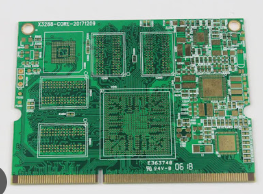
Application of Allegro PCB High Speed Option in Multilayer Board Design
In modern electronic design, as the performance and functional requirements of equipment continue to increase, high-speed circuit design has become particularly important. The application of Allegro PCB High Speed Option in multilayer board design is born to meet this challenge. With this option, designers can better manage signal integrity, power integrity and electromagnetic compatibility to ensure product reliability and performance.
First, the Allegro PCB high-speed option provides powerful signal integrity analysis tools.
In multilayer board design, the transmission path of high-speed signals is complex and easily interfered by various factors. By using Allegro’s high-speed option, designers can simulate and analyze various phenomena in the signal transmission process, such as reflection, crosstalk, and timing problems. These tools can not only help designers identify potential problems, but also provide optimization suggestions to improve the quality and stability of signal transmission.
Next, power integrity is also a key issue in multilayer board design.
High-speed circuits have very demanding requirements on power supply, and any slight power supply fluctuation may cause system instability. The Allegro PCB high-speed option provides power integrity analysis functions to help designers evaluate the performance of the power distribution network. By simulating the impedance and voltage distribution of the power network, designers can identify the weak links in the power system and make corresponding optimizations, such as adding decoupling capacitors or adjusting the layout of the power layer.
In addition, electromagnetic compatibility (EMC) is also an aspect that cannot be ignored in high-speed circuit design.
High-speed signals have high frequencies and are prone to electromagnetic radiation, which affects the normal operation of other electronic devices. The Allegro PCB high-speed option provides electromagnetic compatibility analysis tools to help designers evaluate the electromagnetic radiation level of circuit boards. With these tools, designers can identify possible radiation sources and take corresponding measures, such as adding shielding layers or optimizing routing layouts, to reduce electromagnetic radiation.
It is worth mentioning that the Allegro PCB High Speed Option also supports automatic routing for multilayer boards.
In multilayer board design, manual routing is not only time-consuming and labor-intensive, but also prone to errors. By using automatic routing tools, designers can quickly generate routing schemes that meet design rules, thereby greatly improving design efficiency. In addition, these tools can also automatically adjust the length and spacing of routing according to the characteristics of high-speed signals to ensure the quality of signal transmission.
In general, the application of the Allegro PCB High Speed Option in multilayer board design provides designers with powerful tools and functions to help them cope with various challenges in high-speed circuit design. With these tools, designers can not only improve design efficiency, but also ensure product reliability and performance, thereby gaining an advantage in the fierce market competition.
How to Implement Power Integrity for High-Speed Options in Allegro PCB In modern electronic design, power integrity is one of the key factors to ensure stable operation of high-speed circuits. As a powerful design tool, Allegro PCB provides a variety of options to optimize power integrity, especially in high-speed circuit design. First, it is crucial to understand the basic concept of power integrity. Power integrity refers to the performance of the power distribution network (PDN), which directly affects the stability and reliability of the circuit. High-frequency noise, transient voltage changes, and power supply ripple are all factors that affect power integrity.
To achieve power integrity for high-speed options in Allegro PCBs, a detailed power network analysis is first required. By using Allegro’s power integrity analysis tools, the behavior of the power distribution network can be simulated and analyzed. These tools can help designers identify potential power integrity issues, such as voltage drops and excessive current density. Through these analyses, designers can find and solve problems in the early stages, thus avoiding expensive design modifications at a later stage.
Next, reasonable power and ground plane design is key to ensuring power integrity. Allegro PCB provides multi-layer board design capabilities, allowing designers to easily create independent power and ground planes. By optimizing the layout of the power and ground planes, power noise and electromagnetic interference (EMI) can be reduced. In addition, it is also critical to ensure a low-impedance connection between the power and ground planes, which can be achieved by adding vias and using wide copper foil.
In addition, the selection and layout of decoupling capacitors is also an important factor affecting power integrity. In Allegro PCB, designers can use the decoupling capacitor library to select suitable capacitors and optimize their layout through simulation tools. Decoupling capacitors should be placed as close to the load as possible to reduce parasitic inductance and resistance, thereby improving the stability of the power supply.
Finally, signal integrity and power integrity are inseparable. In high-speed circuit design, the rapid change of signals will generate transient currents on the power supply, thereby affecting the power integrity. Allegro PCB provides signal integrity analysis tools to help designers consider both signal and power integrity during the design process. By comprehensively considering these two aspects, the stability and reliability of the entire circuit can be ensured.
In summary, implementing power integrity for high-speed options in Allegro PCB requires comprehensive consideration of multiple factors, including power network analysis, power and ground plane design, selection and layout of decoupling capacitors, and signal integrity analysis. By using the various tools and functions provided by Allegro PCB, designers can effectively optimize power integrity to ensure the stable operation of high-speed circuits. In the world of modern electronic design, choosing the right design tool is critical to the success of a project. The Allegro PCB High Speed Option stands out in this field and has become the first choice for many engineers. However, to fully understand its advantages, we need to compare it with other design tools.
First, the Allegro PCB High Speed Option excels in handling complex circuit designs. Its powerful signal integrity analysis capabilities enable engineers to identify and resolve potential problems early in the design process. This capability is particularly important in high-speed circuit design because