Altium flex pcb stiffener
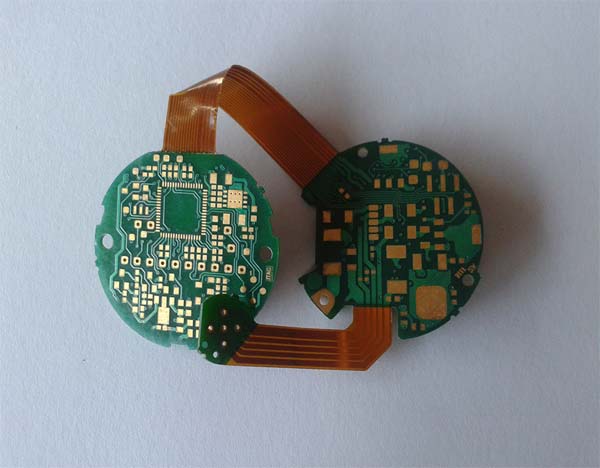
Fundamentally, the benefits of using a flexible circuit in a design are the ability to bend and fold the circuit and to allow the circuit to flex during use.
These thin and flexible stack-ups solve a considerable number of packaging issues.
But, being thin and flexible can also present a few challenges. It is common for a flexible circuit stack-up to include a stiffener,
which is typically going to be either a layer of polyimide or a layer of FR4 material, to provide added support and rigidity in specific areas.
FR4 Stiffeners
An FR4 stiffener is most often used to support a connector area.
If there is a heavy connector, or at least heavy in relation to the weight of the flexible circuit,
a piece of FR4 can be applied to the flex in that area to provide stability and prevent damage to the copper traces.
FR4 stiffeners are also used to support areas in the design that have a number of smaller,
or lighter components and the stiffener functions both as a support for connector weight and to prevent bending or flexing in that area,
which could put stress on the solder joints.
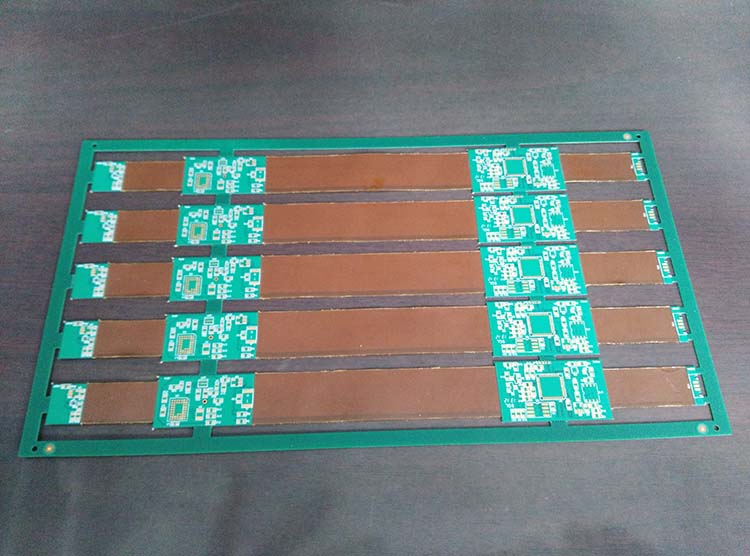
An FR4 stiffener could simply be a piece of FR4 with copper removed used as a backer to the flex area,
or it could have drilled holes and be registered to the flex to allow for thru-hole components.
Sometimes, this “stiffened” flex is confused with a rigid flex construction.
There is one significant difference between a rigid flex and flex with a rigid stiffener;
as a stiffener the FR4 is functioning only as a mechanical support,
there are no plated through holes providing electrical connection between the flex and the rigid material.
Polyimide Stiffeners
Polyimide stiffeners have many different functions.
They too, can add rigidity to a component area and prevent bending and folding that could put stress on solder joints.
Polyimide stiffeners can be utilized for other functions as well.
One typical use of a polyimide stiffener is to match a mating thickness requirement for insertion type connectors.
ZIF connectors are a common connection method with flex designs.
These connectors have a specific thickness spec and tight tolerance on that thickness to ensure the connection is effective.
A piece of polyimide can be added in that area to build the stack-up to the required thickness,
while allowing the rest of the flex to remain thinner and more flexible.
A general rule of thumb to keep in mind is to be sure the stiffener and coverlay end points overlap by at least .
030” to avoid introducing a stress point in the flex design.
Polyimide stiffeners also perform other functions. For example, if a flex circuit is going to have something rubbing up against it in end use,
a layer of polyimide can be added to that area,
so the wear and tear is being done to the non-functional piece of polyimide rather than directly on the circuit itself.
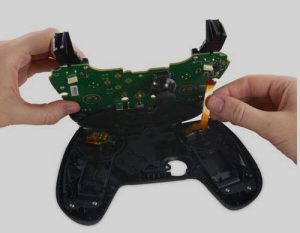
The role of Altium Flex PCB stiffeners is to provide mechanical support to the flexible PCBs,
preventing them from bending or twisting excessively. This ensures that the circuitry remains intact and the device functions properly.
Flex PCB stiffeners are typically made of materials such as FR4, polyimide, or polyester, and are attached to the flexible PCB using adhesive.
They can be placed on one or both sides of the flexible PCB, depending on the level of support required.
Overall, the role of Altium Flex PCB stiffeners is to improve the reliability and durability of flexible PCBs,
ensuring that they can withstand the stresses of handling and installation and perform optimally in their intended application.