Analysis of welding defects of printed circuit board (pcb)
1.Introduction
Welding is actually a chemical treatment process. Printed circuit boards (PCBs) are the support for circuit components and devices in electronic products, and they provide electrical connections between circuit components and devices. With the rapid development of electronic technology, the density of PCBs is getting higher and higher, and the layers are getting more and more. Sometimes all designs may be correct (such as no damage to the circuit board, perfect printed circuit design, etc.), but due to problems in the welding process, welding defects and welding quality are reduced, which affects the qualified rate of the circuit board, and then the quality of the whole machine is unreliable. Therefore, it is necessary to analyze the factors affecting the welding quality of printed circuit boards, analyze the causes of welding defects, and improve these causes to improve the welding quality of the entire circuit board.
2.Causes of welding defects
2.1 PCB design affects welding quality
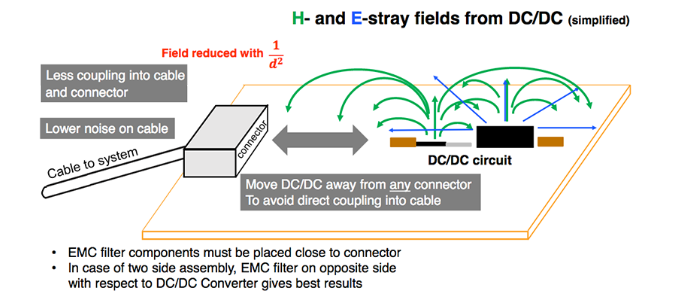
In terms of layout, when the PCB size is too large, although welding is easier to control, the printed lines are long, the impedance increases, the anti-noise ability decreases, and the cost increases; when it is too small, the heat dissipation decreases, the welding is difficult to control, and adjacent lines are prone to mutual interference, such as electromagnetic interference of the circuit board. Therefore, the PCB design must be optimized: (1) Shorten the connection between high-frequency components and reduce EMI interference. (2) Heavy components (such as those over 20g) should be fixed with brackets and then soldered. (3) Heat dissipation should be considered for heating components to prevent defects and rework caused by large ΔT on the surface of the components. Thermistors should be kept away from heat sources. (4) The components should be arranged as parallel as possible, which is not only beautiful but also easy to solder and suitable for mass production. The circuit board design is best in a 4:3 rectangle. The wire width should not change suddenly to avoid wiring discontinuity. When the circuit board is heated for a long time, the copper foil is prone to expansion and falling off. Therefore, large-area copper foil should be avoided.
2.2 The solderability of circuit board holes affects the welding quality
Poor solderability of circuit board holes will cause cold soldering defects, affect the parameters of components in the circuit, and cause unstable conduction between multilayer board components and inner layer lines, causing the entire circuit function to fail. The so-called solderability is the property of the metal surface being wetted by molten solder, that is, a relatively uniform, continuous and smooth adhesion film is formed on the metal surface where the solder is located. The factors that affect the solderability of printed circuit boards are mainly: (1) the composition of the solder and the properties of the solder. Solder is an important component of the welding chemical treatment process. It is composed of chemical materials containing flux. The commonly used low-melting point eutectic metals are Sn-Pb or Sn-Pb-Ag. The impurity content must be controlled to a certain ratio to prevent the oxides produced by the impurities from being dissolved by the flux. The function of the flux is to help the solder wet the surface of the circuit board by transferring heat and removing rust. White rosin and isopropyl alcohol solvents are generally used. (2) The welding temperature and the cleanliness of the metal plate surface will also affect the solderability. If the temperature is too high, the solder diffusion speed will accelerate. At this time, it has a high activity, which will cause the circuit board and the solder molten surface to oxidize rapidly, resulting in welding defects. The contamination of the circuit board surface will also affect the solderability and cause defects. These defects include tin beads, tin balls, open circuits, poor gloss, etc.
2.3 Welding defects caused by warping
PCBs and components will warp during the welding process, and defects such as cold solder joints and short circuits will occur due to stress deformation. Warping is often caused by temperature imbalance between the upper and lower parts of the PCB. For large PCBs, warping can also occur due to the weight of the board itself. Ordinary PBGA devices are about 0.5mm away from the printed circuit board. If the device on the circuit board is large, as the circuit board returns to its normal shape after cooling, the solder joints will be under stress for a long time. If the device is raised by 0.1mm, it is enough to cause a cold solder joint.
While the PCB is warping, the components themselves may also be warped, and the solder joints located in the center of the component are lifted off the PCB, resulting in empty solder joints. This often happens when only flux is used without solder paste to fill the gaps. When using solder paste, the solder paste and the solder balls are connected together due to deformation to form a short circuit defect. Another reason for the short circuit is the delamination of the component substrate during the reflow process. The characteristic of this defect is that bubbles are formed under the device due to internal expansion. Under X-ray detection, it can be seen that the solder short circuit is often in the middle of the device.
3.Conclusion
To sum up, the welding quality of the entire circuit board can be improved by optimizing PCB design, using excellent solder to improve the solderability of circuit board holes, and preventing warping and defects.