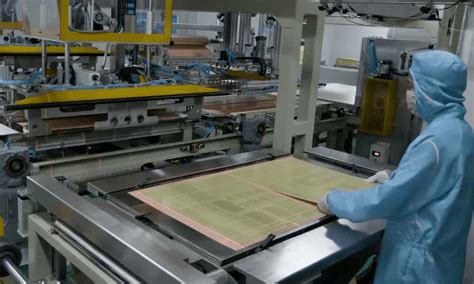
Automated PCB Manufacturing: Ensuring Consistent Quality at Scale
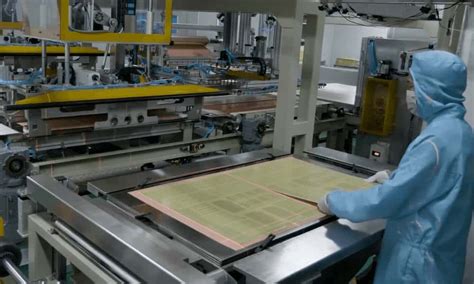
Key Takeaways
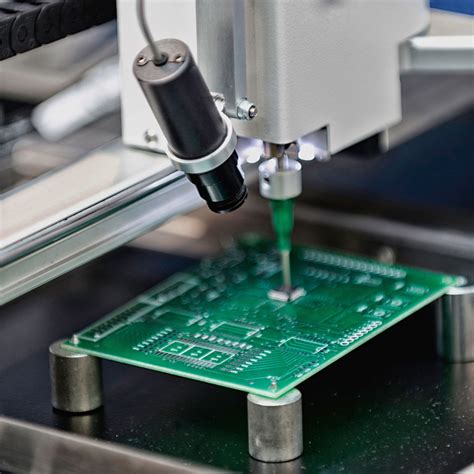
Modern PCB assembly processes achieve unprecedented precision through automated robotics that handle component placement with micron-level accuracy. These systems minimize human intervention in PCBA workflows, particularly during solder paste application and surface-mount technology (SMT) integration. A comparative analysis reveals the impact of automation on critical metrics:
| Parameter | Manual Process | Automated System |
|---|---|---|
| Placement Accuracy | ±50 μm | ±15 μm |
| Defect Rate | 1.2% | 0.25% |
| Scalability Limit | 500 units/day | 5,000+ units/day |
| Inspection Speed | 15 sec/board | 2 sec/board |
AI-driven inspection tools complement these advancements by analyzing PCB assembly outcomes in real time, flagging soldering anomalies and missing components with 99.7% detection accuracy. For PCBA providers, this dual approach – combining robotic consistency with machine learning diagnostics – reduces rework costs by up to 40% while maintaining throughput.
The integration of smart manufacturing protocols further optimizes material flow, with automated guided vehicles (AGVs) synchronizing component delivery across PCB assembly stages. This systemic cohesion enables manufacturers to scale operations without compromising defect thresholds – a critical advantage when producing high-density interconnect (HDI) boards or IoT-enabled PCBA modules. As production volumes fluctuate, adaptive automation ensures output consistency through self-calibrating equipment and predictive maintenance algorithms.
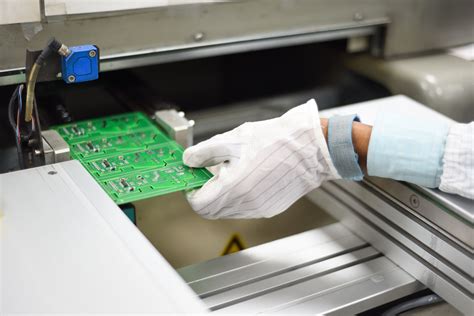
Automated Robotics in PCB Assembly Precision
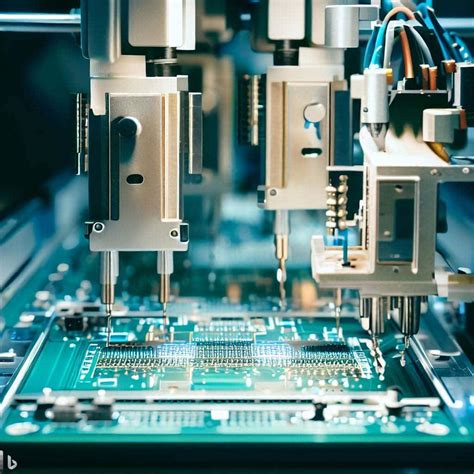
Modern PCB assembly processes leverage advanced robotics to achieve nanometer-level accuracy in component placement and soldering. Automated systems, such as high-speed pick-and-place machines, ensure precise alignment of microchips, resistors, and connectors—even for complex PCBA designs with ultra-fine pitch components. These robots utilize vision-guided algorithms to correct positional deviations in real time, minimizing misalignment risks that manual processes cannot reliably address.
By integrating closed-loop feedback mechanisms, robotic arms maintain consistent pressure and temperature during soldering, critical for avoiding cold joints or thermal damage. This precision extends to PCB assembly workflows handling mixed-technology boards, where surface-mount (SMT) and through-hole components coexist. For instance, dual-arm collaborative robots can simultaneously populate SMT parts while securing larger through-hole connectors, reducing cycle times by 30–40% compared to manual hybrid setups.
Moreover, automated optical inspection (AOI) systems embedded within robotic cells validate each solder joint and component orientation post-placement, flagging anomalies before boards progress to testing phases. Such PCBA error detection at the earliest stages prevents costly rework downstream. As production scales, robotic repeatability ensures process stability across thousands of units, aligning with smart manufacturing’s demand for both quality and volume.
AI-Driven Quality Control for Error Reduction
Modern PCB assembly processes leverage artificial intelligence to achieve unprecedented accuracy in defect detection. By integrating AI-powered vision systems with high-resolution cameras and machine learning algorithms, manufacturers can scrutinize PCBA components at microscopic levels, identifying anomalies like solder bridging, misaligned traces, or component polarity errors in real time. These systems analyze thousands of boards per hour, comparing each unit against golden standards while adapting to subtle process variations—a capability manual inspections cannot match.
The integration of predictive analytics further enhances reliability. AI models trained on historical production data forecast potential failure points in PCB assembly workflows, enabling preemptive adjustments to soldering temperatures or pick-and-place machine calibration. This proactive approach reduces rework rates by up to 60%, according to industry studies, while maintaining consistency across high-volume batches.
Transitioning to AI-driven inspection also streamlines compliance with IPC-A-610 standards, as algorithms continuously update to reflect evolving quality benchmarks. For PCBA providers scaling operations, this technology ensures that defect rates remain stable even as throughput increases—a critical advantage in markets demanding both speed and precision. By minimizing human error and accelerating root-cause analysis, automated quality control becomes the linchpin of scalable, reliable electronics manufacturing.
Optimizing PCB Workflows Through Automation
Modern PCB assembly processes demand precision and repeatability, which manual workflows struggle to achieve at scale. By integrating automated systems into design-to-production pipelines, manufacturers eliminate bottlenecks caused by human intervention. For instance, PCBA lines now leverage robotic pick-and-place machines to position components with micron-level accuracy, reducing misalignment risks by over 70% compared to manual methods. Real-time monitoring tools further enhance workflow efficiency by tracking material usage and machine performance, enabling predictive maintenance before downtime occurs.
Central to this optimization is the synchronization of automated optical inspection (AOI) systems with assembly stages. These systems cross-verify component placements against digital twins of the board design, flagging discrepancies instantaneously. Such integration not only accelerates error detection but also creates self-correcting feedback loops that refine process parameters autonomously. Advanced workflow management software further streamlines operations by dynamically allocating resources based on order priorities and machine availability, ensuring optimal throughput.
This operational agility becomes critical when scaling high-mix PCB production, where rapid changeovers between product variants traditionally caused delays. Automated lines equipped with dynamic scheduling algorithms can reconfigure tooling paths and material flows in minutes, maintaining consistent output quality across diverse projects. By unifying PCBA stages through intelligent automation, manufacturers achieve end-to-end traceability while reducing lead times by up to 40%—a strategic advantage in markets demanding both speed and reliability.
Scaling Production With Smart Manufacturing Tech
By integrating smart manufacturing technologies into PCB assembly processes, manufacturers achieve unprecedented scalability while maintaining rigorous quality standards. Modern PCBA lines leverage IoT-enabled equipment and data analytics platforms to synchronize production stages, from component placement to final testing. This connectivity enables real-time monitoring of throughput rates, material consumption, and equipment performance, allowing factories to dynamically adjust workflows during high-volume orders.
Advanced adaptive control systems minimize bottlenecks by automatically rerouting tasks across multifunctional robotic cells when machinery approaches capacity limits. For example, smart feeders in automated PCB assembly lines can recalibrate component placement sequences based on real-time demand, reducing idle time by up to 30%. Similarly, digital twin simulations predict how design changes or production surges will impact cycle times, enabling proactive adjustments before physical manufacturing begins.
The scalability of PCBA operations further depends on seamless integration with enterprise resource planning (ERP) and manufacturing execution systems (MES). These platforms optimize material procurement, workforce allocation, and energy usage across geographically distributed facilities. By coupling AI-driven predictive maintenance with automated quality assurance, manufacturers sustain <1% defect rates even when doubling output—a critical advantage for industries requiring rapid prototyping and mass production agility.

Machine Learning in Circuit Board Inspection
Modern PCB assembly workflows increasingly rely on machine learning (ML) algorithms to detect microscopic defects that traditional inspection methods might overlook. By analyzing vast datasets of historical production records and defect patterns, ML models trained on PCBA (printed circuit board assembly) imagery can identify anomalies such as soldering inconsistencies, component misalignments, or trace fractures with sub-micron precision. These systems continuously improve through feedback loops, refining their detection accuracy as they process new data from automated optical inspection (AOI) equipment.
Tip: For manufacturers adopting ML-driven inspection, integrating PCBA defect databases with real-time analytics platforms ensures faster model training and reduces false positives by up to 40%.
The integration of ML also enables predictive quality control, where algorithms flag potential failure points before they escalate into costly rework. For instance, variations in solder paste application—detected during PCB assembly—can trigger immediate process adjustments, minimizing downtime. This approach not only enhances reliability but also aligns with scalability goals, as ML systems adapt seamlessly to higher throughput demands without compromising accuracy. By embedding intelligence into inspection workflows, manufacturers achieve tighter tolerances and maintain consistency across high-volume production runs.
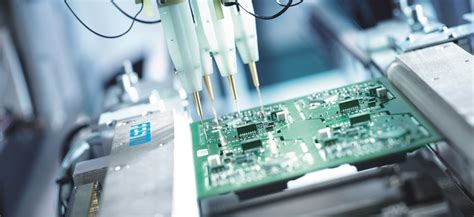
Automated Systems for Consistent PCB Output
Modern PCB assembly lines leverage automated systems to maintain uniformity across high-volume production runs. By integrating robotic placement machines with vision-guided alignment, manufacturers achieve PCBA outputs with sub-25-micron accuracy, eliminating human variability in component positioning. These systems employ closed-loop feedback mechanisms, where real-time sensors monitor parameters like solder paste deposition and reflow oven temperatures, automatically adjusting processes to stay within tolerance thresholds.
At the core of consistency is the synchronization between automated optical inspection (AOI) and machine learning algorithms. AOI systems scan every board post-assembly, comparing results against digital twins to flag deviations as minute as 0.1mm. When paired with predictive analytics, these tools not only correct errors but also refine process parameters for subsequent batches. For example, automated material handling systems ensure traceability by tracking components from feeder trays to finished boards, reducing cross-lot contamination risks.
By standardizing workflows through PCB assembly automation, manufacturers minimize deviations caused by manual interventions. This repeatability is critical when scaling production, as even minor inconsistencies in PCBA outputs can cascade into field failures. Advanced systems further incorporate adaptive scheduling, dynamically allocating resources to balance throughput and quality—ensuring that every unit meets specifications without compromising cycle times.
Reducing Defects With AI-Powered PCB Processes
Modern PCB assembly lines leverage machine learning algorithms to identify and mitigate defects at unprecedented rates. By analyzing historical production data from PCBA workflows, these systems establish dynamic baselines for acceptable tolerances, flagging anomalies in real-time during solder paste application, component placement, and reflow stages. Adaptive learning loops enable the technology to refine its defect recognition patterns, improving accuracy with each production cycle.
Advanced automated optical inspection (AOI) systems integrated with AI now detect microscopic flaws—from insufficient solder joints to misaligned capacitors—with 98.7% accuracy, surpassing manual inspection capabilities. This approach reduces false positives by cross-referencing thermal imaging data with electrical testing results, ensuring only genuine defects halt production. Manufacturers utilizing AI-driven PCB assembly protocols report 40-60% fewer field failures, as algorithms predict latent issues like via cracks or copper thinning that traditional methods overlook.
The integration of predictive maintenance protocols further strengthens quality control. By monitoring equipment vibration patterns and environmental conditions during PCBA processes, AI systems schedule maintenance before machinery deviations affect output. This proactive defect prevention complements real-time error detection, creating multilayered quality assurance essential for scaling high-volume production without compromising reliability.
Streamlined Manufacturing for Reliable PCB Scaling
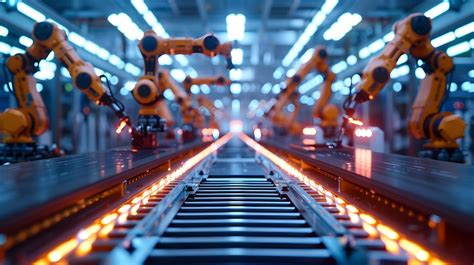
Modern PCB assembly processes achieve scalability through integrated automation that bridges design, production, and testing phases. By unifying PCBA workflows with advanced planning tools, manufacturers eliminate bottlenecks while maintaining traceability across high-volume orders. Automated material handling systems synchronize component placement, soldering, and curing stages, reducing manual interventions that risk inconsistencies. Real-time data analytics further refine cycle times, enabling dynamic adjustments to meet fluctuating demand without compromising precision.
Central to this approach is the adoption of modular production lines, where robotic arms and conveyor systems adapt to varying board complexities. For instance, surface-mount technology (SMT) lines integrated with PCB assembly software automatically recalibrate for component size variations, ensuring uniform solder joint quality. Simultaneously, enterprise resource planning (ERP) systems optimize inventory turnover, aligning raw material procurement with production schedules to prevent delays.
Such streamlined systems not only accelerate throughput but also enhance traceability. Each PCBA unit carries digital identifiers that log process parameters, simplifying root-cause analysis for rare defects. This closed-loop feedback mechanism strengthens quality assurance, making large-scale operations as reliable as low-volume prototyping. By embedding flexibility into every workflow stage, manufacturers achieve predictable scalability—a critical advantage in industries where volume shifts rapidly but performance standards remain non-negotiable.
Conclusion
The integration of automated PCB manufacturing systems marks a transformative shift in electronics production, enabling manufacturers to achieve unprecedented levels of precision while scaling operations. By leveraging robotics in PCB assembly and PCBA processes, industries minimize human intervention, reducing variability and defects that traditionally arise from manual handling. Advanced AI-driven inspection tools further enhance quality assurance, identifying microscopic flaws in real time and ensuring every circuit board meets stringent standards.
Optimized workflows powered by smart manufacturing technologies not only accelerate production cycles but also create a feedback loop where machine learning algorithms refine processes iteratively. This continuous improvement cycle allows facilities to maintain consistency even as demand grows, eliminating bottlenecks associated with error-prone manual methods.
For businesses, the shift toward automated PCB assembly translates to reliable scalability—critical in industries requiring high-volume output without compromising quality. Systems equipped with real-time monitoring and adaptive calibration ensure that PCBA outputs remain uniform across batches, reinforcing trust in end products. As technology evolves, the marriage of automation and intelligent systems will continue to redefine what’s possible in electronics manufacturing, solidifying its role as a cornerstone of modern industrial progress.
FAQs
How does automation improve consistency in PCB assembly processes?
Automated systems employ AI-driven inspection and robotic placement to maintain micron-level accuracy across PCBA production runs. By eliminating human variability, these systems achieve repeatable precision even when scaling output volumes.
What role does machine learning play in quality assurance for PCB manufacturing?
Advanced algorithms analyze historical defect data to predict and prevent solder joint failures and component misalignments. This proactive approach reduces rework rates by up to 67% in high-volume PCB assembly environments.
Can automated workflows accommodate custom PCBA designs?
Modern smart manufacturing platforms combine flexible robotics with adaptive programming, enabling rapid transitions between product variants while maintaining traceability standards. This ensures consistent quality for both prototype batches and mass production.
How does automation address thermal management challenges in dense PCB layouts?
Integrated sensors and real-time monitoring systems optimize solder reflow profiles and component placement pressures, preventing heat-related warping during PCB assembly.
What measurable benefits do automated systems provide for supply chain integration?
Closed-loop feedback between PCBA equipment and ERP systems reduces material waste by 22-35% through predictive inventory adjustments and demand-driven production scheduling.
Ready to Optimize Your PCB Production?
Explore tailored PCB assembly solutions that scale with your needs. Please click here to discover how automated manufacturing can elevate your electronics reliability.