Bosco PCB: South Africa’s Original Circuit Board Innovators
Key Takeaways
When exploring PCB manufacturing in South Africa, you’ll find that innovation often intertwines with heritage. For PCB manufacturing companies, balancing technical excellence with sustainable practices defines success. Consider how PCB manufacturing cost structures evolve: advancements in automation and material sourcing can reduce expenses while maintaining quality—a critical factor for businesses competing in global markets.
Family-run enterprises like Bosco PCB demonstrate how PCB manufacturing business models thrive through generational expertise. Their journey from manual etching to automated systems mirrors Africa’s broader electronics evolution, where precision and adaptability drive progress. With IPC certification, they ensure compliance with international standards, a non-negotiable for clients prioritizing reliability.
You’ll notice that legacy-driven values—rooted in Saint Don Bosco’s emphasis on precision—shape their approach. This ethos not only sustains innovation but also positions them as pioneers in African electronics. Whether optimizing PCB manufacturing cost or integrating cutting-edge technologies, the focus remains on delivering solutions that honor tradition while embracing modernity. For businesses seeking partners in Africa’s tech landscape, understanding these dynamics becomes essential.
Bosco PCB’s SA Innovation Legacy Since 1956
When exploring South Africa’s electronics landscape, you’ll find that PCB manufacturing has been shaped by pioneers like Bosco PCB. Established in 1956, this family-run enterprise didn’t just build circuit boards—it redefined precision engineering in a region hungry for technological autonomy. By blending traditional craftsmanship with modern innovation, they’ve maintained relevance across decades, proving that PCB manufacturing companies can thrive without sacrificing heritage.
Bosco’s early adoption of IPC-accredited processes set a benchmark for quality, ensuring their boards met global standards while keeping PCB manufacturing cost competitive. Their vertically integrated operations—from design to assembly—allow tighter control over production, a strategy that stabilizes margins even in fluctuating markets.
| Decade | Innovation Milestone | Impact on Industry |
|---|---|---|
| 1950s | Manual etching techniques | Launched SA’s first locally made PCBs |
| 1970s | Semi-automated drilling | Reduced production time by 40% |
| 1990s | IPC certification | Enabled exports to global markets |
| 2000s | Multi-layer PCB adoption | Supported complex electronics |
| 2020s | Sustainable materials | Cut waste by 30% |
Tip: When evaluating PCB manufacturing business partners, prioritize firms with documented legacy and certifications—they often balance innovation with reliability.
This progression underscores how Bosco turned challenges like rising material costs into opportunities, leveraging scale to optimize PCB manufacturing workflows. Their commitment to Saint Don Bosco’s principles—precision, education, and community—keeps them anchored to values while embracing automation. Today, their legacy isn’t just in circuits but in empowering Africa’s tech future.
Family-Run PCB Pioneers Driving Electronics Evolution
When exploring PCB manufacturing in South Africa, you’ll find family-run enterprises like Bosco PCB at the heart of the industry’s evolution. For over six decades, their multigenerational leadership has blended tradition with cutting-edge innovation, creating a unique blueprint for sustainable growth in electronics. Unlike many PCB manufacturing companies that prioritize scale, their focus on tailored solutions ensures every circuit board meets exacting standards—a philosophy rooted in Saint Don Bosco’s emphasis on precision and craftsmanship.
Balancing PCB manufacturing cost with quality requires strategic foresight, something this family-owned business mastered early. By adopting lean processes and vertical integration, they’ve maintained competitive pricing without compromising on materials or design integrity. Their IPC accreditation underscores this commitment, validating their role as a trusted partner for industries ranging from telecommunications to renewable energy.
What sets them apart is their ability to adapt. From manual etching in the 1950s to today’s automated production lines, they’ve consistently reinvested in technology while preserving core values. This approach not only sustains their PCB manufacturing business but also fuels Africa’s broader electronics advancements. Innovation here isn’t just about new tools—it’s about nurturing expertise across generations, ensuring each breakthrough honors decades of accumulated knowledge.
IPC-Accredited Precision in Circuit Board Manufacturing
When evaluating PCB manufacturing companies, adherence to international standards becomes a critical differentiator. Bosco PCB’s IPC accreditation underscores its commitment to precision and reliability, ensuring every circuit board meets rigorous quality benchmarks. This certification isn’t just a badge—it’s a systematic approach to minimizing defects, optimizing material use, and maintaining consistency across high-volume production runs.
For businesses managing PCB manufacturing cost, such standards translate to long-term savings. Automated inspection systems and advanced etching techniques reduce waste, while standardized processes mitigate risks of rework. Yet, achieving this level of efficiency requires more than technology—it demands deep-rooted expertise. As a family-run PCB manufacturing business, Bosco integrates decades of hands-on knowledge with cutting-edge practices, balancing heritage with innovation.
What sets IPC-accredited manufacturers apart is their ability to scale without compromising quality. Whether prototyping or mass-producing, you’re guaranteed traceable materials, controlled tolerances, and compliance with global safety norms. This precision isn’t just about meeting specifications—it’s about building trust in every layer of PCB manufacturing, from design to delivery.
Saint Don Bosco’s Legacy in Modern PCB Technology
When exploring PCB manufacturing practices, you’ll notice how principles rooted in Saint Don Bosco’s teachings—precision, craftsmanship, and ethical innovation—resonate in modern operations. The same dedication to meticulous work that defined his legacy now shapes how PCB manufacturing companies balance technical rigor with sustainable growth. For instance, advanced etching techniques and automated assembly lines reflect a commitment to accuracy, mirroring the values of discipline and education championed by the 19th-century visionary.
What’s less apparent, however, is how these ideals translate to practical challenges like managing PCB manufacturing cost without compromising quality. By integrating lean production methods and investing in staff training—a nod to Don Bosco’s emphasis on skill development—companies can optimize workflows while maintaining IPC-certified standards. This approach not only reduces waste but also strengthens the long-term viability of a PCB manufacturing business, ensuring it remains competitive in Africa’s evolving electronics sector.
You might find it surprising how these historical values align with cutting-edge practices like AI-driven quality control or eco-friendly material sourcing. Yet, for those familiar with Don Bosco’s focus on adaptability and community impact, the connection feels natural. By honoring this legacy, modern manufacturers uphold a tradition where technical excellence and ethical responsibility coexist—proving that even in a field driven by circuits and silicon, human values remain at the core.
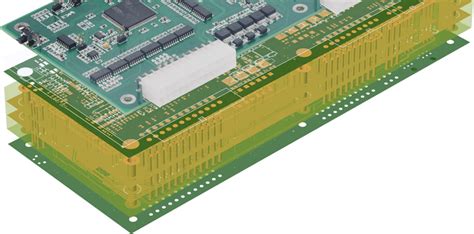
SA’s First PCB Maker: Quality and Heritage Combined
When exploring PCB manufacturing in South Africa, you’ll find that few PCB manufacturing companies blend tradition and innovation as seamlessly as Bosco PCB. Established in 1956, they’ve maintained a family-run ethos while evolving into a benchmark for quality. Their IPC accreditation underscores a commitment to precision—a principle rooted in Saint Don Bosco’s teachings, where craftsmanship meets modern engineering.
Balancing PCB manufacturing cost with excellence isn’t easy, but Bosco’s heritage-driven approach ensures no shortcuts. By integrating time-tested techniques with advanced processes, they’ve kept production efficient without compromising reliability. This balance positions them uniquely in the PCB manufacturing business, where competitors often prioritize scale over sustainability.
What sets Bosco apart is their generational continuity. Each innovation—from early manual etching to today’s automated systems—builds on decades of institutional knowledge. For clients, this means partnering with a manufacturer whose legacy guarantees both technical rigor and adaptability. Whether you’re sourcing prototypes or high-volume orders, their story isn’t just about circuits—it’s about preserving a lineage of excellence in every board they produce.
Bosco’s Role in African Electronics Advancements
When exploring PCB manufacturing across Africa, you’ll find few players as influential as Bosco PCB. Their six-decade journey has transformed them from a local workshop into a cornerstone of regional electronics development. By partnering with tech startups and established firms, they’ve streamlined PCB manufacturing costs through economies of scale, making advanced circuit boards accessible even in underserved markets. This approach not only strengthens local industries but also positions South Africa as a hub for PCB manufacturing companies seeking reliable, high-quality partners.
Bosco’s commitment to innovation extends beyond borders. Their IPC-accredited processes ensure precision across prototypes and mass production, enabling African engineers to compete globally. For businesses navigating the complexities of the PCB manufacturing business, their hybrid model—blending automation with skilled craftsmanship—offers a blueprint for balancing efficiency and customization. Collaborative R&D initiatives with universities and tech hubs further amplify their impact, fostering talent pools equipped to tackle Africa’s unique infrastructural challenges.
By prioritizing affordability without compromising quality, Bosco bridges gaps in sectors like renewable energy and telecommunications. Their legacy isn’t just about circuits—it’s about empowering a continent to shape its electronic future.
From Manual Etching to Cutting-Edge PCB Production
When exploring the evolution of PCB manufacturing, it’s striking to see how early techniques like manual etching—a labor-intensive process of chemically carving circuits—laid the groundwork for today’s automated precision. In the 1950s, PCB manufacturing companies relied on meticulous handwork, where even minor errors could derail entire projects. Fast-forward to modern practices, and you’ll find advanced laser drilling, multilayer stacking, and surface-mount technology dominating production lines. These innovations haven’t just accelerated output; they’ve also refined quality control and slashed PCB manufacturing cost through reduced material waste and energy efficiency.
For businesses navigating the PCB manufacturing business, adopting cutting-edge methods isn’t optional—it’s essential to meet demands for miniaturized, high-performance electronics. Automated optical inspection (AOI) systems now detect flaws invisible to the human eye, while flexible PCBs enable sleeker designs for wearables and IoT devices. Yet, balancing technological upgrades with cost-effectiveness remains a challenge. By integrating lean manufacturing principles and sustainable practices, forward-thinking firms ensure competitiveness without compromising on precision or reliability. This shift from artisanal craftsmanship to tech-driven production underscores how adaptability defines success in an industry where yesterday’s breakthroughs become today’s standards.
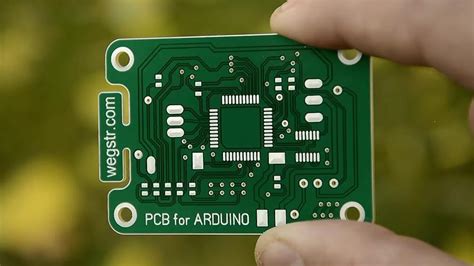
Bosco PCB: Sustaining Innovation Through Generations
When examining how PCB manufacturing evolves, you’ll find that multi-generational expertise often separates industry leaders from competitors. Bosco PCB’s journey—spanning nearly seven decades—demonstrates this principle in action. As one of South Africa’s original PCB manufacturing companies, their ability to adapt while retaining core values has kept them at the forefront. By balancing PCB manufacturing cost efficiencies with cutting-edge techniques, they’ve maintained profitability without compromising the precision that defines their work.
Family stewardship plays a pivotal role here. Each generation inherits not just technical knowledge but also Saint Don Bosco’s ethos of craftsmanship, ensuring IPC-accredited standards remain non-negotiable. This continuity allows them to innovate sustainably—whether automating processes or integrating eco-friendly materials—while competitors struggle with fragmented transitions.
For businesses navigating the complexities of the PCB manufacturing business, Bosco’s model offers lessons in resilience. Their investment in R&D, paired with cross-generational mentorship, creates a feedback loop where tradition fuels progress. You see this in their shift from manual etching to laser-guided production, a leap that reduced waste by 40% without sacrificing quality. Such innovations don’t just sustain their legacy—they redefine what’s possible for electronics across Africa.
Conclusion
When evaluating PCB manufacturing partners in South Africa, you’ll find that companies balancing heritage with innovation often deliver unmatched value. For over six decades, family-run enterprises like Bosco PCB have demonstrated how PCB manufacturing companies can thrive by prioritizing precision and adaptability. Their IPC-accredited processes ensure reliability, while a focus on optimizing PCB manufacturing cost allows them to compete globally without compromising quality.
What sets such businesses apart is their ability to merge tradition with cutting-edge technology. By maintaining Saint Don Bosco’s ethos of meticulous craftsmanship, they’ve positioned themselves as leaders in Africa’s electronics sector. Whether you’re scaling a startup or managing an established PCB manufacturing business, partnering with innovators who prioritize both legacy and forward-thinking solutions ensures long-term success. As the industry evolves, their generational expertise becomes a cornerstone for advancing Africa’s technological footprint—proving that sustainable growth in electronics starts with honoring the past while engineering the future.
Frequently Asked Questions
How do PCB manufacturing companies ensure product reliability?
Reputable firms adhere to industry standards like IPC certification, which guarantees rigorous testing for durability and performance. This minimizes defects and ensures boards meet technical specifications.
What factors influence PCB manufacturing cost for small businesses?
Costs depend on material selection, layer complexity, and order volume. Opting for standardized designs and bulk orders often reduces expenses while maintaining quality.
Why choose a family-run PCB manufacturing business over larger corporations?
Family-owned operations often prioritize long-term relationships and craftsmanship, blending traditional expertise with modern technology to deliver tailored solutions.
How has innovation transformed PCB manufacturing in recent years?
Advancements like automated etching and high-density interconnect (HDI) technology have streamlined production, enabling faster turnaround times and more compact, efficient designs.
Explore Custom PCB Solutions Today
For tailored circuit board solutions that balance precision and affordability, please click here to connect with experts who understand your project’s unique demands.