Carbon Fiber Mold Making: Techniques, Materials, and Best Practices
Introduction
Carbon fiber is a high-performance material widely used in aerospace, automotive, marine, and sporting industries due to its exceptional strength-to-weight ratio, stiffness, and durability. However, producing high-quality carbon fiber parts requires precise mold making. The mold’s quality directly impacts the final product’s surface finish, dimensional accuracy, and structural integrity.
This article explores the key aspects of carbon fiber mold making, including materials, manufacturing techniques, and best practices to achieve optimal results.
1. Importance of Mold Making in Carbon Fiber Manufacturing
Molds serve as the foundation for carbon fiber parts, dictating their shape, surface finish, and structural consistency. A well-made mold ensures:
- Dimensional accuracy – Critical for parts requiring tight tolerances (e.g., aerospace components).
- Surface finish – High-quality molds produce smooth, defect-free surfaces.
- Repeatability – Durable molds allow for multiple production cycles without degradation.
- Ease of demolding – Properly designed molds reduce part damage during removal.
Poor mold construction can lead to defects such as warping, voids, or fiber misalignment, compromising part performance.
2. Materials for Carbon Fiber Molds
Choosing the right mold material depends on factors like production volume, part complexity, and budget. Common materials include:
A. Composite Molds (Fiberglass or Carbon Fiber)
- Pros: Lightweight, cost-effective for low to medium production, and can be fabricated quickly.
- Cons: Less durable than metal molds; may degrade over multiple cycles.
- Best for: Prototyping, custom one-off parts, and short production runs.
B. Aluminum Molds
- Pros: Excellent thermal conductivity (ideal for heat-cured composites), durable, and machinable to high precision.
- Cons: Expensive and heavy compared to composite molds.
- Best for: Medium to high production volumes (e.g., automotive parts).
C. Steel Molds
- Pros: Extremely durable, resistant to wear, and suitable for high-pressure molding processes.
- Cons: Heavy, costly, and requires CNC machining.
- Best for: High-volume production (e.g., aerospace components).
D. 3D-Printed Molds (Polymer or Composite-Based)
- Pros: Rapid prototyping, complex geometries, and low initial cost.
- Cons: Limited temperature resistance and durability.
- Best for: Prototyping and low-temperature curing processes.
3. Carbon Fiber Mold Manufacturing Techniques
Several methods are used to fabricate molds, each with advantages depending on the application.
A. Traditional Hand Lay-Up
- A master model (often CNC-machined or 3D-printed) is used to create a negative mold.
- Layers of fiberglass or carbon fiber are laminated onto the master with epoxy resin.
- Once cured, the mold is separated from the master and polished.
- Best for: Low-cost, custom molds with moderate precision.
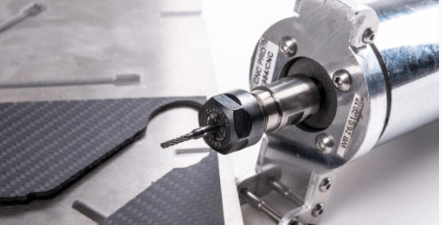
B. CNC Machining
- Aluminum or steel blocks are precision-machined into the desired mold shape.
- Provides high accuracy and excellent surface finish.
- Best for: High-performance applications requiring tight tolerances.
C. 3D Printing (Additive Manufacturing)
- Rapid prototyping of molds using high-temperature resins or composite materials.
- Allows for complex geometries without expensive tooling.
- Best for: Prototyping and small-batch production.
D. Injection Molding (For High-Volume Production)
- Metal molds are used in compression or resin transfer molding (RTM).
- Suitable for mass production of carbon fiber parts.
- Best for: Automotive and industrial applications.
4. Key Considerations in Carbon Fiber Mold Design
Designing an effective mold requires attention to several critical factors:
A. Draft Angles
- A slight taper (1-3°) facilitates easy demolding and prevents part damage.
B. Surface Finish
- High-gloss finishes (achieved via polishing or coatings like PVA) ensure smooth part surfaces.
C. Venting and Air Escape
- Proper venting prevents air traps, which can cause voids or delamination.
D. Thermal Expansion
- Molds must account for material expansion during curing to avoid distortion.
E. Parting Lines
- Strategic placement minimizes flash and simplifies demolding.
5. Mold Release Systems
To prevent carbon fiber parts from sticking to molds, release agents are essential:
- PVA (Polyvinyl Alcohol): A liquid film that creates a barrier between mold and part.
- Wax-Based Releases: Applied in layers for high-temperature curing.
- Semi-Permanent Releases: Silicone or polymer coatings that last multiple cycles.
Proper application ensures clean demolding and extends mold life.
6. Post-Processing and Maintenance
- Polishing: Regular polishing maintains surface quality.
- Repairs: Small cracks or wear can be repaired with epoxy fillers.
- Storage: Molds should be stored in a controlled environment to prevent warping.
7. Advanced Techniques: Composite Tooling with Heating Elements
For high-performance applications, molds can incorporate:
- Heated Tooling: Electric or fluid-based heating for uniform curing.
- Vacuum-Assisted Molding: Improves fiber compaction and reduces voids.
8. Common Challenges & Solutions
| Challenge | Solution |
|---|---|
| Sticking parts | Optimize release agents |
| Warping | Use stable mold materials (e.g., invar steel) |
| Surface defects | Polish molds and apply PVA sealant |
| Short mold lifespan | Use durable materials like nickel-plated molds |
9. Future Trends in Carbon Fiber Mold Making
- Automation: Robotic mold finishing and lay-up processes.
- AI-Driven Design: Optimized mold geometries using generative design.
- Sustainable Materials: Bio-based resins and recyclable mold materials.
Conclusion
Carbon fiber mold making is a critical step in producing high-performance composite parts. By selecting the right materials, manufacturing techniques, and design considerations, manufacturers can achieve precision, durability, and cost efficiency. As technology advances, innovations in mold fabrication will further enhance the quality and scalability of carbon fiber components.
Whether for aerospace, automotive, or sporting goods, mastering mold making ensures the production of superior carbon fiber products that meet the highest industry standards.