
CE Marking for PCB Products: European Market Compliance Guide
If you manufacture PCB products for the European market, CE marking compliance determines whether your electronics can legally enter the EU. According to EU regulations, products without proper CE certification face customs seizures, fines ranging from €10,000 to €100,000, and mandatory recalls.
This compliance guide covers CE marking requirements for PCB manufacturers, including LVD, EMC, and RoHS directive compliance, testing procedures, technical documentation, and declaration of conformity requirements for electronic products.
What is CE Marking for PCB Products?
CE marking indicates that a product complies with European Union safety, health, and environmental protection requirements. When you affix the CE mark to your PCB product, you declare on your sole responsibility that the product conforms to all applicable EU directive requirements.
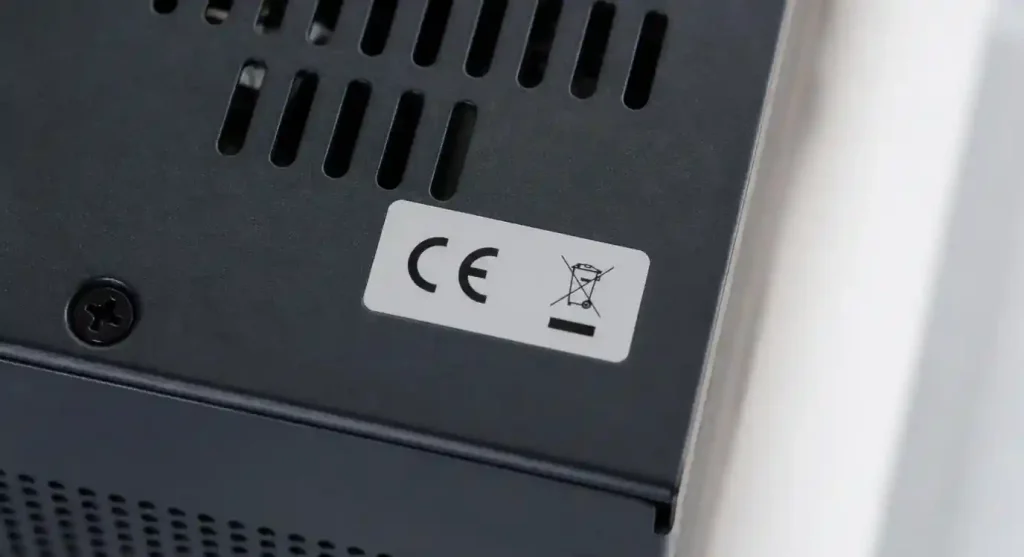
CE marking applies to complete electronic products containing PCBs, not bare circuit boards unless sold as finished goods. The manufacturer bears full responsibility for compliance and applying the CE mark, which allows free circulation across the European Economic Area (EEA).
Key EU Directives for PCB Products
Low Voltage Directive (LVD)
The Low Voltage Directive 2014/35/EU covers electrical equipment operating between 50-1000V AC or 75-1500V DC. LVD focuses on product safety during use, including protection against electric shock, energy hazards, and fire risks.
You should specify LVD compliance when your PCB products contain power supplies, motor drives, or industrial controls. Testing includes insulation resistance, dielectric strength, and protective grounding verification per EN 60950 or EN 62368 standards.
EMC Directive (Electromagnetic Compatibility)
Directive 2014/30/EU harmonizes electromagnetic compatibility requirements across EU member states. EMC compliance ensures your PCB product does not generate excessive electromagnetic interference and can tolerate interference from other equipment.
Testing per EMC directive includes emission testing and immunity testing (electrostatic discharge, radiated immunity, electrical fast transients). For high-speed digital PCBs above 50 MHz, implement proper impedance control and EMI filtering.
RoHS Directive (Restriction of Hazardous Substances)
RoHS Directive 2011/65/EU restricts 10 hazardous substances in electrical and electronic equipment: lead, mercury, cadmium, hexavalent chromium, polybrominated biphenyls (PBB), polybrominated diphenyl ethers (PBDE), and four phthalates.
Maximum concentration values are 0.1% (1000 ppm) for most substances and 0.01% (100 ppm) for cadmium. Ensure RoHS compliance by specifying lead-free PCB assembly, RoHS-compliant components, and material composition declarations. Learn more about RoHS compliance requirements.
RED Directive (Radio Equipment)
If your PCB product contains wireless modules (WiFi, Bluetooth, cellular), Radio Equipment Directive 2014/53/EU applies. RED compliance requires radio frequency testing, spectrum efficiency verification, and RF exposure assessment.
CE Marking Compliance Requirements Comparison
| Directive | Voltage Range | Key Requirements | Testing Standards | Typical Cost |
|---|---|---|---|---|
| LVD | 50-1000V AC, 75-1500V DC | Electrical safety, insulation, protective grounding | EN 60950, EN 62368, EN 61010 | €2,000-€5,000 |
| EMC | All electronic products | Emission limits, immunity thresholds | EN 55032, EN 55035, EN 61000 | €3,000-€8,000 |
| RoHS | All EEE | Material restrictions (10 substances) | IEC 62321, XRF screening | €500-€2,000 |
| RED | Wireless products | RF performance, spectrum efficiency | EN 300 328, EN 301 489 | €5,000-€15,000 |
Technical Documentation Requirements
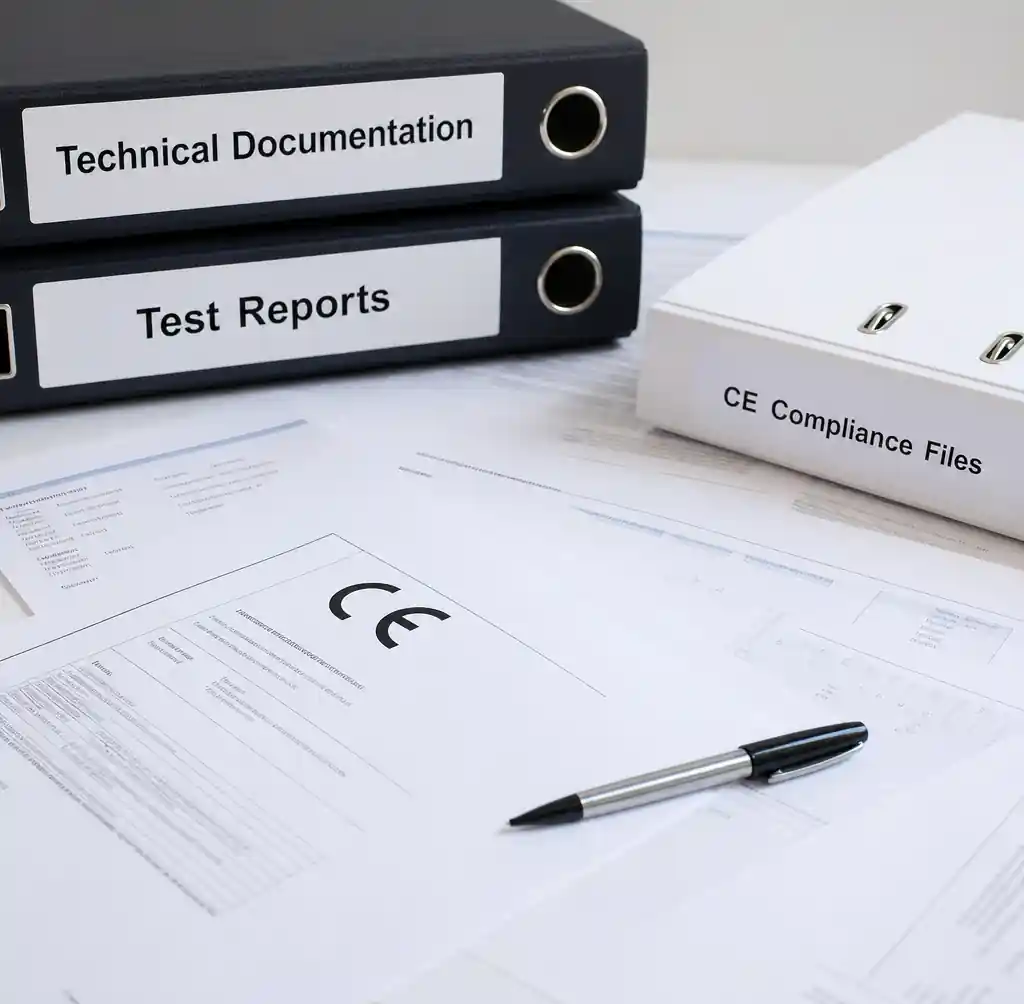
Technical documentation is mandatory for products requiring CE marking. This file enables assessment of your PCB product’s conformity and must include risk analysis.
Essential Technical File Contents
Your technical file must contain product specifications, circuit diagrams, bill of materials with datasheets, risk assessment, test reports, and quality control procedures. For PCB assembly products, include inspection criteria per IPC-A-610 standards and traceability records.
Retain technical documentation for 10 years after the last product enters the EU market. Market surveillance authorities can request this documentation, and incomplete files result in penalties.
Risk Assessment Documentation
Risk assessment identifies potential hazards and demonstrates mitigation measures. For electrical products, assess electric shock hazards, fire risks, and material exposures. Document each hazard, its severity, risk mitigation implemented, and residual risk after mitigation.
Testing and Certification Process
CE marking testing verifies your PCB product meets all applicable directive requirements. The compliance process takes 2-6 weeks depending on product complexity.
Step 1: Identify Applicable Directives
Determine which EU directives apply based on voltage levels, wireless functionality, and application. Most electronics require EMC and RoHS compliance, while products above 50V AC or 75V DC need LVD compliance.
For medical device PCBs, additional Medical Device Regulation requirements apply. Automotive PCBs require sector-specific standards beyond basic CE marking.
Step 2: Select Test Laboratory
Choose an ISO/IEC 17025 accredited laboratory with expertise in your product category. While self-certification is allowed for most electronics, accredited labs provide credibility and technical expertise.
For high-risk products, a Notified Body (EU-approved certification organization) must verify compliance before CE marking.
Step 3: Conduct Compliance Testing
EMC testing measures conducted emissions (150 kHz to 30 MHz), radiated emissions (30 MHz to 6 GHz), and immunity to disturbances. Electrical safety testing verifies insulation resistance and dielectric strength. RoHS compliance requires XRF screening or IEC 62321 laboratory analysis.
Step 4: Prepare Declaration of Conformity
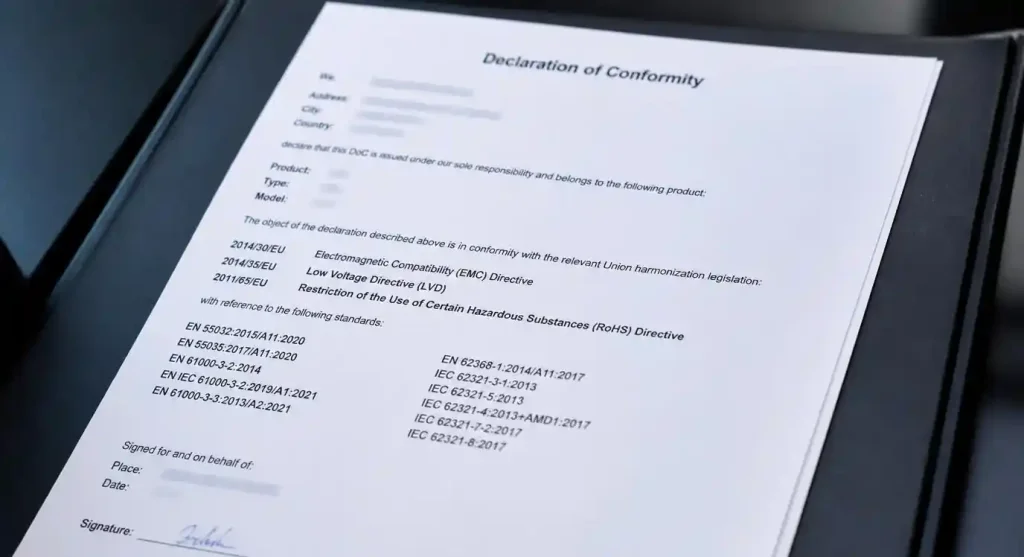
The Declaration of Conformity (DoC) states that your PCB product meets all relevant EU requirements. The DoC must include company name and address, product identification, applicable EU directives, harmonized standards used, and your signature with date.
When CE Marking is Required for PCBs
Not all PCB products require CE marking—only those subject to specific EU directives must bear it. Understanding when CE applies to your products prevents compliance gaps and market access issues.
| Product Type | CE Required? | Applicable Directives | Notes |
|---|---|---|---|
| Bare PCB | No | None | Component/raw material |
| PCB Assembly (no power) | No | None | Passive component board |
| PCBA with power circuit | Yes | LVD, EMC, RoHS | Complete electronic product |
| Wireless PCB module | Yes | RED, EMC, RoHS | Radio equipment |
| Industrial control PCB | Yes | LVD, EMC, RoHS, Machinery | Control system component |
| Medical equipment PCB | Yes | MDR, LVD, EMC, RoHS | Medical device component |
The distinction centers on whether the PCB constitutes a complete product or remains a component. If your customer integrates your PCBA into their product, they typically bear CE marking responsibility for the final product, though you should provide technical support documentation.
PCB Design Considerations for CE Compliance
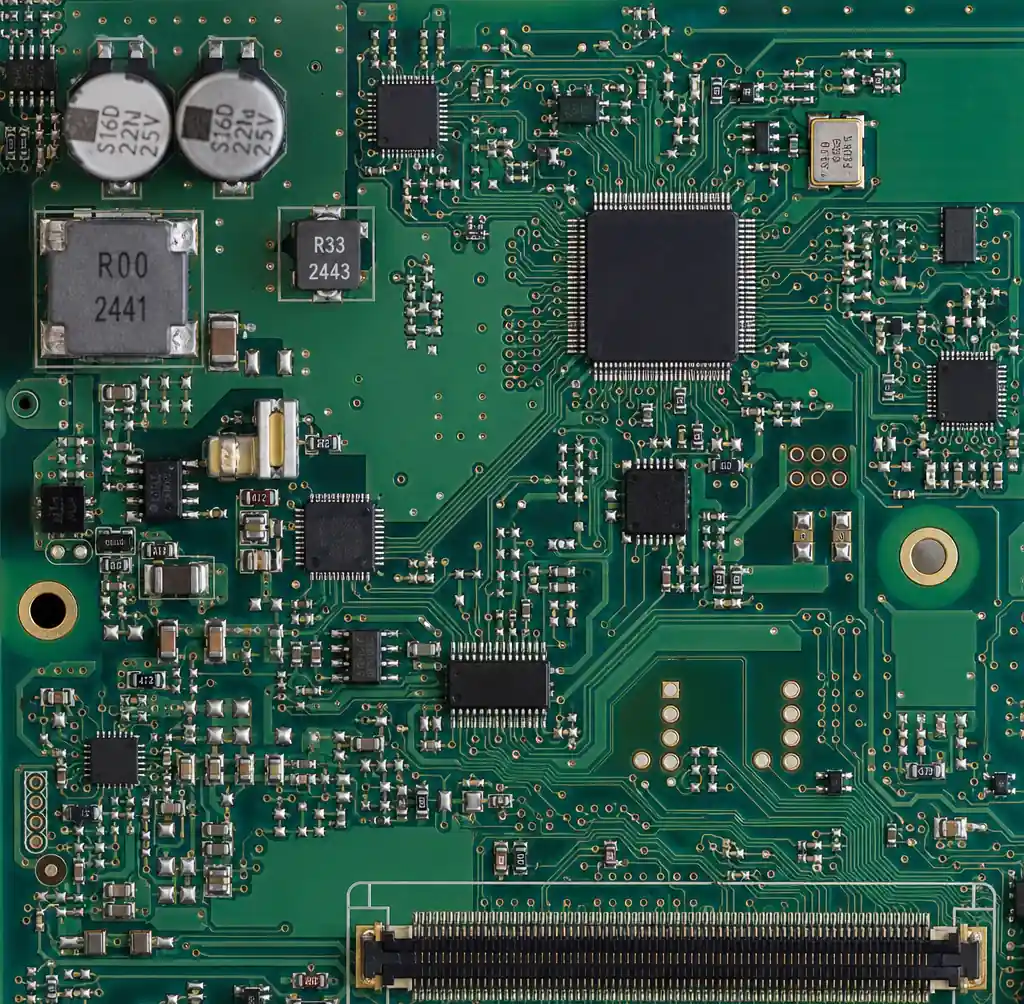
Design choices directly impact CE compliance testing results. Implementing compliance-friendly design practices during PCB layout prevents costly redesigns.
EMC Design Guidelines
Proper ground plane implementation reduces electromagnetic emissions by 15-25 dB. Specify solid ground planes on layer 2 for multilayer PCBs, minimize ground plane splits, and use ground stitching vias every 5-10mm along board edges.
Controlled impedance design per IPC-2141 maintains signal integrity and reduces emissions. For frequencies above 50 MHz, specify controlled impedance PCB with 50Ω single-ended or 100Ω differential traces.
Implement filtering at all I/O connections using common-mode chokes, ferrite beads, and bypass capacitors within 5mm of connectors.
Safety Design Requirements
For LVD compliance, maintain minimum creepage and clearance distances per IEC 60664-1 based on working voltage. At 250V AC, minimum clearance is 3mm for basic insulation and 6mm for reinforced insulation.
Ensure proper trace width for current-carrying capacity using IPC-2221 calculations. For 2A current on 1oz copper, minimum trace width is 0.6mm (24mil) for external layers and 1.0mm (40mil) for internal layers.
Working with PCB Assembly Partners
Your assembly partner’s quality systems affect your CE marking process. Selecting ISO 9001 certified providers ensures consistent quality and proper documentation.

Manufacturing Documentation
Request complete documentation including assembly drawings per IPC-7711/7721, bill of materials with RoHS declarations, first article inspection reports, and quality control records supporting your technical file requirements.
For quick turn PCB assembly, ensure accelerated timelines do not compromise compliance testing or documentation completeness.
Supplier Compliance Verification
Verify that component suppliers provide RoHS declarations, conflict minerals reports per EU Regulation 2017/821, and REACH substance declarations. Maintain supplier qualification records demonstrating supply chain compliance.
For PCB assembly services in China, confirm manufacturers maintain proper certifications and provide EU-compliant documentation. Andwin Circuits holds ISO 9001 and IATF 16949 certifications with complete traceability systems.
CE Marking Application and Placement
Once you complete testing and prepare documentation, you can affix the CE mark to your PCB product. Proper CE mark application follows specific size and placement requirements.
The CE mark must be at least 5mm high and maintain proper proportions. Apply the mark to the product itself or, when not possible, to packaging and accompanying documentation.
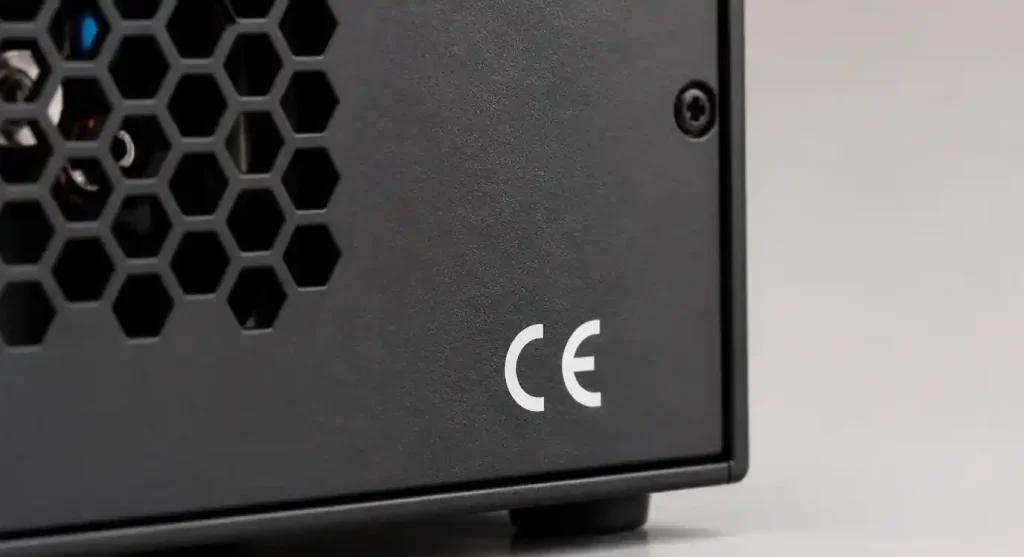
If a Notified Body was involved, place their four-digit identification number after the CE mark. The mark must be affixed before the product enters the EU market and remains visible throughout the product’s lifetime.
Common CE Compliance Mistakes
Avoiding common mistakes accelerates your certification process and prevents costly corrections.
Incomplete technical documentation represents the most frequent compliance gap. Start technical file creation during design phase, not after production. Testing the wrong product configuration leads to invalid results—re-test after design modifications.
Ignoring supply chain compliance creates hidden risks. A single non-RoHS component invalidates your entire product compliance. Implement component screening and maintain approved vendor lists.
Insufficient electromagnetic compatibility margins cause field failures. Design for 6 dB margin beyond EMC limits to account for production variations and aging effects.
Maintaining CE Compliance
CE marking requires ongoing obligation throughout your product’s lifecycle. Implement systems for monitoring regulatory changes.

Change Control Procedures
Implement formal change control for product modifications affecting compliance. Engineering change notices must include compliance impact assessment determining whether re-testing is required. Major changes like PCB redesign or component substitutions require re-evaluation.
Regulatory Monitoring
EU directives evolve regularly. The RoHS directive expanded from 6 to 10 restricted substances between 2015 and 2019. Subscribe to regulatory monitoring services to track relevant changes and plan for re-testing during standard transitions.
FAQ
Do bare PCBs need CE marking?
No, bare printed circuit boards without components do not require CE marking as they are considered components rather than complete products. CE marking applies when the PCB becomes part of a finished electronic product under specific EU directives.
How long does CE certification take for PCB products?
The CE compliance process typically takes 2-6 weeks depending on product complexity and applicable directives. Complex products requiring RED certification for wireless functionality may take 8-12 weeks.
Can I self-certify CE marking for my PCB products?
Yes, for most electronics you can perform conformity assessment yourself without involving a Notified Body. You remain responsible for testing, preparing technical documentation, and issuing the Declaration of Conformity. Notified Body involvement is mandatory only for specific high-risk categories.
What happens if my PCB product fails CE testing?
If your product fails testing, identify failure modes from test reports, implement design corrections (EMC filtering, shielding, layout changes), and re-test affected parameters. Document failures, corrective actions, and re-test results in your technical file.
How much does CE certification cost for PCB assemblies?
CE compliance costs range from €5,000 to €20,000 depending on applicable directives and product complexity. Basic EMC and RoHS testing costs €3,500-€10,000, while products requiring LVD, RED, and Notified Body assessment can reach €15,000-€30,000.
Do I need CE marking for PCBs sold outside the EU?
No, CE marking is only required for products placed on the European market. However, many global markets recognize CE compliance, and obtaining CE certification can facilitate entry into other regions.
Conclusion
CE marking for PCB products requires systematic compliance with LVD, EMC, RoHS, and potentially RED directives. The process involves identifying applicable requirements, conducting compliance testing, preparing technical documentation, and issuing a Declaration of Conformity.
Successful CE compliance starts during PCB design with proper EMC layout, safety spacing, and RoHS-compliant material selection. Working with certified manufacturing partners ensures production quality and proper documentation supporting your technical file.
Andwin Circuits offers complete PCB manufacturing and assembly capabilities supporting CE compliance requirements, including ISO 9001 and IATF 16949 certification, RoHS-compliant processes, and technical documentation assistance. Our engineering team supports your CE compliance journey from design review through production. Contact us for PCB solutions meeting European market requirements.