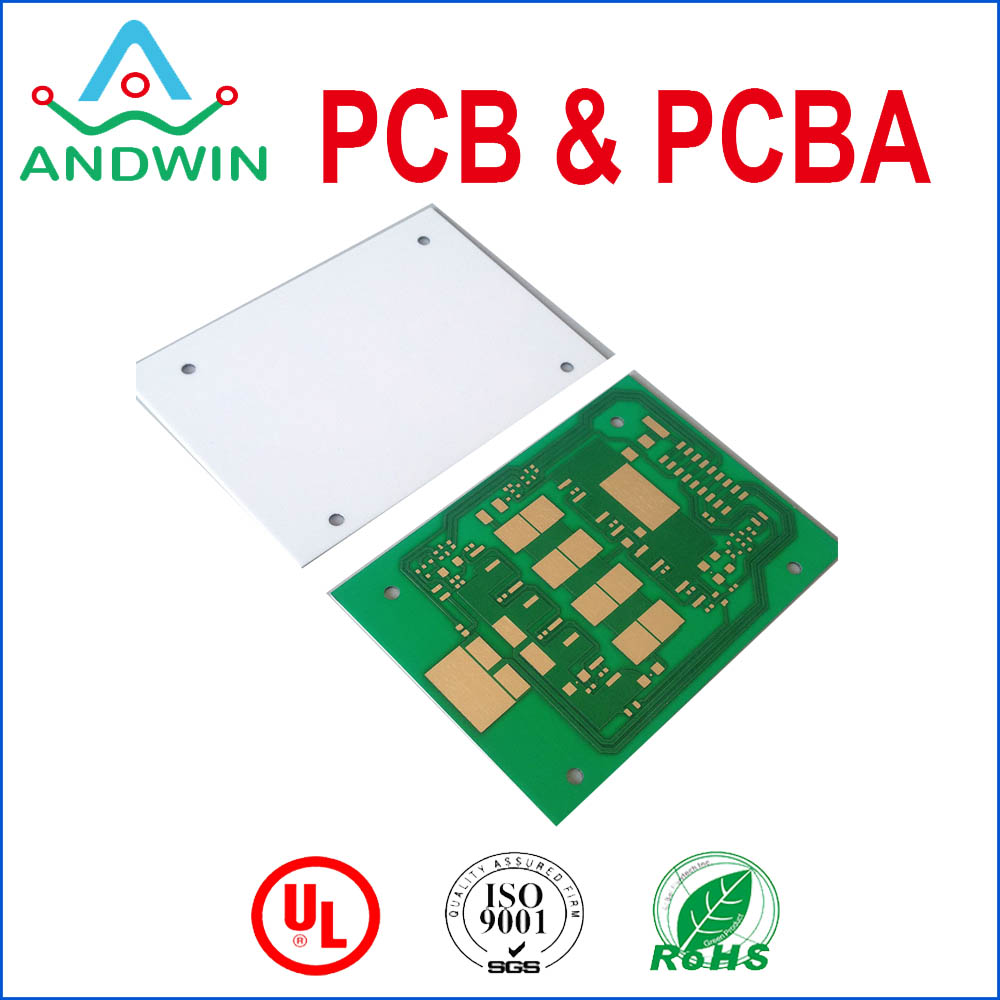
Ceramic PCB VS FR4
In today’s world of technology, printed circuit boards (PCBs) are an essential component in the manufacturing of electronic devices.
PCBs are the backbone of any electronic device, and they come in different types and materials.
The two most common types of PCBs are ceramic PCBs and FR4 PCBs. In this letter, we will discuss the differences between ceramic PCBs and FR4 PCBs.
Firstly, let us define what ceramic PCBs and FR4 PCBs are.
Ceramic PCBs are made of a ceramic material, while FR4 PCBs are made of a fiberglass material.
Ceramic PCBs are known for their excellent thermal conductivity and high-temperature resistance, while FR4 PCBs are known for their high mechanical strength and electrical insulation properties.
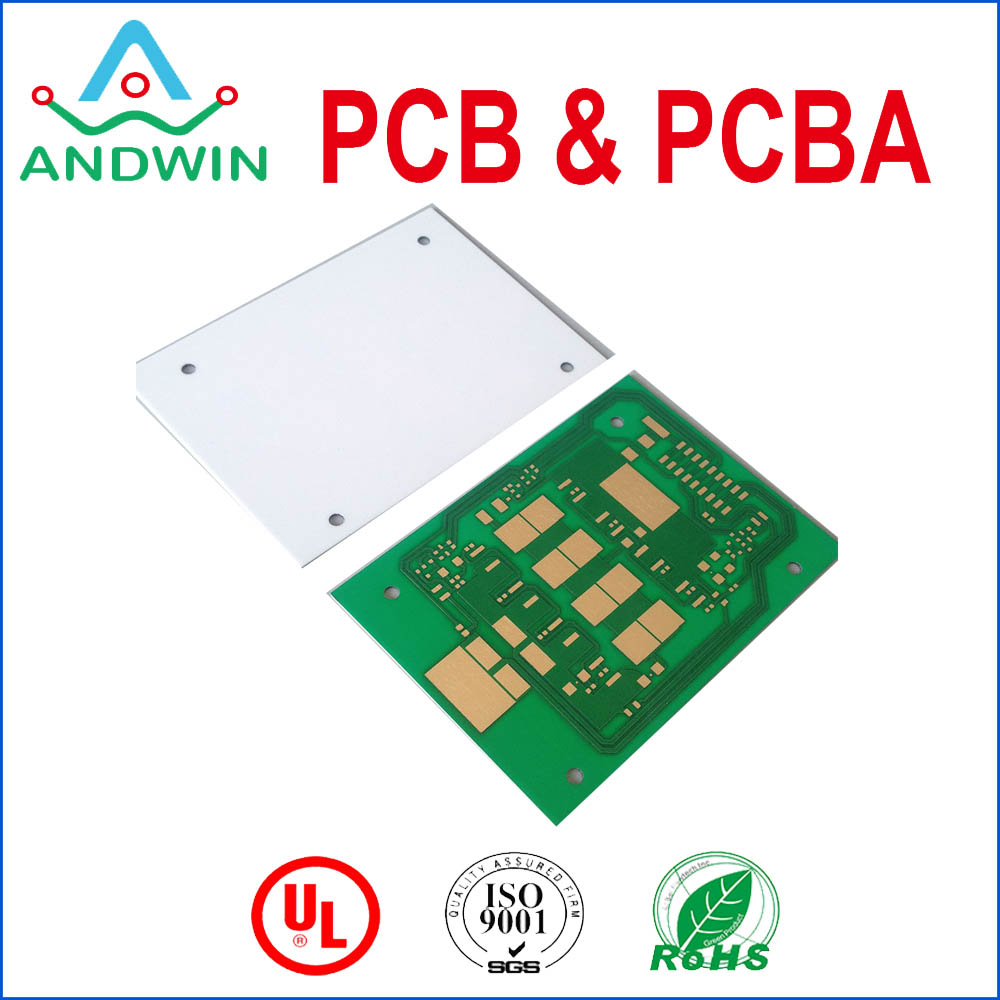
One of the main differences between ceramic PCBs and FR4 PCBs is their thermal conductivity.
Ceramic PCBs have a much higher thermal conductivity than FR4 PCBs.
This means that ceramic PCBs can dissipate heat much more efficiently than FR4 PCBs. This makes ceramic PCBs ideal for applications that generate a lot of heat, such as powerelectronics, LED lighting, and high-frequency communication devices.
Another difference between ceramic PCBs and FR4 PCBs is their mechanical strength.
FR4 PCBs are much stronger than ceramic PCBs.
This means that FR4 PCBs can withstand more physical stress and are less likely to crack or break.
This makes FR4 PCBs ideal for applications that require a high degree of mechanical strength, such as aerospace and defense applications.

In terms of electrical properties, both ceramic PCBs and FR4 PCBs are excellent insulators.
However, ceramic PCBs have a higher dielectric constant than FR4 PCBs.
This means that ceramic PCBs can store more electrical energy than FR4 PCBs.
This makes ceramic PCBs ideal for applications that require high-frequency signal transmission, such as RF and microwave communication devices.
Another advantage of ceramic PCBs over FR4 PCBs is their high-temperature resistance.
Ceramic PCBs can withstand much higher temperatures than FR4 PCBs.
This makes ceramic PCBs ideal for applications that require high-temperature operation,
such as automotive electronics and industrial control systems.
In terms of cost, FR4 PCBs are generally less expensive than ceramic PCBs.
This is because FR4 PCBs are made of a less expensive material than ceramic PCBs.
However, the cost difference between the two types of PCBs is not significant,
and the choice between ceramic PCBs and FR4 PCBs ultimately depends on the specific application requirements.

In conclusion, ceramic PCBs and FR4 PCBs are two types of PCBs that have different properties and are suitable for different applications.
Ceramic PCBs are ideal for applications that require high thermal conductivity, high-temperature resistance, and high-frequency signal transmission.
FR4 PCBs are ideal for applications that require high mechanical strength and electrical insulation properties.
The choice between ceramic PCBs and FR4 PCBs ultimately depends on the specific application requirements and budget.
Thank you for taking the time to read this letter.
We hope that it has provided you with valuable information about the differences between ceramic PCBs and FR4 PCBs.