circuit board function
What is a functional block in a circuit board?
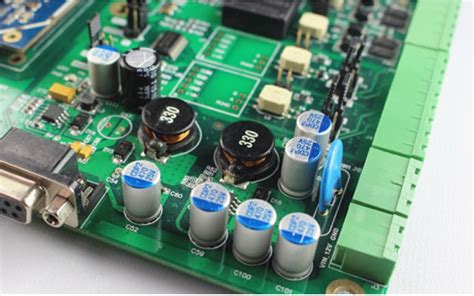
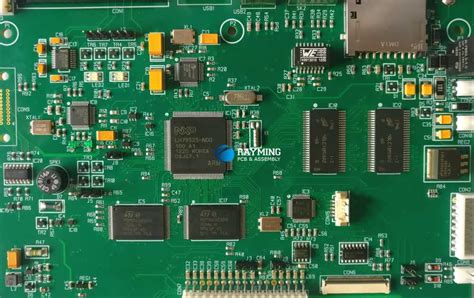
I believe many people know about circuit boards, so what are its functions? We should start by learning which functional blocks the circuit board is divided into.
When we know the functional block circuits of each part of the circuit board, and then learn the structure and working principle of each functional block circuit, we can achieve twice the result with half the effort in our study, and we can achieve the purpose of mastering various circuits of the circuit board.
After observing and studying the structure of various circuit boards, it was found that no matter what type of circuit board it is, its circuit composition is composed of seven major circuits, including power supply circuit, input interface circuit, microprocessor control circuit, output interface circuit, display circuit, protection circuit, and communication circuit.
The engineer of Guangzhou Keyu Circuit Board Maintenance Training believes that as long as we master the circuit composition structure and control principle of these seven major categories, we can analyze its control principle no matter what type of circuit board it is.
Power supply circuit: This part of the circuit is a circuit that provides energy to each unit circuit in the entire circuit board. In other words, the voltages of various levels required by each unit circuit in the circuit board are all provided by the power supply circuit part, so the power supply circuit is the most critical part of the circuit board.
This part of the circuit usually works under high voltage and high current conditions. It is a part of the circuit with a relatively high failure rate, and its failure rate accounts for about 40% of the entire circuit.
Input interface circuit: The function of this part of the circuit is to convert physical quantities such as sound, light, temperature, height, thickness, liquid volume, etc. in nature into electrical signals, and condition them into information that can be recognized by the microprocessor.
For example: When we monitor the temperature, if you use the language we usually communicate with people to tell the microprocessor that the temperature is high, please lower it, the microprocessor cannot understand what we say.
At this time, we can use thermistors or thermocouples to convert the temperature signal into electrical signals through the interface circuit, and then process the converted electrical signals to obtain electrical signals that can be recognized by the microprocessor.
In this way, after the microprocessor understands what we want it to handle, it can do it according to our intentions.
The same is true for other signals such as light intensity, pressure, wind force, liquid level, position, etc.
Microprocessor control circuit: The main function of this part of the circuit is to receive the relevant information sent by the input interface circuit, analyze and process the information, and make corresponding processing results, and further send the processing results to the output interface circuit.
We can regard this part of the circuit as the headquarters in the army or the general manager’s office in the enterprise. We know that the headquarters is a command agency that only issues orders but does not go to the front field to fight! The general manager’s office of the enterprise is also a unit that only issues orders.
Output interface circuit: The signal driving ability output from the microprocessor is relatively weak, and it cannot directly drive high-power tubes, relay coils, solenoid valves, speakers and other high-power devices.
At this time, the signal output by the microprocessor must be amplified by current or voltage or processed in other aspects through the output interface circuit before it can drive high-power tubes, relay coils, solenoid valves, speakers and other high-power devices to operate.
This part of the circuit can be regarded as a combat unit in the army, directly going to the battlefield to fight
Protection circuit: The main function of this part of the circuit is to monitor the operating status of the circuit in the circuit board. When the circuit in the circuit board has one of the conditions such as overvoltage, overcurrent, overheating, phase loss, short circuit, undervoltage, etc.,
the protection circuit immediately sends information about the abnormal conditions such as overvoltage, overcurrent, overheating, phase loss to the microprocessor. If the effect is serious, corresponding protection measures will be taken immediately.
For example: stop the circuit board from working, fuse blows, varistor breaks down, etc.
Communication circuit: This part of the circuit mainly plays the role of signal transmission, and is mainly responsible for communicating information between the circuit board or the host computer (touch screen or PLC) and the circuit board. The forms of information transmission are usually divided into: wireless transmission, wired transmission, and network transmission. At present, industrial control circuit boards do not use wireless transmission, but mainly use wired transmission and network transmission, which is mainly considered for safety factors.
Display circuit: The function of this part of the circuit is mainly to display the working conditions of the circuit board during operation, such as voltage, current, motor speed, temperature, etc. through a display screen, LCD screen or LED. The above is the functional analysis of the circuit board.
GET PCB MANUFACTURING AND ASSEMBLY QUOTE NOW!
What are the main functions of PCB?
Printed circuit boards (PCBs) play a vital role in modern electronic devices. Their functions and applications are wide-ranging, covering all aspects from circuit connection to signal transmission. First of all, one of the main functions of PCBs is to provide electrical connections.
By etching conductive paths on insulating substrates, PCBs are able to connect electronic components such as resistors, capacitors, and integrated circuits to form a complete circuit system.
This connection method not only improves the reliability of the circuit, but also simplifies the design and manufacturing process.
1. PCBs play a key role in signal transmission.
High-frequency signals are susceptible to interference and attenuation during transmission, and PCBs can effectively control signal paths and reduce interference and loss through precise design and layout. For example, multi-layer PCBs can form a shielding effect by arranging signal lines and ground lines between different layers, thereby improving signal integrity and stability. This is especially important for high-speed data transmission and high-frequency communication equipment.
2. PCBs also have the function of heat dissipation management.
Electronic components generate heat during operation, and excessive temperatures may cause component performance degradation or even damage. PCBs can effectively conduct heat away from components and maintain the normal operating temperature of the circuit by adding heat dissipation holes, heat sinks, and thermal conductive materials to the design. This is particularly critical for power-intensive devices such as computer motherboards and power modules.
3. PCB’s mechanical support function.
As a carrier of electronic components, PCB not only provides electrical connections, but also needs to have a certain mechanical strength and stability to withstand the weight of components and the impact of the external environment. By selecting suitable substrate materials and optimizing structural design, PCB can maintain its performance and reliability under various harsh conditions.
4. PCB promotes the improvement of automated production efficiency
The production of modern electronic products is highly dependent on automated equipment, and the standardized design and manufacturing process of PCB makes it very suitable for mass production. Through automated placement machines and welding equipment, components can be mounted on PCBs quickly and efficiently, greatly improving production efficiency and product consistency.
In summary, PCB not only provides the basis for electrical connection and signal transmission in electronic equipment, but also plays an important role in heat dissipation management, mechanical support and automated production. Its versatility and wide application make it an indispensable part of modern electronic technology. Through continuous technological innovation and optimized design, PCB will continue to promote electronic products to develop in the direction of higher performance, higher reliability and higher integration.
GET PCB AND ASSEMBLY SERVICE QUOTE NOW!
What are the PCB circuit function test methods?
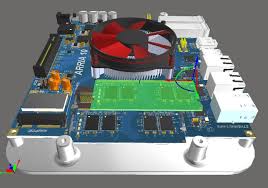
a. Dial phone test method
This method is mainly used to detect the audio signal transmission quality of PCB circuit boards. By making a call and listening to the clarity of the call sound, the audio performance of the circuit board can be judged. To ensure the accuracy of the test results, this test should be performed in a quiet environment as much as possible.
b. Sending email test method
This method is mainly used to detect the network connection function of the PCB circuit board. By sending and receiving emails, observe whether the network communication of the circuit board is normal. To ensure the effectiveness of the test, the stability of the network connection should be ensured.
c. Running program test method
This method is used to detect the performance of the PCB circuit board under the operation of a specific program. Run a specific program on the circuit board and observe the delay, freeze, crash and other phenomena during the execution of the program to evaluate the performance of the circuit board