Electronic pcb design
Best Practices For PCB Layout Design
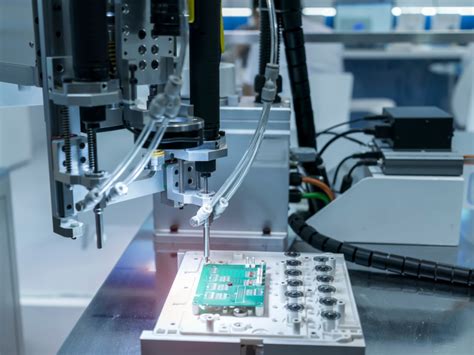
When embarking on the journey of electronic PCB design, adhering to best practices is crucial for ensuring both functionality and reliability. The process of designing a printed circuit board (PCB) involves a series of meticulous steps, each of which plays a pivotal role in the overall performance of the final product.
To begin with, it is essential to have a clear understanding of the circuit requirements and constraints.
This foundational knowledge serves as the bedrock upon which the entire design is built, guiding decisions related to component placement, routing, and layer configuration.
One of the primary considerations in PCB layout design is component placement.
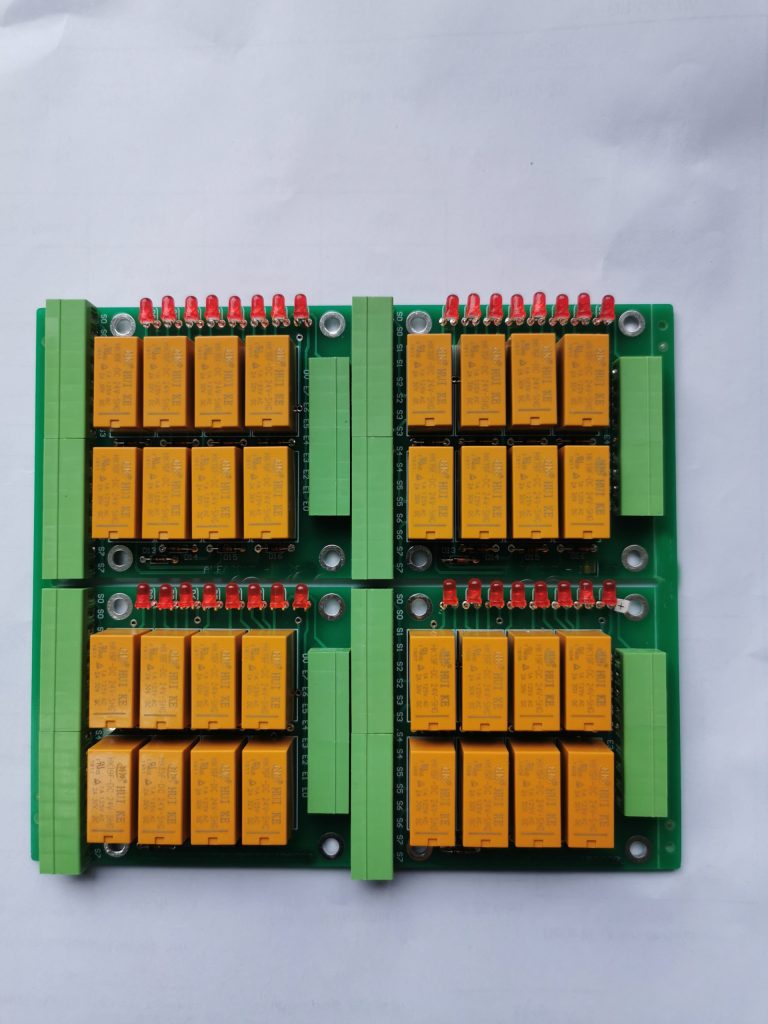
Proper placement not only affects the ease of routing but also impacts signal integrity and thermal management. Components should be arranged logically, with related parts placed in close proximity to minimize trace lengths and reduce potential interference. Additionally, attention must be paid to the orientation of components to facilitate efficient routing and to avoid unnecessary crossovers. By strategically placing components, designers can create a more organized and efficient layout, which in turn simplifies the routing process.
Transitioning from component placement to routing, it is imperative to follow certain guidelines to ensure optimal performance.
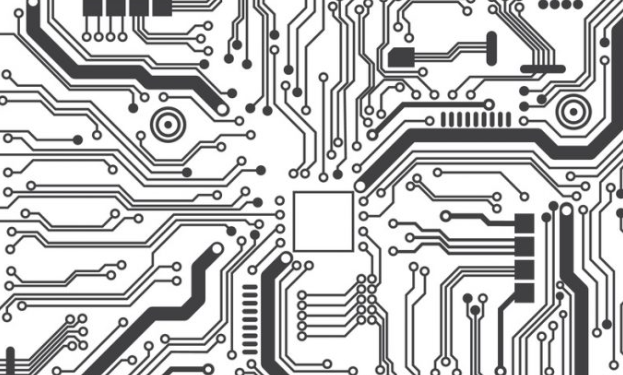
Signal traces should be kept as short and direct as possible to minimize resistance and inductance, which can degrade signal quality. Furthermore, maintaining consistent trace widths and spacing is vital for achieving uniform impedance, particularly in high-speed digital circuits. Designers should also be mindful of the return paths for signals, ensuring that ground planes are uninterrupted and provide a low-impedance path for return currents. This practice helps to reduce electromagnetic interference (EMI) and enhances signal integrity.
In addition to signal routing, power distribution is another critical aspect of PCB layout design.
A well-designed power distribution network (PDN) ensures that all components receive stable and adequate power. To achieve this, designers should use wide traces or planes for power and ground connections, minimizing voltage drops and reducing the risk of power-related issues. Decoupling capacitors should be strategically placed near power pins of integrated circuits to filter out noise and provide a stable power supply. By carefully planning the PDN, designers can prevent power-related problems and enhance the overall reliability of the PCB.
Thermal management is another key consideration in PCB design, particularly for high-power applications.
Excessive heat can lead to component failure and reduced lifespan, making it essential to implement effective thermal management strategies. This can be achieved through the use of thermal vias, heat sinks, and proper component spacing to facilitate heat dissipation. Additionally, designers should consider the thermal properties of the PCB materials and select those that offer better heat conduction. By addressing thermal management early in the design process, potential overheating issues can be mitigated, ensuring the longevity and reliability of the PCB.
Finally, thorough design rule checks (DRC) and electrical rule checks (ERC) are indispensable steps in the PCB design process.
These checks help to identify and rectify potential issues before the board goes into production, saving time and resources. DRC ensures that the layout adheres to the manufacturing constraints, while ERC verifies the electrical integrity of the design. By conducting these checks, designers can catch errors that might otherwise go unnoticed, thereby enhancing the overall quality of the PCB.
In conclusion, following best practices in PCB layout design is essential for creating functional, reliable, and efficient electronic circuits. From thoughtful component placement and meticulous routing to robust power distribution and effective thermal management, each step plays a crucial role in the success of the final product. By adhering to these guidelines and conducting thorough checks, designers can ensure that their PCB designs meet the highest standards of performance and reliability.
Advanced Techniques In High-Speed PCB Design
In the realm of electronic PCB design, the advent of high-speed circuits has necessitated the adoption of advanced techniques to ensure optimal performance and reliability. As electronic devices become increasingly sophisticated, the demand for high-speed data transmission and processing has surged, making it imperative for designers to master these advanced methodologies. One of the primary considerations in high-speed PCB design is signal integrity, which encompasses the preservation of signal quality as it traverses the PCB. To achieve this, designers must meticulously manage impedance, crosstalk, and electromagnetic interference (EMI).
Impedance control is crucial in high-speed PCB design, as mismatched impedance can lead to signal reflections, which degrade signal quality.
To mitigate this, designers employ controlled impedance traces, ensuring that the characteristic impedance of the trace matches the source and load impedance. This is typically achieved through careful selection of trace width, spacing, and the dielectric properties of the PCB material. Additionally, differential signaling is often used for high-speed data lines, as it offers superior noise immunity and reduced EMI compared to single-ended signaling.
Crosstalk, the unwanted coupling of signals between adjacent traces, is another critical factor in high-speed PCB design.
To minimize crosstalk, designers must maintain adequate spacing between high-speed traces and employ ground planes to provide a return path for signals. Furthermore, the use of guard traces, which are grounded traces placed between high-speed signals, can effectively reduce crosstalk by providing additional isolation. It is also essential to route high-speed signals on internal layers, sandwiched between ground planes, to further shield them from external noise sources.
Electromagnetic interference (EMI) poses a significant challenge in high-speed PCB design, as it can lead to signal degradation and regulatory compliance issues.
To combat EMI, designers must implement proper grounding and shielding techniques. A solid ground plane is indispensable, as it provides a low-impedance return path for signals and helps to contain EMI within the PCB. Additionally, the use of decoupling capacitors is vital to filter out high-frequency noise and stabilize the power supply. Placing these capacitors close to the power pins of integrated circuits ensures effective noise suppression.
Another advanced technique in high-speed PCB design is the use of via stitching, which involves placing multiple vias around high-speed traces to connect different ground planes.
This technique helps to reduce ground bounce and improve signal integrity by providing a continuous return path for high-frequency signals. Moreover, designers must pay close attention to the placement and routing of components, as improper layout can lead to signal degradation and increased EMI. Critical components should be placed as close as possible to their corresponding connectors, and high-speed traces should be kept short and direct to minimize signal loss.
Thermal management is also a key consideration in high-speed PCB design, as excessive heat can adversely affect the performance and reliability of electronic components.
To address this, designers employ techniques such as thermal vias, heat sinks, and thermal pads to dissipate heat effectively. Additionally, the use of high thermal conductivity materials and proper component spacing can help to manage heat distribution across the PCB.
In conclusion, advanced techniques in high-speed PCB design are essential to ensure the performance and reliability of modern electronic devices. By meticulously managing impedance, crosstalk, and EMI, and employing strategies such as via stitching and thermal management, designers can create PCBs that meet the stringent demands of high-speed applications. As technology continues to evolve, the mastery of these advanced techniques will remain a cornerstone of successful electronic PCB design.
Common Mistakes To Avoid In PCB Design
Designing a printed circuit board (PCB) is a critical step in the development of electronic devices, and even minor errors can lead to significant issues in functionality, reliability, and manufacturability. Therefore, understanding and avoiding common mistakes in PCB design is essential for engineers and designers. One of the most frequent errors is inadequate planning. Before diving into the design process, it is crucial to have a clear understanding of the project requirements, including the electrical specifications, mechanical constraints, and environmental conditions. Failing to plan adequately can result in a design that does not meet the necessary criteria, leading to costly revisions and delays.
Another common mistake is improper component placement.
Components should be placed in a manner that minimizes signal path lengths and reduces the potential for interference. Placing components too close together can lead to difficulties in soldering and increased risk of short circuits, while placing them too far apart can result in excessive trace lengths, which can degrade signal integrity. Additionally, it is important to consider the thermal management of the board. Components that generate significant heat should be placed in areas where heat dissipation can be effectively managed, and thermal vias should be used to transfer heat away from critical components.
Signal integrity issues are another area where designers often encounter problems.
High -speed signals are particularly susceptible to issues such as crosstalk, reflection, and electromagnetic interference (EMI). To mitigate these issues, designers should use proper grounding techniques, such as creating a solid ground plane and ensuring that signal return paths are as short as possible. Additionally, differential pairs should be routed together with controlled impedance to maintain signal integrity. Failing to address these issues can result in poor performance and unreliable operation of the final product.
Power distribution is another critical aspect of PCB design that is often overlooked.
Ensuring that all components receive a stable and adequate power supply is essential for the proper functioning of the board. Designers should use power planes to distribute power efficiently and minimize voltage drops. Decoupling capacitors should be placed close to the power pins of integrated circuits to filter out noise and provide a stable power supply. Neglecting proper power distribution can lead to issues such as voltage fluctuations and increased noise, which can affect the performance of the entire system.
Manufacturability is another important consideration in PCB design.
Designers should be aware of the capabilities and limitations of the manufacturing process and design the board accordingly. This includes adhering to design rules for trace widths, spacing, and hole sizes, as well as considering the assembly process. For example, components should be oriented in a way that facilitates automated assembly and minimizes the risk of errors. Failing to consider manufacturability can result in boards that are difficult or expensive to produce, and may require multiple iterations to achieve a manufacturable design.
In conclusion, avoiding common mistakes in PCB design requires careful planning, attention to detail, and a thorough understanding of the principles of electronics and manufacturing. By taking the time to plan the design, place components appropriately, address signal integrity and power distribution issues, and consider manufacturability, designers can create reliable and efficient PCBs that meet the requirements of their projects. This not only saves time and resources but also ensures the success of the final product.
Innovations In Flexible PCB Technology
In recent years, the field of electronic PCB design has witnessed remarkable advancements, particularly in the realm of flexible PCB technology. These innovations have not only expanded the possibilities for electronic device design but have also introduced new levels of efficiency and functionality. As we delve into the intricacies of these developments, it becomes evident that flexible PCBs are revolutionizing the electronics industry.
To begin with, flexible PCBs, or flex circuits, are designed to bend and conform to various shapes, unlike their rigid counterparts.
This inherent flexibility allows for more compact and versatile electronic devices. For instance, wearable technology, such as smartwatches and fitness trackers, benefits immensely from flexible PCBs. These devices require circuits that can withstand constant movement and bending, a feat that rigid PCBs simply cannot achieve. Consequently, the adoption of flexible PCBs in wearable tech has led to more durable and user-friendly products.
Moreover, the automotive industry has also embraced flexible PCB technology.
Modern vehicles are equipped with a plethora of electronic systems, from advanced driver-assistance systems (ADAS) to infotainment units. Flexible PCBs enable the integration of these systems into the limited space available within a vehicle’s dashboard and other components. This not only optimizes space but also reduces the overall weight of the vehicle, contributing to improved fuel efficiency. As a result, flexible PCBs are playing a crucial role in the development of smarter and more efficient automobiles.
Transitioning to the medical field, flexible PCBs have made significant strides in enhancing medical devices.
For example, they are used in the design of implantable medical devices, such as pacemakers and neurostimulators. The flexibility of these circuits ensures that they can conform to the contours of the human body, providing a more comfortable and effective solution for patients. Additionally, flexible PCBs are employed in diagnostic equipment, such as portable ultrasound machines, where their lightweight and compact nature is highly advantageous.
Furthermore, the consumer electronics sector has seen a surge in the use of flexible PCBs.
Smartphones, tablets, and laptops are becoming increasingly slim and lightweight, thanks in part to the integration of flexible circuits. These devices demand high performance and reliability, which flexible PCBs are well-equipped to deliver. The ability to fold or bend the circuit boards allows for innovative designs, such as foldable smartphones, which are gaining popularity in the market. This trend underscores the importance of flexible PCB technology in driving the evolution of consumer electronics.
In addition to these applications, advancements in materials and manufacturing processes have further propelled the capabilities of flexible PCBs.
The development of new substrates, such as polyimide and polyester, has enhanced the durability and thermal stability of these circuits. Moreover, innovations in additive manufacturing techniques, such as 3D printing, have streamlined the production of flexible PCBs, making them more cost-effective and accessible.
In conclusion, the innovations in flexible PCB technology are transforming various industries by enabling the creation of more versatile, efficient, and reliable electronic devices. From wearable technology and automotive systems to medical devices and consumer electronics, the impact of flexible PCBs is far-reaching. As research and development continue to push the boundaries of what is possible, we can expect even more groundbreaking applications and improvements in the near future. The future of electronic PCB design is undoubtedly flexible, and its potential is boundless.