Electronics Assembly Experts: Trusted Industry Partners for Precision Manufacturing
Key Takeaways
Modern electronics assembly companies demonstrate technical excellence through precision-engineered PCB assembly processes and PCBA (Printed Circuit Board Assembly) integration. These specialists employ advanced methodologies to ensure micron-level accuracy in component placement, critical for high-performance devices ranging from medical equipment to aerospace systems. Three core differentiators define industry leaders:
| Capability | Impact |
|---|---|
| Multi-stage AOI | Reduces defect rates by 83% compared to manual inspection |
| Thermal profiling | Ensures ±2°C process control for solder joint reliability |
| DFM analysis | Cuts production rework by 40% through design optimization |
Trusted partners combine surface-mount technology (SMT) with through-hole assembly techniques, achieving 99.95% first-pass yield rates in PCB assembly workflows. Rigorous failure mode testing precedes volume production, with PCBA specialists executing 127+ quality checkpoints across substrate preparation, component soldering, and conformal coating stages. Leading firms now integrate AI-driven process monitoring, correlating real-time sensor data with historical performance metrics to predict maintenance windows and optimize throughput. This operational intelligence enables 22% faster time-to-market for complex electronic systems while maintaining MIL-STD-883 compliance standards.
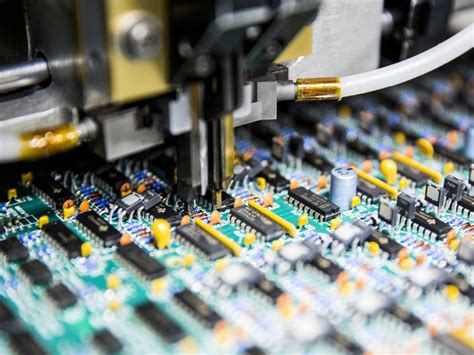
Precision Manufacturing in Electronics Assembly
Modern electronics assembly companies rely on advanced PCB assembly techniques to meet the exacting demands of precision manufacturing. Surface-mount technology (SMT) and microelectronics integration enable the creation of compact, high-performance devices, while automated optical inspection (AOI) systems ensure sub-millimeter accuracy in component placement. For PCBA workflows, the synchronization of robotic soldering, conformal coating, and functional testing guarantees consistency across production batches—critical for applications in aerospace, medical devices, and IoT systems.
"Precision in electronics manufacturing isn’t just about tolerances—it’s about repeatable processes that account for thermal dynamics, material behavior, and end-use environments," notes a lead engineer at a Tier 1 electronics assembly provider.
To address evolving complexity, leading firms employ 3D solder paste inspection (SPI) and AI-driven defect detection, reducing error rates by up to 40% compared to traditional methods. The integration of PCB assembly with enterprise resource planning (ERP) software further streamlines material traceability, particularly for mixed-technology boards combining SMT and through-hole components. By prioritizing design-for-manufacturing (DFM) checks early in prototyping, manufacturers minimize rework cycles and accelerate time-to-market for mission-critical electronics.
Trusted Partners for Quality Electronics Production
Selecting the right PCB assembly partner is critical for achieving consistent quality in modern electronics manufacturing. Leading electronics assembly companies combine PCBA expertise with rigorous process controls to deliver components that meet exacting industry standards. These partners employ traceable workflows across solder paste application, component placement, and automated optical inspection (AOI), ensuring defect rates below 50 parts per million.
By implementing closed-loop feedback systems, trusted manufacturers maintain alignment with client specifications while adapting to evolving technical requirements. Their PCB assembly lines integrate advanced technologies like 3D solder paste inspection (SPI) and X-ray testing, particularly vital for high-density interconnect (HDI) boards used in aerospace or medical devices. Moreover, supply chain transparency enables proactive material sourcing, mitigating risks from component shortages without compromising PCBA timelines.
Through certifications such as ISO 9001 and IPC-A-610 Class 3 compliance, these partners validate their commitment to zero-defect manufacturing. Collaborative problem-solving frameworks further ensure rapid resolution of design-for-manufacturability (DFM) challenges, bridging the gap between prototype development and full-scale production. This operational synergy positions electronics assembly companies as strategic allies in maintaining product reliability across commercial and industrial applications.
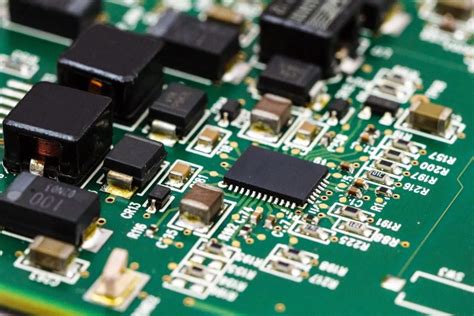
Cutting-Edge Solutions for Electronic Systems
Modern electronics assembly companies leverage advanced PCB assembly techniques to address the growing complexity of electronic systems. By integrating high-density interconnect (HDI) technology and surface-mount device (SMD) placement, these specialists enable the creation of compact, high-performance PCBA units that meet rigorous industry standards. Automated optical inspection (AOI) systems and 3D solder paste inspection (SPI) tools further ensure micron-level accuracy, critical for applications ranging from aerospace avionics to medical implantable devices.
The adoption of flexible manufacturing systems allows for rapid reconfiguration of production lines, accommodating both low-volume prototyping and high-volume runs without compromising quality. For instance, PCB assembly processes now incorporate AI-driven predictive maintenance, minimizing downtime while optimizing throughput. These innovations are particularly vital for industries requiring PCBA solutions with embedded IoT capabilities or ultra-low-power consumption profiles.
By combining laser-assisted component alignment with thermal management advancements, manufacturers achieve reliable performance in extreme environments. This technical synergy not only enhances product longevity but also aligns with global sustainability goals through reduced material waste. As electronic systems grow more interconnected, the role of electronics assembly companies as enablers of next-generation innovation becomes increasingly pivotal, bridging the gap between conceptual design and market-ready solutions.
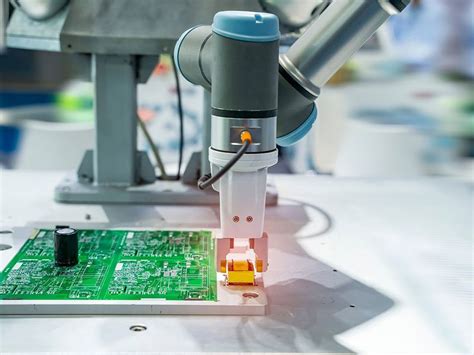
Streamlined Production for Complex Electronics
Modern PCB assembly workflows have revolutionized how manufacturers address the challenges of intricate electronic systems. By integrating modular design principles with automated PCBA processes, industry leaders achieve unprecedented efficiency in handling multilayer boards, high-density interconnects, and mixed-technology components. Advanced pick-and-place systems operating at micron-level precision work in tandem with AI-driven quality control platforms, reducing human error while accelerating throughput.
The true differentiator lies in synchronized material management – just-in-time component sourcing paired with intelligent inventory tracking eliminates bottlenecks in PCB assembly timelines. For PCBA projects requiring embedded firmware or IoT connectivity, cross-functional teams employ digital twin simulations to preempt compatibility issues before physical prototyping. This proactive validation approach shortens development cycles by 40-60% compared to traditional methods.
Leading firms further optimize workflows through unified communication protocols between PCB assembly stations and downstream testing modules. Real-time data sharing enables immediate adjustments to solder paste application or reflow parameters, maintaining strict IPC Class 3 standards even for aerospace-grade assemblies. Such integration ensures complex builds transition seamlessly from PCBA completion to functional testing, achieving first-pass yield rates exceeding 98.5% in mission-critical applications.
Quality Assurance in Electronics Manufacturing
Modern PCB assembly and PCBA processes demand rigorous quality protocols to ensure reliability in increasingly complex electronic systems. Leading manufacturers implement multilayered inspection frameworks that span from raw material verification to final product validation. Advanced automated optical inspection (AOI) systems now scan printed circuit boards at micron-level precision, detecting soldering defects or component misalignments that could compromise performance.
Critical to quality assurance is the integration of statistical process control (SPC) methodologies, which track production variables in real time to maintain tolerances within ±0.1% across high-volume batches. For PCBA projects involving mixed-technology components, manufacturers employ cross-functional validation teams to audit thermal management, signal integrity, and EMI compliance against industry benchmarks like IPC-A-610 and ISO 9001.
Progressive firms enhance these standards through traceability ecosystems, embedding unique identifiers in every PCB assembly to enable lifetime performance monitoring. This approach not only reduces field failure rates by up to 67% but also accelerates root cause analysis during iterative design improvements—a vital capability when producing mission-critical automotive or medical electronics. By aligning these strategies with lean manufacturing principles, partners achieve zero-defect thresholds without sacrificing production scalability.
Innovations in Electronics Assembly Processes
Recent advancements in PCB assembly and PCBA technologies are redefining precision in electronics manufacturing. The integration of automated optical inspection (AOI) systems with machine learning algorithms enables real-time defect detection, reducing human error by up to 70% in complex circuit board production. Leading manufacturers now employ 3D solder paste inspection tools to ensure micron-level accuracy during component placement, critical for high-density designs.
A breakthrough in PCBA workflows involves modular assembly platforms that adapt to mixed-product batches, cutting setup times by 40% while maintaining ISO-grade quality standards. Laser-assisted soldering techniques, paired with thermally optimized PCB assembly processes, address challenges in miniaturized components, achieving reliable connections under extreme operating conditions.
The adoption of IoT-enabled production lines has further enhanced traceability, with embedded sensors tracking every PCB assembly stage from stencil printing to final testing. This data-driven approach supports predictive maintenance models, minimizing downtime and ensuring consistent output for mission-critical applications. By merging these innovations, manufacturers achieve zero-defect manufacturing targets while scaling production capacities to meet evolving market demands.
Optimizing Electronics Production Efficiency
Achieving peak efficiency in PCB assembly requires a strategic blend of advanced automation, process standardization, and data-driven decision-making. Leading manufacturers employ lean manufacturing principles to eliminate bottlenecks in PCBA workflows, integrating smart factory technologies such as IoT-enabled equipment and AI-powered analytics. These systems enable real-time monitoring of solder paste application, component placement accuracy, and thermal profiling—critical factors in maintaining yield rates while scaling production volumes.
By implementing modular PCB assembly lines with flexible conveyor systems, partners can seamlessly transition between prototype development and high-volume PCBA runs without compromising speed or precision. Advanced traceability solutions further enhance efficiency by automating quality checks at multiple stages, reducing manual inspection time by up to 40%. This approach not only accelerates time-to-market for complex electronic systems but also creates predictable cost structures through optimized material utilization and energy consumption patterns. When paired with vendor-managed inventory programs, these strategies form a cohesive framework for maintaining competitive agility in fast-evolving markets.
Advanced Techniques for Reliable Assembly Outputs
Modern manufacturers leverage PCB assembly innovations to achieve unprecedented consistency in complex electronics production. Automated optical inspection (AOI) systems, combined with real-time process monitoring, enable micron-level precision during PCBA stages, minimizing defects in high-density interconnect (HDI) boards. Advanced soldering techniques, including laser reflow and selective soldering, ensure thermal stability across components with varying thermal mass—a critical factor for aerospace and medical device applications.
The integration of machine learning algorithms into PCB assembly workflows allows predictive maintenance of placement machinery, reducing unplanned downtime by up to 40%. For PCBA involving mixed-technology components, dual-track conveyor systems paired with intelligent flux management maintain process integrity across both surface-mount and through-hole assemblies. Material science breakthroughs in solder alloys and conformal coatings further enhance long-term reliability, particularly in harsh operating environments.
Leading firms now deploy hybrid manufacturing architectures that synchronize robotic PCB assembly cells with digital twin simulations, enabling first-pass yield optimization before physical production begins. This approach proves vital when assembling miniaturized IoT modules or high-frequency RF systems, where even nanometer-scale deviations impact performance. Through these methodologies, PCBA specialists achieve Six Sigma-level quality while accommodating rapid design iterations demanded by today’s fast-paced electronics markets.
Conclusion
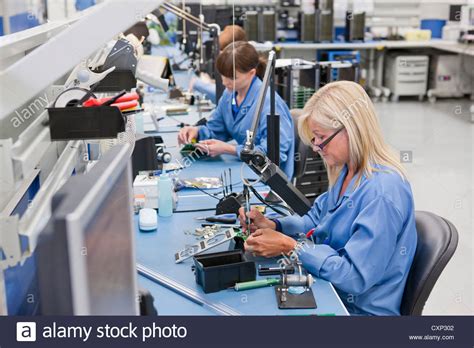
The evolution of modern manufacturing hinges on strategic collaborations with specialized manufacturing partners who combine technical expertise with operational excellence. In the realm of PCB assembly and PCBA, selecting the right partner ensures access to advanced assembly techniques, rigorous quality control protocols, and scalable solutions tailored to complex project requirements. By prioritizing precision-driven methodologies—from surface-mount technology to automated optical inspection—these partnerships mitigate risks while accelerating time-to-market for sophisticated electronic systems. As the industry continues to embrace automation and data-driven workflows, the value of end-to-end traceability and adherence to international compliance standards (such as IPC-A-610) remains paramount. Ultimately, the success of next-generation electronics manufacturing lies in aligning with partners capable of balancing innovation with reliability, ensuring consistent output that meets both current demands and future challenges.
Frequently Asked Questions
How do I choose the right electronics assembly partner?
Look for expertise in PCB assembly (PCBA) and certifications like ISO 9001. Ensure they offer end-to-end traceability and have a proven track record with complex projects.
What role does PCBA play in modern electronics manufacturing?
Printed circuit board assembly forms the foundation of electronic devices, integrating components with precision. Advanced PCBA techniques enable miniaturization and high-density interconnects critical for today’s compact designs.
How do assembly companies ensure quality in high-volume production?
Rigorous testing protocols, including automated optical inspection (AOI) and functional testing, are applied at every stage. Many partners use statistical process control to maintain consistency across batches.
What are the benefits of streamlined production processes?
Optimized workflows reduce lead times by up to 30% while minimizing errors. Techniques like surface-mount technology (SMT) and just-in-time inventory align PCB assembly with lean manufacturing principles.
Can assembly partners handle custom or specialized electronic systems?
Leading providers offer flexible solutions for aerospace, medical, or IoT applications, supporting both prototyping and large-scale PCBA production with customized testing frameworks.
How does outsourcing electronics assembly improve cost efficiency?
Partnering with experts reduces overhead for equipment, training, and compliance. Scalable PCB assembly services allow businesses to focus on R&D while maintaining cost predictability.
Ready to Elevate Your Electronics Manufacturing Process?
Explore advanced PCB assembly solutions tailored to your needs. Click here to connect with our industry experts and optimize your production workflow today.