Flex pcb stiffener
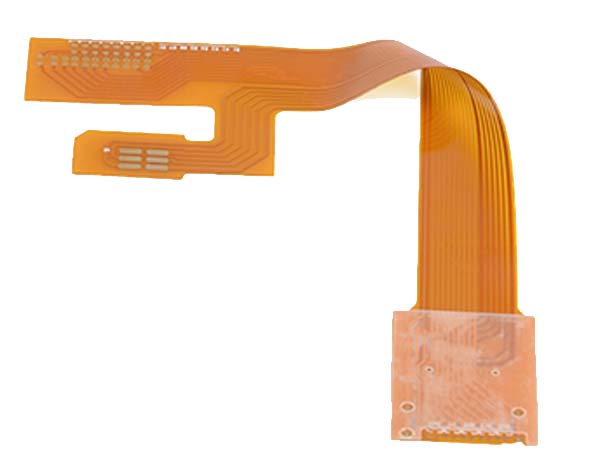
A flex PCB stiffener is a material or structure that is added to a flexible printed circuit board (PCB) to provide rigidity and support.
The role of a flex PCB stiffener is to provide support and rigidity to the flexible circuit.
Flex PCBs are made of thin and flexible materials, which can bend and twist easily.
However, in some applications, the flex circuit needs to maintain a specific shape or position.
In such cases, a stiffener is used to provide support and prevent the flex circuit from bending or twisting beyond a certain point.
The stiffener is usually attached to the backside of the flex circuit using an adhesive or mechanical fasteners.
It can be made of various materials, such as FR4, polyimide, aluminum, stainless steel, or copper, depending on the application requirements.
The stiffener also helps to protect the flex circuit from damage caused by bending, twisting, or vibration.
It can also improve the reliability and lifespan of the flex circuit by reducing the stress on the flexible material.
Overall, the flex PCB stiffener plays a crucial role in ensuring the stability, durability,
and performance of the flexible circuit in various applications, such as aerospace, medical devices, automotive, and consumer electronics.
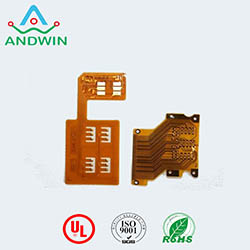
Flex PCBs are thin and flexible, making them ideal for use in applications where space is limited or where the PCB needs to bend or flex.
However, in some cases, the flexibility of the PCB can be a disadvantage,
as it can make it difficult to mount the board securely or to connect it to other components.

A flex PCB stiffener can be made from a variety of materials, including rigid PCB material, FR4, polyimide, or metal.
It is typically attached to the flex PCB using an adhesive or a mechanical fastener, such as screws or clips.
The stiffener provides additional support and rigidity to the flex PCB, making it easier to mount and connect to other components.
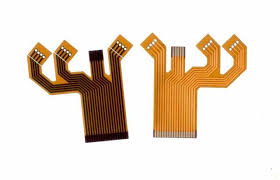
Flex PCB stiffeners are commonly used in applications such as mobile devices, wearables, and medical devices,
where space is limited and the PCB needs to be flexible but also sturdy.
They are also used in automotive and aerospace applications, where the PCB needs to withstand high temperatures and vibrations.