Ground Layer in PCB Design: Importance, Implementation, and Best Practices
Introduction
Printed Circuit Board (PCB) design has evolved significantly over the past few decades, with ground layers becoming an essential component of modern electronic circuits. As circuit speeds increase and devices become more compact, proper grounding techniques have transitioned from being merely recommended to absolutely critical for reliable operation. This article explores the fundamental concepts of ground layers in PCBs, their various types, implementation strategies, and best practices for optimal circuit performance.
Understanding Ground Layers
Definition and Basic Concept
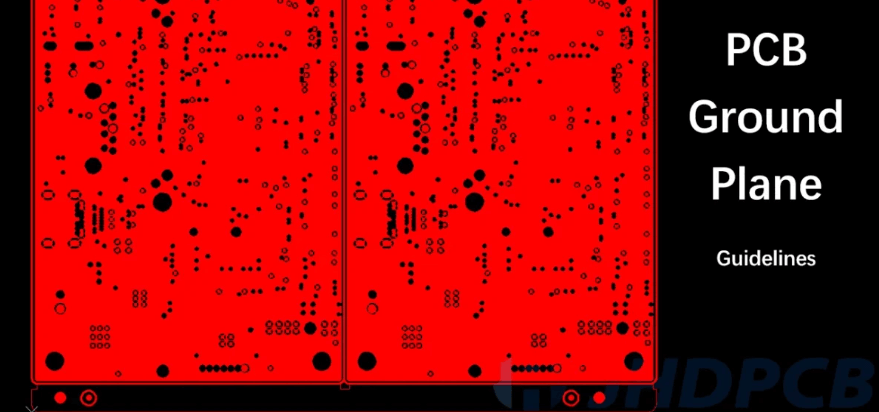
A ground layer in a PCB is a dedicated copper plane that serves as a common reference point for electrical circuits. Unlike traditional grounding methods that use traces, a ground layer provides a continuous, low-impedance return path for signals and power throughout the board. This solid plane offers numerous advantages over discrete grounding techniques, particularly in high-frequency and mixed-signal applications.
The Evolution of Grounding in PCBs
Early electronic circuits often used single-sided PCBs with point-to-point grounding. As circuit complexity increased, double-sided boards became common, with one side frequently dedicated as a ground plane. Modern multi-layer PCBs typically incorporate one or more dedicated ground layers, sometimes in conjunction with power planes, to meet the demanding requirements of contemporary electronics.
Types of Ground Layers
Single Ground Plane
The simplest implementation features one continuous ground plane, typically on an inner layer of a four-layer board or the bottom layer of a two-layer board. This approach works well for many analog circuits and lower-speed digital designs.
Split Ground Planes
For mixed-signal designs (combining analog and digital circuits), designers often split the ground plane into analog and digital sections. This technique helps prevent digital noise from coupling into sensitive analog circuits while still maintaining a common reference potential at a single point.
Multi-ground Layer Configurations
Complex designs, especially those involving high-speed digital signals, RF components, or power electronics, may employ multiple ground layers. These can include:
- Signal ground layers: For low-current return paths
- Power ground layers: For high-current power circuits
- Shield ground layers: For electromagnetic interference (EMI) protection
- Thermal ground layers: For heat dissipation in power applications
Benefits of Proper Ground Layer Implementation
Improved Signal Integrity
A solid ground plane provides several signal integrity benefits:
- Controlled impedance: Enables proper transmission line behavior for high-speed signals
- Reduced crosstalk: Minimizes unwanted coupling between adjacent traces
- Lower inductance: Provides a low-impedance return path for high-frequency currents
Enhanced EMI Performance
Proper grounding significantly affects a PCB’s electromagnetic compatibility:
- Reduced emissions: Contained return currents radiate less electromagnetic energy
- Improved immunity: Provides better shielding against external interference
- Effective shielding: Ground planes can act as electrostatic shields between layers
Thermal Management
Ground layers contribute to thermal performance:
- Heat spreading: Copper planes distribute heat more evenly
- Thermal relief: Provides paths for heat dissipation to vias and board edges
- Power handling: Supports higher current capacity for power circuits
Manufacturing and Reliability Advantages
- Improved etch yield: More uniform copper distribution reduces board warpage
- Better solderability: Thermal relief connections improve assembly quality
- Enhanced durability: Robust grounding improves long-term reliability
Ground Layer Design Considerations
Layer Stackup Planning
The arrangement of ground layers within a PCB stackup significantly impacts performance:
- Adjacent to signal layers: Ground planes should accompany high-speed signal layers
- Symmetry: Balanced stackups reduce warpage and improve impedance control
- Layer pairing: Power-ground layer pairs form effective decoupling capacitors
Ground Return Path Management
Ensuring uninterrupted return paths is crucial:
- Avoid splits under critical traces: Maintain continuous return paths for high-speed signals
- Via placement: Provide adequate ground vias for layer transitions
- Slot avoidance: Prevent interruptions in the ground plane that could impede return currents
Mixed-Signal Grounding Strategies
For designs combining analog and digital circuits:
- Partitioning: Physically separate analog and digital ground regions
- Single-point connection: Join ground sections at a carefully chosen location
- Component placement: Group analog and digital components over their respective grounds

Common Ground Layer Mistakes to Avoid
Excessive Splitting
While ground plane partitioning can be beneficial, excessive splitting can:
- Create return path discontinuities
- Increase ground loop risks
- Reduce the effectiveness of the ground plane
Improper Via Usage
Common via-related mistakes include:
- Insufficient ground vias for layer transitions
- Long via stubs that act as antennas
- Poor via placement relative to signal transitions
Neglecting Current Density
Failure to consider current flow can lead to:
- Localized heating issues
- Voltage drops across the ground plane
- Unexpected ground bounce effects
Advanced Grounding Techniques
Embedded Ground Planes
Some high-performance designs incorporate:
- Buried ground layers for additional shielding
- Ultra-thin dielectric materials for closer coupling
- Specialized materials for improved high-frequency performance
Hybrid Ground Structures
Innovative approaches include:
- Gridded ground planes for specific applications
- Frequency-selective grounding structures
- Active grounding techniques for sensitive circuits
3D Grounding in Multi-board Systems
For complex systems involving multiple PCBs:
- Backplane grounding strategies
- Chassis grounding integration
- Cable shield termination techniques
Testing and Verification
Ground Impedance Measurement
Techniques to verify ground layer performance:
- Four-point probe measurements
- Time-domain reflectometry (TDR)
- Network analyzer characterization
EMI Testing
Ground layer effectiveness verification through:
- Radiated emissions testing
- Conducted susceptibility tests
- Near-field scanning
Signal Integrity Analysis
Evaluation methods include:
- Eye diagram analysis
- Bit error rate testing
- Crosstalk measurements
Future Trends in Ground Layer Design
Materials Innovation
Emerging developments:
- High-frequency laminates with improved grounding characteristics
- Conductive polymers for flexible circuits
- Nanomaterials for enhanced thermal and electrical performance
3D Printed Electronics
Impact on grounding:
- Integrated grounding in additive manufacturing
- Novel grounding structures enabled by 3D printing
- Challenges in maintaining ground continuity
AI-assisted Ground Layer Optimization
Future possibilities:
- Machine learning for automated ground plane segmentation
- AI-driven stackup optimization
- Predictive modeling of grounding performance
Conclusion
The ground layer represents one of the most critical yet often underestimated aspects of PCB design. Proper implementation requires careful consideration of the circuit’s electrical requirements, mechanical constraints, and manufacturing realities. As electronic systems continue to push performance boundaries while shrinking in size, the importance of optimized ground layer design will only increase. By understanding fundamental principles, avoiding common pitfalls, and staying informed about emerging techniques, designers can create PCBs that meet today’s demanding requirements while being prepared for tomorrow’s challenges.
The ground layer is not merely a “fill” area or afterthought—it is an active, essential component of the circuit that requires as much design attention as the signal traces themselves. When properly implemented, a well-designed ground system can mean the difference between a marginal design and a robust, high-performance product. In the complex world of modern electronics, the ground layer truly forms the foundation upon which successful circuit operation is built.