High frequency pcb design
Understanding Signal Integrity in High Frequency PCB Design
In the realm of high frequency PCB design, understanding signal integrity is paramount to ensuring optimal performance and reliability of electronic circuits. As electronic devices continue to evolve, operating at increasingly higher frequencies, the challenges associated with maintaining signal integrity become more pronounced. Signal integrity refers to the preservation of the quality of electrical signals as they traverse through the PCB, and it is influenced by a myriad of factors including impedance mismatches, crosstalk, and electromagnetic interference.
To begin with, impedance control is a critical aspect of high frequency PCB design.
Impedance mismatches can lead to signal reflections, which degrade the quality of the signal and can cause data errors. Therefore, it is essential to design transmission lines with controlled impedance to minimize these reflections. This involves careful selection of materials, precise control of trace widths, and maintaining consistent dielectric properties across the PCB. Moreover, the use of differential signaling, where two complementary signals are transmitted, can help mitigate the effects of impedance mismatches and improve signal integrity.
In addition to impedance control, crosstalk is another significant concern in high frequency PCB design.
Crosstalk occurs when a signal in one trace induces an unwanted signal in an adjacent trace, leading to potential data corruption. To reduce crosstalk, designers can increase the spacing between traces, use ground planes to provide isolation, and employ shielding techniques. Furthermore, routing strategies such as maintaining orthogonal trace paths on adjacent layers can also help minimize crosstalk.
Electromagnetic interference (EMI) is yet another challenge that must be addressed to ensure signal integrity.
EMI can originate from both external sources and internal components, and it can disrupt the operation of high frequency circuits. To combat EMI, designers can implement filtering techniques, use proper grounding methods, and design enclosures that shield sensitive components from external electromagnetic fields. Additionally, selecting components with low electromagnetic emissions and placing them strategically on the PCB can further enhance signal integrity.
Transitioning to the topic of signal integrity analysis, simulation tools play a crucial role in the design process.
These tools allow designers to model and predict the behavior of high frequency signals on the PCB, enabling them to identify potential issues and optimize the design before physical prototyping. By using simulation software, designers can analyze parameters such as signal rise and fall times, eye diagrams, and bit error rates, providing valuable insights into the performance of the PCB.
Moreover, as high frequency designs often involve complex multilayer PCBs, understanding the stack-up configuration is vital.
The stack-up determines the arrangement of signal and power layers, and it influences factors such as impedance, crosstalk, and EMI. A well-designed stack-up can enhance signal integrity by providing controlled impedance paths, reducing crosstalk through effective layer separation, and minimizing EMI through strategic placement of ground and power planes.
In conclusion, maintaining signal integrity in high frequency PCB design is a multifaceted challenge that requires careful consideration of various factors. By focusing on impedance control, minimizing crosstalk, mitigating EMI, and utilizing simulation tools, designers can create PCBs that perform reliably at high frequencies. As technology continues to advance, the importance of understanding and addressing signal integrity in high frequency PCB design will only grow, underscoring the need for ongoing research and innovation in this critical field.
Material Selection for High Frequency PCBs
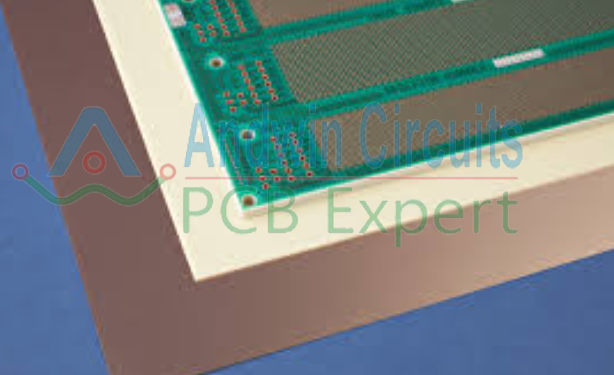
In the realm of high frequency printed circuit board (PCB) design, material selection plays a pivotal role in determining the performance and reliability of the final product. As electronic devices continue to evolve, operating at increasingly higher frequencies, the demand for materials that can support these frequencies without compromising signal integrity has become more critical than ever. Consequently, understanding the properties and implications of various materials is essential for engineers and designers working in this field.
To begin with, one must consider the dielectric constant (Dk) of the material, which is a measure of its ability to store electrical energy in an electric field.
For high frequency applications, materials with a low and stable dielectric constant are preferred, as they minimize signal delay and distortion. This stability is crucial because variations in the dielectric constant can lead to impedance mismatches, which in turn cause signal reflections and losses. Therefore, materials such as PTFE (polytetrafluoroethylene) and certain ceramic-filled laminates are often chosen for their low Dk values and consistent performance across a range of frequencies.
In addition to the dielectric constant, the dissipation factor (Df) is another critical parameter to consider.
The dissipation factor indicates the amount of energy lost as heat in the dielectric material. At high frequencies, even small losses can accumulate, leading to significant power dissipation and potential thermal issues. Thus, selecting materials with a low dissipation factor is essential to ensure efficient signal transmission and to maintain the thermal stability of the PCB. Materials like Rogers RO3000 series and Taconic RF-35 are renowned for their low dissipation factors, making them suitable candidates for high frequency applications.
Moreover, the thermal properties of the material cannot be overlooked.
High frequency PCBs often operate in environments where thermal management is a concern. Therefore, materials with high thermal conductivity and a low coefficient of thermal expansion (CTE) are desirable. High thermal conductivity ensures efficient heat dissipation, preventing hotspots and maintaining the integrity of the board. Meanwhile, a low CTE minimizes the risk of mechanical stress and potential failure due to thermal cycling. Materials such as ceramic-filled PTFE composites offer these thermal advantages, making them a popular choice for high frequency designs.
Furthermore, the surface roughness of the copper foil used in the PCB can significantly impact high frequency performance.
A smoother copper surface reduces skin effect losses, which become more pronounced at higher frequencies. The skin effect causes current to concentrate near the surface of the conductor, increasing resistance and signal attenuation. Therefore, selecting materials with smooth copper foils, such as rolled copper, can enhance signal integrity and reduce losses.
Finally, cost considerations and manufacturability also influence material selection.
While high-performance materials offer superior electrical and thermal properties, they can be more expensive and challenging to work with compared to standard FR-4 materials. Designers must balance these factors, considering the specific requirements of their application and the available budget.
In conclusion, selecting the appropriate materials for high frequency PCB design is a complex process that requires careful consideration of various electrical, thermal, and mechanical properties. By understanding these factors and their implications, designers can make informed decisions that optimize the performance and reliability of their high frequency PCBs, ultimately leading to more efficient and effective electronic devices.
Techniques for Minimizing Electromagnetic Interference in High Frequency PCBs
In the realm of high frequency printed circuit board (PCB) design, minimizing electromagnetic interference (EMI) is a critical challenge that engineers must address to ensure optimal performance and reliability. As electronic devices become more compact and complex, the potential for EMI increases, necessitating the implementation of effective techniques to mitigate its impact.
One fundamental approach to minimizing EMI in high frequency PCBs is through careful layout design.
By strategically placing components and routing traces, designers can significantly reduce the potential for interference. For instance, maintaining adequate spacing between high-speed signal traces and sensitive components can help prevent unwanted coupling. Additionally, employing differential signaling, where two complementary signals are transmitted simultaneously, can effectively cancel out common-mode noise, thereby reducing EMI.
Another crucial technique involves the use of ground planes.
Ground planes act as a reference point for signals and provide a low-impedance path for return currents, which is essential in high frequency applications. By incorporating a continuous ground plane beneath signal layers, designers can minimize loop areas and reduce the potential for radiated emissions. Furthermore, stitching vias can be employed to connect multiple ground planes, ensuring a consistent ground reference throughout the PCB. This practice not only enhances signal integrity but also aids in suppressing EMI.
Moreover, the selection of materials plays a pivotal role in EMI mitigation.
High frequency PCBs often require substrates with low dielectric constants and low loss tangents to minimize signal attenuation and dispersion. Materials such as PTFE (polytetrafluoroethylene) and Rogers laminates are commonly used due to their favorable electrical properties. Additionally, the use of shielding materials, such as metal enclosures or conductive coatings, can provide an effective barrier against external electromagnetic fields, further reducing EMI susceptibility.
Transitioning to the topic of power distribution, it is essential to consider the impact of power integrity on EMI.
Poor power distribution can lead to voltage fluctuations and ground bounce, which can exacerbate EMI issues. To address this, designers can implement decoupling capacitors strategically placed near power pins to provide a local energy reservoir, thus stabilizing voltage levels. Additionally, employing a power distribution network (PDN) with low inductance and resistance can help maintain a stable power supply, minimizing the potential for EMI generation.
Signal integrity is another critical aspect that influences EMI in high frequency PCBs.
Signal reflections, crosstalk, and impedance mismatches can all contribute to increased EMI levels. To mitigate these effects, designers can utilize controlled impedance traces, ensuring that the characteristic impedance of the transmission line matches that of the source and load. This practice minimizes signal reflections and enhances signal integrity. Furthermore, implementing proper termination techniques, such as series or parallel termination, can further reduce reflections and improve overall signal quality.
In conclusion, minimizing electromagnetic interference in high frequency PCB design requires a multifaceted approach that encompasses careful layout design, strategic use of ground planes, appropriate material selection, effective power distribution, and meticulous attention to signal integrity. By employing these techniques, engineers can significantly reduce EMI, ensuring that high frequency PCBs operate reliably and efficiently in increasingly demanding electronic environments. As technology continues to advance, the importance of mastering these techniques will only grow, underscoring the need for ongoing research and innovation in the field of high frequency PCB design.

Best Practices for Layer Stackup in High Frequency PCB Design
In the realm of high frequency PCB design, the layer stackup plays a pivotal role in determining the performance and reliability of the final product. As electronic devices continue to shrink in size while increasing in functionality, the demand for high frequency PCBs has surged. These PCBs are essential in applications such as telecommunications, radar systems, and high-speed computing, where signal integrity and electromagnetic compatibility are paramount. Therefore, understanding the best practices for layer stackup in high frequency PCB design is crucial for engineers and designers aiming to optimize their designs.
To begin with, one of the fundamental considerations in layer stackup is the selection of materials.
The dielectric material used between the layers significantly affects the signal propagation speed and impedance. Materials with low dielectric constants are preferred as they reduce signal delay and minimize losses. Additionally, the choice of material impacts the thermal management of the PCB, which is critical in high frequency applications where heat dissipation can affect performance. Consequently, selecting materials with appropriate thermal conductivity and stability is essential.
Moreover, the arrangement of layers in the stackup is another critical factor.
A well-planned layer stackup can help mitigate issues such as crosstalk, electromagnetic interference (EMI), and signal reflection. Typically, a high frequency PCB stackup includes multiple signal layers, power planes, and ground planes. Placing ground planes adjacent to signal layers can provide a return path for signals, thereby reducing loop inductance and enhancing signal integrity. Furthermore, it is advisable to position power and ground planes in close proximity to minimize the loop area, which in turn reduces EMI.
Transitioning to the topic of impedance control, maintaining consistent impedance across the PCB is vital for high frequency applications.
Impedance mismatches can lead to signal reflections, which degrade signal quality. To achieve controlled impedance, designers must carefully calculate the trace width, spacing, and dielectric thickness. Utilizing simulation tools can aid in predicting the impedance and making necessary adjustments during the design phase. Additionally, maintaining uniform trace geometry and avoiding abrupt changes in trace width can further enhance impedance control.
Another best practice involves the use of via structures.
Vias are essential for connecting different layers in a PCB, but they can introduce parasitic inductance and capacitance, which are detrimental at high frequencies. To mitigate these effects, designers should minimize the use of vias in critical signal paths and opt for blind or buried vias when necessary. Furthermore, ensuring that vias are properly back-drilled can help eliminate stubs, which can act as antennas and exacerbate signal integrity issues.
In addition to these technical considerations, collaboration with PCB manufacturers during the design process is highly recommended.
Manufacturers can provide valuable insights into the feasibility of the proposed stackup and suggest modifications to enhance manufacturability and performance. Engaging with manufacturers early in the design phase can also help identify potential cost-saving opportunities without compromising on quality.
In conclusion, the layer stackup in high frequency PCB design is a complex yet crucial aspect that demands careful attention to detail. By selecting appropriate materials, strategically arranging layers, controlling impedance, and optimizing via usage, designers can significantly improve the performance and reliability of high frequency PCBs. As technology continues to evolve, adhering to these best practices will remain essential for meeting the ever-increasing demands of high frequency applications.