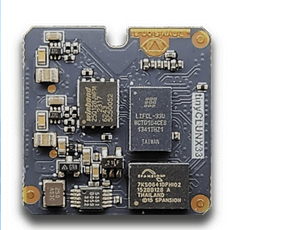
How can RF circuits and digital circuits live in harmony on the same PCB?
Monolithic RF devices greatly facilitate the application of wireless communication within a certain range. A complete wireless communication link can be formed by using a suitable microcontroller and antenna combined with this transceiver device. They can be integrated on a very small circuit board and applied to many fields such as wireless digital audio, digital video data transmission systems, wireless remote control and telemetry systems, wireless data acquisition systems, wireless networks, and wireless security systems.
1 Potential contradictions between digital circuits and analog circuits
If analog circuits (RF) and digital circuits (microcontrollers) work separately, they may work well on their own, but once they are placed on the same circuit board and work together using the same power supply, the entire system is likely to be unstable. This is mainly because digital signals frequently swing between the ground and the positive power supply (size 3 V), and the cycle is particularly short, often at the ns level. Due to the large amplitude and small switching time, these digital signals contain a large number of high-frequency components that are independent of the switching frequency. In the analog part, the signal transmitted from the antenna tuning loop to the receiving part of the wireless device is generally less than 1μV. Therefore, the difference between digital signals and RF signals will reach 10-6 (120 dB). Obviously, if the digital signal and RF signal cannot be separated well, the weak RF signal may be damaged, so that the performance of the wireless device will deteriorate or even fail to work at all.
2 Common problems when RF circuits and digital circuits are made on the same PCB
It is often a problem that sensitive lines and noisy signal lines cannot be fully isolated. As mentioned above, digital signals have high swings and contain a large number of high-frequency harmonics. If the digital signal wiring on the PCB is adjacent to sensitive analog signals, high-frequency harmonics may be coupled in. The most sensitive nodes of RF devices are usually the loop filter circuit of the phase-locked loop (PLL), the external voltage-controlled oscillator (VCO) inductor, the crystal reference signal and the antenna terminal. These parts of the circuit should be handled with special care.
(1) Power supply noise
Since the input/output signals have a swing of several volts, digital circuits are generally acceptable to power supply noise (less than 50 mV). Analog circuits are quite sensitive to power supply noise, especially to glitches and other high-frequency harmonics. Therefore, the power supply line routing on PCBs containing RF (or other analog) circuits must be more careful than routing on ordinary digital circuit boards, and automatic routing should be avoided. It should also be noted that microcontrollers (or other digital circuits) will suddenly absorb most of the current for a short period of time during each internal clock cycle. This is because modern microcontrollers are designed using CMOS technology. Therefore, assuming that a microcontroller runs at an internal clock frequency of 1 MHz, it will extract (pulse) current from the power supply at this frequency. If proper power supply decoupling is not taken, voltage glitches on the power supply line will inevitably occur. If these voltage glitches reach the power supply pins of the RF part of the circuit, serious work failures may occur. Therefore, it is necessary to ensure that the analog power supply line is separated from the digital circuit area.
(2) Unreasonable ground line
RF circuit boards should always have a ground layer connected to the negative pole of the power supply. If it is not handled properly, some strange phenomena may occur. For a digital circuit designer, this may be difficult to understand, because even without a ground layer, most digital circuits function well. In the RF band, even a very short line will act like an inductor. A rough calculation shows that the inductance per mm of length is about 1 nH, and the inductance of a 10 mm PCB line at 434 MHz is about 27 Ω. If a ground plane is not used, most ground lines will be long and the circuit will not be able to guarantee the design characteristics.
(3) Radiation of the antenna to other analog parts
This point is often overlooked in circuits that include RF and other parts. In addition to the RF part, there are usually other analog circuits on the board. For example, many microcontrollers have built-in analog-to-digital converters (ADCs) for measuring analog inputs and battery voltage or other parameters. If the antenna of the RF transmitter is located near this PCB (or on this PCB), the high-frequency signal emitted may reach the analog input of the ADC. Don’t forget that any circuit line may emit or receive RF signals like an antenna. If the ADC input is not properly processed, the RF signal may self-excite in the ESD diode of the ADC input, causing ADC deviation.
3 Solutions for RF circuits and digital circuits on the same PCB
The following are some general design and layout strategies for most RF applications. However, it is more important to follow the layout recommendations for RF devices in actual applications.
(1) A reliable ground plane
When designing a PCB with RF components, a reliable ground plane should always be used. The purpose is to establish an effective 0 V potential point in the circuit so that all devices can be easily decoupled. The 0 V terminal of the power supply should be directly connected to this ground plane. Due to the low impedance of the ground plane, no signal coupling will occur between the two decoupled nodes. This is very important for multiple signals on the board that may differ by 120 dB in amplitude. On a surface mounted PCB, all signal routing is on the same side as the component mounting surface, and the ground plane is on the opposite side. The ideal ground plane should cover the entire PCB (except under the antenna PCB). If a PCB with more than two layers is used, the ground plane should be placed on a layer adjacent to the signal layer (such as the layer below the component surface). Another good method is to fill the vacant part of the signal wiring layer with ground planes. These ground planes must be connected to the main ground plane through multiple vias. It should be noted that since the existence of the ground point will cause the inductance characteristics of the adjacent ones to change, the selection of inductance value and the arrangement of inductance must be carefully considered.
(2) Shorten the connection distance to the ground layer
All connections to the ground layer must be as short as possible, and the ground vias should be placed at (or very close to) the pads of the components. Never let two ground signals share a ground via, which may cause crosstalk between the two pads due to the impedance of the via connection.
(3) RF decoupling
The decoupling capacitor should be placed as close to the pin as possible, and each pin that needs decoupling should be decoupled with a capacitor. Use high-quality ceramic capacitors, and the dielectric type is preferably “NPO”, and “X7R” can also work well in most applications. The ideal capacitor value should be selected so that its series resonance is equal to the signal frequency. For example, at 434 MHz, a 100 pF SMD mounted capacitor will work well. At this frequency, the capacitive reactance of the capacitor is about 4 Ω, and the inductive reactance of the via is also in the same range. The series capacitor and via form a notch filter for the signal frequency, enabling effective decoupling. At 868 MHz, a 33 pF capacitor is an ideal choice. In addition to the small value capacitor for RF decoupling, a large value capacitor should also be placed on the power supply line to decouple the low frequency. A 2.2 μF ceramic or 10 μF tantalum capacitor can be selected.
(4) Star wiring of power supply
Star wiring is a well-known technique in analog circuit design (as shown in Figure 1). Star wiring – each module on the circuit board has its own power supply line from a common power supply point. In this case, star wiring means that the digital part and the RF part of the circuit should have their own power supply lines, and these power lines should be decoupled separately near the IC. This is an effective way to isolate the power supply noise from the digital part and from the RF part. If modules with severe noise are placed on the same circuit board, inductors (ferrite beads) or small resistances (10 Ω) can be connected in series between the power line and the module, and tantalum capacitors of at least 10 μF must be used for power decoupling of these modules. Such modules include RS 232 drivers or switching power regulators.
(5) Proper PCB layout
To reduce interference from noisy modules and surrounding analog parts, the layout of each circuit module on the board is important. Sensitive modules (RF parts and antennas) should always be kept away from noisy modules (microcontrollers and RS 232 drivers) to avoid interference.
(6) Shielding the influence of RF signals on other analog parts
As mentioned above, RF signals will interfere with other sensitive analog circuit modules such as ADC when transmitted. Most problems occur at lower operating frequency bands (such as 27 MHz) and high power output levels. It is a good design practice to use RF decoupling capacitors (100p F) connected to ground to decouple sensitive points.
(7) Special considerations for loop antennas on a board
The antenna can be built entirely on the PCB. Compared to traditional whip antennas, it not only saves space and production costs, but is also more stable and reliable in structure. Conventionally, loop antennas are designed for relatively narrow bandwidths, which helps suppress unwanted strong signals to prevent interference with the receiver. It should be noted that loop antennas (like all other antennas) may receive noise capacitively coupled from nearby noisy signal lines. It will interfere with the receiver and may also affect the modulation of the transmitter. Therefore, digital signal lines must not be laid near the antenna, and it is recommended to keep free space around the antenna. Any object close to the antenna will constitute part of the tuning network, causing the antenna tuning to deviate from the expected frequency point, reducing the transmit and receive radiation range (distance). For all types of antennas, this fact must be noted, and the circuit board casing (peripheral packaging) may also affect the antenna tuning. At the same time, care should be taken to remove the ground plane at the antenna area, otherwise the antenna will not work effectively.
(8) Circuit board connection
If a cable is used to connect the RF circuit board to an external digital circuit, a twisted pair cable should be used. Each signal line must be twisted with the GND line (DIN/GND, DOUT/GND, CS/GND, PWR_UP/GND). Remember to connect the RF circuit board and the digital application circuit board with the GND line of the twisted pair cable, and the cable length should be as short as possible. The line that powers the RF circuit board must also be twisted with the GND (VDD/GND.
4 Conclusion
The rapid development of RF integrated circuits has provided the greatest possibility for engineers and technicians engaged in the design of wireless digital audio and video data transmission systems, wireless remote control and telemetry systems, wireless data acquisition systems, wireless networks, and wireless security systems to solve the bottleneck of wireless applications. At the same time, the design of RF circuits requires designers to have certain practical experience and engineering design capabilities. This article is the experience summarized by the author in actual development, hoping to help many RF integrated circuit developers shorten the development cycle, avoid unnecessary detours, and save manpower and financial resources.