How to Properly Layout a 40A Power Supply: Copper Pour, Vias, and Current Loops
Introduction
Designing printed circuit boards (PCBs) for high-current applications like 40A power supplies requires careful consideration of several critical factors. Unlike low-power circuits where layout may be more forgiving, high-current designs demand precise attention to copper weight, via placement, thermal management, and current loop minimization. This 2000-word guide will explore best practices for laying out 40A power circuits, focusing on three key aspects: copper pour strategies, via implementation, and current loop control.
Understanding the Challenges of 40A Current
Before diving into layout techniques, it’s essential to understand why 40A presents unique challenges:
- Resistance Concerns: Even small resistances can lead to significant power loss (P=I²R). For example, just 1mΩ of resistance at 40A creates 1.6W of heat.
- Thermal Management: High currents generate substantial heat that must be dissipated properly.
- Voltage Drop: Excessive voltage drop along traces can affect circuit performance.
- Electromagnetic Interference (EMI): High current switching creates strong magnetic fields that can interfere with nearby circuits.
Section 1: Copper Pour Strategies for 40A Currents
1.1 Copper Weight Selection
For 40A currents, standard 1oz (35μm) copper is generally insufficient. Consider:
- 2oz (70μm) Copper: Minimum recommendation for 40A designs
- 3oz (105μm) Copper: Better for reduced voltage drop and thermal performance
- 4oz (140μm) Copper: Ideal for highest efficiency and thermal management
Calculation example: A 100mm long, 10mm wide 2oz trace has approximately 0.83mΩ resistance, resulting in 33mV drop at 40A (V=IR).
1.2 Trace Width Considerations
While standard calculators provide starting points, high-current designs require additional considerations:
- Temperature Rise: Aim for <20°C temperature rise in normal operation
- Current Density: Keep below ~500A/cm² for reliable long-term operation
- Practical Widths: For 2oz copper, 10-15mm widths are typical for 40A
Use the modified IPC-2152 formula for high-current traces:
Width = (I / (k * ΔT^0.44))^(1/0.725)Where:
- I = current (A)
- ΔT = temperature rise (°C)
- k = 0.048 for outer layers, 0.024 for inner layers
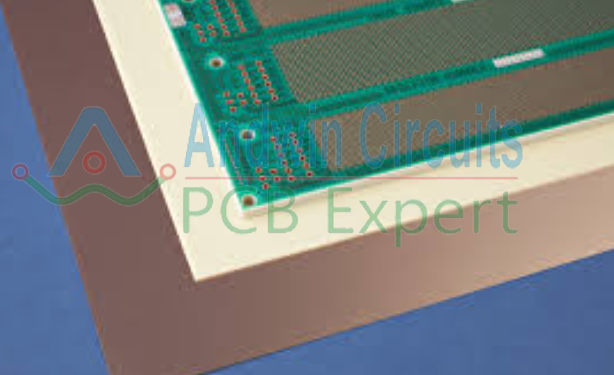
1.3 Copper Pour Shapes and Routing
- Avoid Sharp Corners: Use 45° angles or rounded corners to prevent current crowding
- Tapered Transitions: When changing widths, use gradual tapers (length ≥ 3× width change)
- Branching Strategies: For splitting current, use symmetrical “Y” branches rather than “T” junctions
1.4 Multi-Layer Current Distribution
When using multiple layers for current carrying:
- Mirror Layouts: Place identical current paths directly above/below each other
- Interleaved Phases: For multi-phase designs, alternate phase layers to cancel magnetic fields
- Current Sharing: Ensure parallel paths have equal lengths and impedances
Section 2: Via Implementation for High Current
2.1 Via Current Capacity
Standard vias are inadequate for 40A. Key parameters:
- Via Diameter: Use ≥0.5mm finished hole size (preferably 0.8-1.0mm)
- Annular Ring: Minimum 0.2mm additional beyond hole size
- Plating Thickness: Specify ≥25μm (1mil) copper plating
Current capacity estimation:
I = k * (ΔT^0.54) * (A^0.72)Where:
- I = current (A)
- ΔT = temperature rise (°C)
- A = via cross-sectional area (cm²)
- k = 5.2 for plating thickness ≥25μm
2.2 Via Arrays and Patterns
Single vias cannot handle 40A – use arrays:
- Uniform Distribution: Space vias evenly along current path
- Staggered Patterns: Alternate via positions in adjacent rows
- Minimum Spacing: Keep ≥2× via diameter center-to-center
Example via array for 40A:
- 10 vias of 0.8mm diameter, arranged in 2 rows of 5
- Provides ~4A per via with safety margin
2.3 Thermal Vias
For heat dissipation to inner layers or heatsinks:
- High Density Arrays: Place under power components
- Connection to Ground Planes: Use for additional thermal mass
- Fill Material: Consider thermally conductive via fill (copper or epoxy)
2.4 Via Placement Guidelines
- Current Entry/Exit Points: Place via arrays at component pads
- Layer Transitions: Use via arrays where current changes layers
- Avoid Current Bottlenecks: Ensure via arrays don’t create localized high-resistance points
Section 3: Managing Current Loops
3.1 Understanding Current Loops
Current loops in power circuits:
- Create varying magnetic fields
- Generate EMI
- Can induce noise in sensitive circuits
- Increase parasitic inductance
3.2 Minimizing Loop Area
Key strategies:
- Tight Component Placement: Keep power components close together
- Parallel Return Paths: Route supply and return paths adjacent to each other
- Layer Stackup Planning: Place supply and return layers adjacent
Loop area calculation:
A = I * d * μ₀ / (2π * B)Where:
- A = loop area (m²)
- I = current (A)
- d = distance between conductors (m)
- μ₀ = permeability of free space
- B = acceptable magnetic field strength
3.3 Multi-Layer Loop Control
For 4+ layer boards:
- Sandwich Technique: Place power between two ground planes
- Image Planes: Use adjacent reference planes for return current
- Decoupling Placement: Position decoupling capacitors to minimize high-frequency loops
3.4 High di/dt Considerations
For switching power circuits:
- Local Energy Storage: Place bulk capacitance near switches
- Gate Drive Loops: Keep gate drive loops small and away from power loops
- Shielding: Use grounded copper between sensitive and noisy areas
Practical Implementation Example
Step-by-Step 40A Buck Converter Layout
- Component Placement:
- Place input capacitors closest to switching FETs
- Position inductor for minimal AC current path
- Group output capacitors near load
- Copper Pour Implementation:
- 3oz outer layers, 2oz inner layers
- 12mm main power traces
- Gradual tapers at width changes
- Via Arrays:
- 8× 0.8mm vias at each switch node
- 6× 0.8mm vias at input/output connections
- Thermal via array under control IC
- Loop Control:
- Input cap to FET distance <5mm
- FET to inductor distance <8mm
- Return paths mirrored directly beneath supply paths
Thermal Considerations
Heat Dissipation Techniques
- Exposed Pads: Use large component pads for heatsinking
- Copper Area: Maximize unused board area for thermal relief
- Board Thickness: 2mm or thicker for better heat spreading
- External Heatsinks: Plan for mounting points if needed
Temperature Rise Estimation
Use the following approximation for copper areas:
ΔT ≈ P * RθWhere:
- P = power dissipated (W)
- Rθ = thermal resistance (°C/W)
For a 10cm² 2oz copper area:
Rθ ≈ 20°C/W (still air)
Verification and Testing
Design Verification Steps
- DC Resistance Measurement:
- Calculate expected resistance
- Verify with 4-wire measurement if possible
- Thermal Imaging:
- Identify hot spots under load
- Verify even current distribution
- Voltage Drop Testing:
- Measure at critical points under full load
- Compare with calculations
Simulation Tools
- DC Analysis: Verify voltage drops and current distribution
- Thermal Simulation: Predict temperature rises
- EMI Simulation: Analyze magnetic field emissions
Conclusion
Proper layout of 40A power circuits requires a holistic approach considering electrical, thermal, and electromagnetic factors. By implementing appropriate copper weights, strategic via arrays, and careful loop area control, designers can create reliable, efficient high-current PCBs. Always remember to:
- Use sufficient copper weight and width for current requirements
- Distribute current through multiple parallel vias
- Minimize all current loop areas, especially high di/dt paths
- Verify designs through calculation and measurement
Following these guidelines will help ensure your 40A power supply design meets performance requirements while remaining reliable and manufacturable.