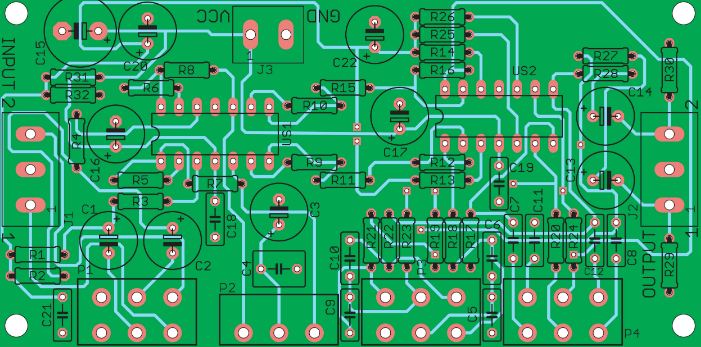
Introduction to PCB cleaning Techniques and procedures
PCBs are widely used in China.The manufacturing process generates contaminants,including residual flux and adhesives,dust,and debris from the manufacturing process.If the PCB surface is not effectively cleaned,resistance and leakage can lead to PCB failure,thus shortening the product’s lifespan.Therefore,cleaning PCBs is a crucial step in the manufacturing process
1.Semi-aqueous cleaning primarily uses a cleaning agent composed of organic solvents and deionized water,along with a certain amount of surfactants and additives.This cleaning method falls somewhere between solvent cleaning and aqueous cleaning.These cleaning agents are organic solvents,which are flammable,have high flash points,and low toxicity,making them safe to use .However,they must be rinsed with water and then airdried.
2.Aqueous cleaning technology is the future direction of cleaning technology.Establishing a pure water source and wastewater treatment facilities is essential.Using water as the cleaning medium,surfactants,additives,corrosion inhibitors,and chelating agents are added to the water to create a series of water-based cleaning agents.These can remove both aqueous solvents and non-polar contaminants.
3.No-clean technology is used during the soldering process without the use of clean flux or solder paste.After soldering,the soldering process proceeds directly to the next cleaning step.No-clean technology is currently the most commonly used alternative technology, particularly for mobile communication products,where it is essentially a one-time use alternative to 0DS.
4.Solvent cleaning primarily involves solvent dissolution to remove contaminants.Due to its rapid volatility and strong solubility,solvent cleaning requires simple equipment.
5.Ultrasonic cleaning utilizes the conversion of ultra-high frequencies into kinetic energy in a liquid medium,creating a cavitation effect.Numerous tiny bubbles then impact the surface,dislodging dirt and achieving a cleansing effect.Because it uses liquid,any contact with the surface is fully cleaned,leaving no blind spots.It can simultaneously clean multiple surface.It is highly effective and fast,taking approximately 15 minutes to clean.Advantages of ultrasonic cleaning include its ability to effectively restore and improve the performance of solder pads and components,while also reducing electromagnetic interference.
Circuit Board Cleaning Steps:
Preparation Before cleaning:Before cleaning,carefully remove all connectors on the circuit board,including jumper sockets,card boards,batteries,and ICs. Potentiometers,transformers,and solenoid coils(inductors) must also be removed from the circuit board.Once water has entered these components,it is difficult to remove from the circuit board. Once water has entered these components, it is difficult to remove water droplets between gaps or turns with compressed air, and the moisture is difficult to dry out. Keep a record of each component during disassembly to avoid errors during restoration after cleaning.
Also, check the electrolytic capacitors on the circuit board for leaks or bulging tops. Remove them and keep a record so that they can be replaced with new ones of equal value after the circuit board is cleaned. For computer power supply circuit boards, also check for cracks or loose soldering between the printed circuit board pads and component pins, paying particular attention to high-power components. If cracks or loose soldering are found, repair them immediately. Repair any cracks or loose soldering as soon as you find them, as they can be easily missed.
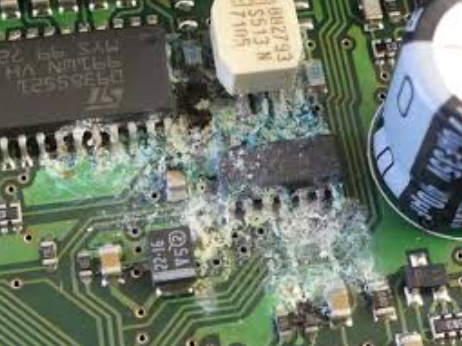
Cleaning:
1) Before cleaning, use a clean, soft paintbrush (a 1-inch-wide brush is ideal) and dry compressed air at a pressure of approximately 0.1 MPa (1 kg/cm2) to remove any dust from the circuit board.
2) You can use a special circuit board cleaning solution (commonly known as circuit board cleaning water), which can be purchased at specialty stores. If you don’t have circuit board cleaning water, follow these steps: (These days, we generally don’t use circuit board cleaning water anymore.) First, rinse with tap water, using a gentle, not forceful, flow. While rinsing, gently scrub the surface with a soft brush, applying this pressure to both sides of the circuit board.
3) Then use a soft brush dipped in neutral soap to carefully and gently clean every part of the circuit board, especially the jumper plugs, the inside and bottom of the slots (CPU slot, AGP slot, PCI slot, memory slot), the bottom of the IC socket, the north and south bridge chips, the bottom of the BIOS chip and each other IC chip, the bottom of the large capacitor, etc. should be cleaned more carefully. During operation, be careful not to touch the small capacitors and other components installed upright; if you find that the soap foam is very dirty, you must rinse it with clean water and then scrub it again with soap until the soap foam is white