Leading PCB Assembly Services Suppliers for Seamless Production

Key Takeaways
When evaluating PCB assembly partners, prioritize suppliers that demonstrate proven expertise in handling complex PCBA requirements while maintaining rigorous quality standards. The best providers combine advanced automation with skilled engineering support to ensure precision in surface-mount technology (SMT) and through-hole assembly processes.
"Always verify a supplier’s certifications—such as ISO 9001 and IPC-A-610 compliance—to guarantee adherence to industry benchmarks for PCB assembly reliability."
Key considerations include scalability for high-volume orders, transparent communication channels, and the ability to integrate PCBA workflows with existing manufacturing systems. Look for suppliers offering real-time production tracking and failure analysis tools to minimize downtime. Cost-effectiveness remains critical, but avoid compromising on material quality or testing protocols like automated optical inspection (AOI).
For prototyping or low-volume needs, opt for partners specializing in rapid-turn PCB assembly without sacrificing solder joint integrity. Industry leaders often differentiate themselves through thermal management innovations and compatibility with high-density interconnect (HDI) designs, which are essential for next-gen electronics.
Transitioning between PCB assembly stages becomes seamless when suppliers provide design-for-manufacturability (DFM) feedback early in the development cycle. This proactive approach reduces revision cycles and accelerates time-to-market for PCBA-intensive products.
Top PCB Assembly Service Suppliers
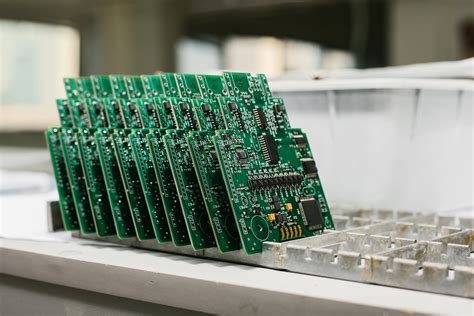
Selecting the right PCB assembly partner is critical for optimizing manufacturing workflows. Industry-leading PCBA providers combine advanced engineering capabilities with scalable production processes to meet diverse project requirements. These suppliers specialize in delivering high-mix, low-volume prototypes alongside high-volume runs, ensuring flexibility for startups and enterprises alike.
Key players in this space leverage cutting-edge technologies, such as automated surface-mount (SMT) and through-hole assembly, to maintain precision across complex designs. Many prioritize certifications like ISO 9001 and IPC-A-610 standards, guaranteeing adherence to high-quality PCB assembly benchmarks. Additionally, partnerships with component distributors enable reliable material sourcing, reducing lead times even for specialized orders.
For businesses seeking fast-turnaround PCBA solutions, top suppliers integrate real-time project tracking and DFM (Design for Manufacturing) analysis to preempt delays. Their expertise in thermal management and signal integrity ensures robust performance for applications ranging from consumer electronics to industrial automation. By aligning with these providers, manufacturers gain access to end-to-end support—from prototyping to final testing—streamlining time-to-market without compromising reliability.
As demand for miniaturized and IoT-enabled devices grows, leading PCB assembly services continue to innovate, offering embedded system integration and rigid-flex PCB capabilities. This adaptability positions them as indispensable partners in an increasingly competitive electronics landscape.
High-Quality PCB Assembly Solutions
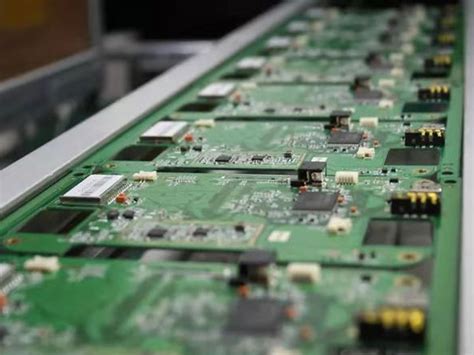
Modern electronics demand precision-engineered PCB assembly processes to ensure performance and longevity. Leading suppliers combine advanced manufacturing techniques with rigorous quality control, delivering error-free PCBA (printed circuit board assembly) outcomes. Key elements include automated optical inspection (AOI), X-ray testing for hidden defects, and adherence to IPC-A-610 standards, which govern acceptability criteria for electronic assemblies.
| Quality Parameter | Specification | Impact on Production |
|---|---|---|
| Component Placement Accuracy | ±0.025mm | Minimizes rework and ensures signal integrity |
| Material Traceability | Full lot tracking | Reduces risk of counterfeit parts |
| Solder Joint Inspection | 3D SPI systems | Enhances long-term reliability |
By integrating high-mix, low-volume (HMLV) capabilities with scalable production lines, providers address diverse needs—from prototyping to mass manufacturing. Advanced PCB assembly workflows also leverage surface-mount technology (SMT) and through-hole assembly for hybrid designs, ensuring compatibility with complex layouts. These solutions not only streamline manufacturing but also align with ISO 9001 and RoHS compliance, critical for industries like aerospace, automotive, and medical devices.
Transitioning to the next phase, suppliers offering fast-turnaround electronics manufacturing build on this foundation, prioritizing efficiency without compromising the precision inherent in PCBA processes.
Fast-Turnaround Electronics Manufacturing
In today’s competitive electronics landscape, PCB assembly providers must balance speed with precision to meet tight production deadlines. Leading suppliers leverage advanced PCBA workflows, integrating automated pick-and-place systems and AI-driven quality control to slash turnaround times without compromising reliability. Just-in-time manufacturing principles ensure components arrive synchronized with production schedules, minimizing delays caused by supply chain bottlenecks.
For industries like automotive or IoT, where rapid prototyping is critical, fast-turnaround PCB assembly services enable manufacturers to iterate designs in days rather than weeks. These providers often offer tiered timelines—from 24-hour expedited builds to standard 5-day cycles—catering to both low-volume prototyping and high-volume demands. Real-time tracking systems further enhance transparency, allowing clients to monitor progress at every stage.
By optimizing material sourcing and employing modular assembly lines, top-tier PCBA specialists reduce idle time between batches. This agility is particularly valuable for startups and enterprises alike, as accelerated production cycles directly translate to faster time-to-market for cutting-edge devices. When selecting a partner, prioritize those with certifications like ISO 9001, ensuring their speed aligns with stringent quality benchmarks.
Streamlined PCB Assembly Providers
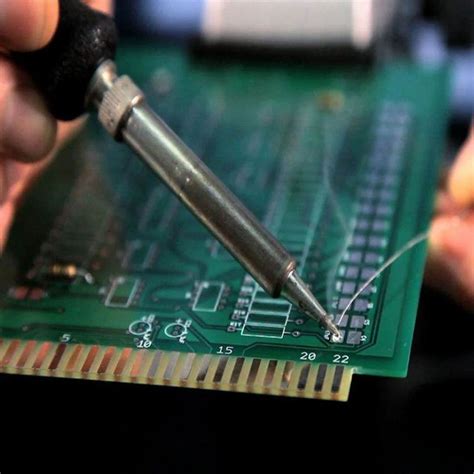
Modern manufacturers increasingly prioritize PCB assembly partners that combine precision with operational agility. Streamlined PCB assembly providers distinguish themselves through integrated workflows that eliminate redundancies across design verification, component sourcing, and surface-mount technology (SMT) processes. By leveraging advanced automation and digital twin simulations, these suppliers reduce PCBA cycle times by up to 40% compared to conventional methods, while maintaining defect rates below 50 parts per million.
Key to this efficiency is the adoption of smart factory principles, where real-time data analytics optimize material utilization and equipment performance. For instance, AI-driven pick-and-place systems dynamically adjust feeder reels to minimize setup gaps, enabling rapid transitions between high-mix, low-volume batches and mass production runs. Additionally, cloud-based procurement platforms synchronize with global component databases, mitigating supply chain disruptions through alternate sourcing strategies.
Leading providers further enhance responsiveness by offering unified communication portals—centralized interfaces where clients monitor production milestones, approve engineering change orders (ECOs), and access test reports. This transparency ensures alignment with stringent IPC-A-610 standards while accelerating time-to-market. As industries like automotive IoT and medical devices demand tighter tolerances, streamlined PCB assembly services remain critical for balancing scalability with uncompromised quality.
Cutting-Edge PCB Technologies
The evolution of PCB assembly processes has been driven by advancements in automation, precision engineering, and material science. Modern high-frequency laminates and thermal management substrates enable PCBA solutions to meet the demands of 5G, IoT, and automotive applications, where signal integrity and heat dissipation are critical. Innovations like laser-direct imaging (LDI) and additive manufacturing techniques allow suppliers to produce ultra-fine-pitch components and multilayer boards with micron-level accuracy, reducing defects and accelerating time-to-market.
Leading PCB assembly services providers now integrate AI-powered inspection systems, which leverage machine learning to detect microscopic flaws in solder joints or trace alignments, ensuring zero-defect manufacturing. Additionally, the adoption of flexible and rigid-flex PCB designs supports compact, lightweight electronics—ideal for wearable devices and aerospace systems. To further enhance reliability, advanced conformal coating methods protect assemblies from moisture, dust, and chemical exposure, extending product lifespans in harsh environments.
As sustainability gains prominence, eco-conscious PCBA suppliers are pioneering halogen-free materials and lead-free soldering processes, aligning with global regulatory standards. These technologies not only streamline production but also future-proof electronics manufacturing, empowering businesses to deliver innovative, high-performance products efficiently.
Reliable PCB Assembly Suppliers
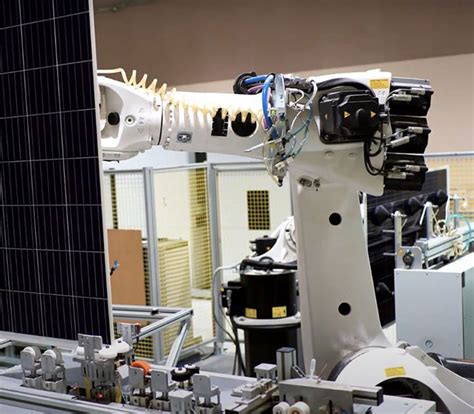
Selecting PCB assembly partners with proven dependability ensures consistent quality and minimizes production risks in electronics manufacturing. Leading PCBA providers distinguish themselves through rigorous quality control protocols, including automated optical inspection (AOI) and X-ray testing, to detect defects at micron-level precision. These suppliers typically hold ISO 9001 and IPC-A-610 certifications, guaranteeing adherence to international manufacturing standards.
A key advantage of partnering with established PCB assembly services lies in their robust supply chain networks, which mitigate component shortages and ensure material traceability. Many leverage vendor-managed inventory (VMI) systems to maintain critical part stocks, reducing lead times for high-mix, low-volume projects. Advanced providers also implement real-time production monitoring, enabling clients to track order progress through secure portals.
For industries requiring mission-critical assemblies—such as aerospace or medical devices—reliability extends to compliance with RoHS and REACH regulations, ensuring environmental and safety standards are met. Trusted PCBA suppliers often provide design-for-manufacturability (DFM) feedback during prototyping, optimizing layouts for yield improvements and cost efficiency. This collaborative approach minimizes redesign cycles while maintaining electrical performance benchmarks, making reliability a cornerstone of scalable electronics production.
Efficient PCB Production Services
Modern PCB assembly efficiency stems from synchronized engineering processes and smart manufacturing protocols. By leveraging automated optical inspection (AOI) systems and AI-driven component placement algorithms, PCBA specialists achieve precision at scale while minimizing material waste. Advanced factories employ just-in-time inventory models paired with IoT-enabled production trackers, reducing lead times by up to 35% compared to traditional workflows.
The integration of surface-mount technology (SMT) with robotic soldering arms ensures consistent quality across high-volume batches, maintaining defect rates below 0.02%. Real-time thermal profiling during reflow processes further optimizes solder joint reliability, critical for aerospace and medical-grade assemblies. For rapid prototyping, modular PCB assembly lines enable swift transitions between design iterations without compromising throughput.
Suppliers prioritizing efficiency often adopt closed-loop testing frameworks, where in-circuit and functional validations occur parallel to manufacturing stages. This methodology slashes final QA cycles by 50% while adhering to IPC-A-610 standards. Such streamlined approaches empower manufacturers to scale operations seamlessly, whether producing 100-unit pilot runs or 100,000-unit commercial orders.
Expert PCB Solutions for Manufacturers
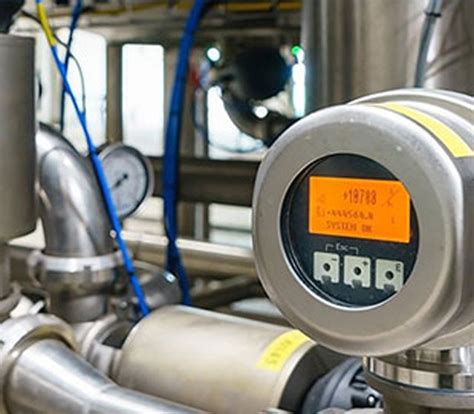
Manufacturers seeking to optimize their electronics production workflows increasingly rely on PCB assembly specialists who deliver tailored technical expertise. These providers combine advanced PCBA capabilities with industry-specific knowledge to address challenges ranging from complex circuit designs to compliance with evolving regulatory standards. By leveraging automated assembly lines and AI-driven quality control systems, top-tier suppliers ensure precision in component placement, soldering, and testing—critical for high-reliability applications in aerospace, medical devices, or IoT infrastructure.
A key advantage lies in the integration of design-for-manufacturability (DFM) analysis during early project phases. This proactive approach identifies potential production bottlenecks, such as incompatible component footprints or thermal management issues, reducing costly redesigns post-prototyping. Additionally, partnerships with PCB assembly services suppliers often include just-in-time inventory management and multi-tiered testing protocols, enabling manufacturers to scale production without compromising on turnaround speed or yield rates.
For industries requiring specialized certifications—such as ISO 13485 for medical devices or AS9100 for aerospace—expert providers streamline compliance through documented process controls and traceability frameworks. This alignment between technical proficiency and operational rigor positions PCBA partners as strategic allies in achieving seamless, end-to-end electronics manufacturing outcomes.
Conclusion
In the dynamic landscape of electronics manufacturing, selecting the right PCB assembly partner is pivotal to ensuring operational efficiency and product reliability. Leading PCBA providers distinguish themselves through precision-driven processes and scalable solutions, addressing both prototyping needs and high-volume production demands. By integrating advanced technologies like automated optical inspection (AOI) and surface-mount technology (SMT), these suppliers minimize defects while accelerating timelines—critical for industries requiring rapid market entry.
Collaborating with trusted PCB assembly services suppliers ensures seamless coordination between design, component sourcing, and final testing, reducing bottlenecks in the supply chain. Moreover, their expertise in handling complex multilayer boards and mixed-technology assemblies guarantees compatibility with evolving industry standards. For manufacturers prioritizing cost-effectiveness without compromising quality, partnering with specialists in PCBA offers a strategic advantage, enabling businesses to focus on innovation while maintaining rigorous production benchmarks. As manufacturing demands grow increasingly intricate, aligning with forward-thinking providers remains essential for sustaining competitiveness in a fast-paced market.
Frequently Asked Questions
What distinguishes PCB assembly from PCBA?
PCB assembly refers to the process of populating a bare circuit board with electronic components, while PCBA (Printed Circuit Board Assembly) denotes the completed board ready for integration into devices. Both terms are often used interchangeably, but PCBA explicitly includes component mounting.
How do suppliers ensure quality in PCB assembly services?
Leading providers implement automated optical inspection (AOI), X-ray testing, and adherence to IPC-A-610 standards. These protocols verify solder joint integrity, component alignment, and electrical functionality, minimizing defects in high-volume production.
What factors influence turnaround times for PCBA projects?
Turnaround depends on design complexity, component availability, and order volume. Many suppliers offer 24-48-hour expedited services for prototypes, while large-scale orders may require 1-2 weeks. Just-in-time manufacturing models further accelerate timelines.
Can PCB assembly services support mixed-technology boards?
Yes, advanced providers combine surface-mount (SMT), through-hole (THT), and mixed-technology assembly in a single workflow. This flexibility accommodates designs requiring both high-density ICs and ruggedized connectors.
How do costs vary between prototype and full-scale PCBA production?
Prototyping incurs higher per-unit costs due to setup fees and low material discounts. Bulk orders leverage economies of scale, with savings up to 40-60% for quantities exceeding 1,000 units.
What certifications should a reliable PCB assembly partner hold?
Look for ISO 9001 (quality management), ISO 13485 (medical devices), and UL certification for safety-critical applications. Aerospace and automotive sectors often require AS9100 or IATF 16949 compliance.
Ready to Optimize Your Electronics Manufacturing?
For tailored PCB assembly solutions that align with your project’s technical and budgetary needs, please click here to connect with industry experts.