Live Cam PCB: Design, Components, and Applications
Introduction
Live camera PCBs (Printed Circuit Boards) are essential components in modern video streaming, surveillance, and real-time communication systems. These PCBs integrate image sensors, processors, memory, and connectivity modules to capture, process, and transmit video data efficiently. With the increasing demand for high-definition (HD) and ultra-high-definition (UHD) video streaming, live cam PCBs have evolved to support advanced features such as low-light performance, motion detection, and AI-based analytics.
This article explores the key aspects of live cam PCBs, including their design considerations, essential components, manufacturing challenges, and applications in various industries.
1. Key Components of a Live Cam PCB
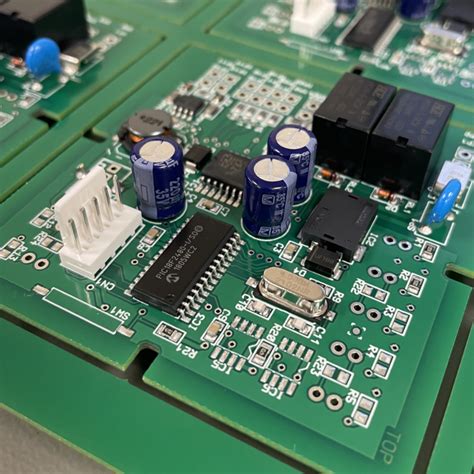
A live cam PCB consists of multiple critical components that work together to capture, process, and transmit video signals. The major components include:
1.1 Image Sensor
The image sensor is the core component that converts light into electrical signals. Common types include:
- CMOS Sensors – Widely used due to their low power consumption and high-speed readout.
- CCD Sensors – Offer superior image quality but consume more power and are costlier.
Popular sensor manufacturers include Sony (e.g., IMX series), OmniVision, and ON Semiconductor.
1.2 Image Signal Processor (ISP)
The ISP enhances image quality by performing tasks such as:
- Noise reduction
- Auto-exposure and auto-white balance
- Edge enhancement
- HDR (High Dynamic Range) processing
1.3 Microcontroller / System-on-Chip (SoC)
Modern live cameras often use SoCs that integrate a CPU, GPU, and ISP to optimize performance. Examples include:
- Ambarella (for high-end surveillance cameras)
- HiSilicon (used in Huawei cameras)
- NXP i.MX (for industrial applications)
1.4 Memory (RAM & Storage)
- RAM (DDR3/DDR4/LPDDR4) – Ensures smooth video buffering and processing.
- Flash Storage (eMMC/NAND) – Stores firmware and temporary video data.
1.5 Connectivity Modules
- Wi-Fi/Bluetooth – For wireless streaming (e.g., ESP32, Qualcomm QCA9377).
- Ethernet (PoE Support) – For wired IP cameras with Power-over-Ethernet.
- USB/HDMI – For direct video output.
1.6 Power Management IC (PMIC)
Ensures stable voltage regulation for different components, including:
- DC-DC Converters – Step-down/step-up voltage as needed.
- LDO Regulators – Provide clean power to sensitive analog components.
1.7 Lens & IR Cut Filter
- Fixed or Varifocal Lens – Adjusts focus and field of view.
- IR Cut Filter – Improves color accuracy by blocking infrared light in daylight.
2. PCB Design Considerations for Live Cameras
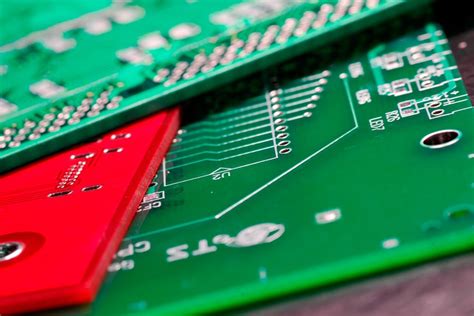
Designing a live cam PCB requires careful consideration of signal integrity, power efficiency, and thermal management.
2.1 High-Signal Integrity Design
- Controlled Impedance Traces – Essential for high-speed signals (MIPI CSI-2, USB 3.0, HDMI).
- Proper Grounding & Shielding – Reduces electromagnetic interference (EMI).
- Differential Pair Routing – Used for high-speed data lines to minimize noise.
2.2 Thermal Management
- Copper Pour & Thermal Vias – Dissipate heat from processors.
- Heat Sinks & Fans – Required for high-performance cameras (e.g., 4K/8K streaming).
2.3 Power Distribution Network (PDN) Optimization
- Decoupling Capacitors – Minimize voltage fluctuations.
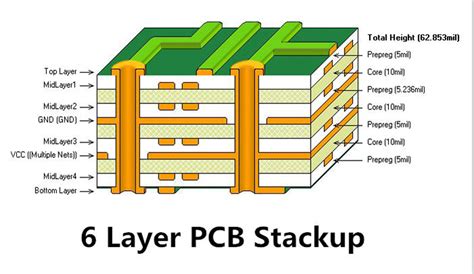
- Multi-Layer Stackup – Ensures stable power delivery (e.g., 4-6 layer PCBs).
2.4 Miniaturization & Component Placement
- High-Density Interconnect (HDI) PCBs – Enable compact designs.
- Fine-Pitch BGAs & QFNs – Used for SoCs and memory modules.
3. Manufacturing Challenges
Producing high-quality live cam PCBs involves several challenges:
3.1 EMI & Signal Crosstalk
- Solution: Proper shielding, ground planes, and impedance matching.
3.2 Heat Dissipation in Compact Designs
- Solution: Thermal vias, heat spreaders, and efficient PCB layout.
3.3 Firmware & Driver Compatibility
- Solution: Close collaboration between hardware and software teams.
3.4 Cost vs. Performance Trade-offs
- Solution: Selecting cost-effective yet reliable components (e.g., mid-range CMOS sensors instead of high-end CCDs).
4. Applications of Live Cam PCBs
Live cam PCBs are used in various industries, including:
4.1 Surveillance & Security
- IP Cameras – Used in smart homes and commercial security systems.
- Body Cameras – For law enforcement and industrial safety.
4.2 Video Conferencing & Live Streaming
- Webcams – For remote work and content creation (e.g., Logitech, Razer).
- Live Broadcast Cameras – Used in sports and event streaming.
4.3 Automotive & Drones
- Dash Cams – For accident recording and driver assistance.
- FPV (First-Person View) Drones – Require low-latency video transmission.
4.4 Medical & Industrial Imaging
- Endoscopy Cameras – Used in minimally invasive surgeries.
- Machine Vision Cameras – For quality control in manufacturing.
5. Future Trends in Live Cam PCB Technology
The evolution of live cam PCBs is driven by advancements in AI, 5G, and semiconductor technology:
5.1 AI-Enhanced Cameras
- Edge AI Processing – Enables real-time object detection (e.g., NVIDIA Jetson).
- Facial Recognition – Used in smart security systems.
5.2 5G & Low-Latency Streaming
- Ultra-HD Live Streaming – 8K resolution with minimal delay.
- Cloud-Based Video Processing – Reduces onboard processing requirements.
5.3 Advanced Sensor Technologies
- Event-Based Vision Sensors – Reduce power consumption by only capturing changes in the scene.
- Multi-Spectral Imaging – Used in agriculture and medical diagnostics.
5.4 Flexible & Wearable Cameras
- Foldable PCBs – Enable compact and wearable camera designs.
6. Conclusion
Live cam PCBs are at the heart of modern imaging systems, enabling real-time video capture and transmission across various industries. Their design involves careful consideration of signal integrity, thermal management, and power efficiency. As technology advances, AI integration, 5G connectivity, and advanced sensors will further enhance the capabilities of live camera systems.
For engineers and manufacturers, staying updated with the latest PCB design techniques and component innovations is crucial to developing high-performance live cam solutions.