PCB Heat Dissipation Design: Strategies and Best Practices
Introduction to PCB Thermal Management
Printed Circuit Board (PCB) heat dissipation design is a critical aspect of modern electronics engineering that directly impacts product reliability, performance, and longevity. As electronic devices continue to shrink in size while increasing in power and functionality, effective thermal management has become one of the most challenging aspects of PCB design.
Heat in PCBs primarily originates from power dissipation in active components like processors, power transistors, voltage regulators, and other semiconductor devices. When this heat isn’t properly managed, it can lead to numerous problems including reduced component lifespan, performance throttling, intermittent failures, and in extreme cases, catastrophic thermal runaway.
This comprehensive guide explores the fundamental principles of PCB heat dissipation, various cooling techniques, material considerations, and design strategies that engineers employ to maintain optimal operating temperatures in electronic assemblies.
Fundamentals of Heat Transfer in PCBs
Understanding the basic mechanisms of heat transfer is essential for effective thermal design. Heat moves through PCBs via three primary mechanisms:
- Conduction: The transfer of heat through solid materials (like the PCB substrate and copper traces)
- Convection: The transfer of heat to surrounding air or liquid coolants
- Radiation: The emission of infrared energy (typically minor in PCB applications)
The thermal conductivity of materials plays a crucial role in conduction. Standard FR-4 PCB material has relatively poor thermal conductivity (about 0.3 W/mK), while copper layers (385 W/mK) provide excellent heat spreading capability. This disparity explains why copper is so heavily utilized in thermal management solutions.
Key Factors Affecting PCB Temperature
Several factors influence the thermal performance of a PCB:
- Power dissipation of components: Higher power components generate more heat
- Component density and placement: Clustered high-power components create hot spots
- PCB layer stack-up: More copper layers generally improve thermal performance
- Board size and shape: Larger boards have more surface area for heat dissipation
- Ambient temperature: Higher environment temperatures reduce cooling efficiency
- Airflow conditions: Natural convection vs. forced air cooling
- Enclosure design: Affects airflow and heat retention
PCB Layout Strategies for Improved Heat Dissipation
1. Component Placement and Orientation
Strategic component placement is the first line of defense against thermal issues:
- Distribute heat-generating components evenly across the board
- Avoid clustering high-power components in one area
- Place temperature-sensitive components away from heat sources
- Orient components to take advantage of natural airflow patterns
- Position high-power components near board edges when possible
2. Copper Utilization and Thermal Relief
Copper features are powerful tools for heat spreading:
- Use thicker copper weights (2oz or more) for high-power designs
- Create large copper pours connected to component thermal pads
- Implement thermal relief connections to balance soldering and heat transfer
- Utilize all available copper layers for heat spreading
- Connect thermal vias to inner and opposite side copper layers
3. Thermal Via Arrays
Thermal vias are among the most effective tools for PCB heat dissipation:
- Place arrays of small vias under component thermal pads
- Use via diameters between 0.2mm to 0.3mm for optimal results
- Fill vias with thermally conductive material when possible
- Connect vias to internal ground planes for additional heat spreading
- Consider staggered via patterns for very high density designs
4. Power Plane Design
Power planes serve dual purposes in thermal management:
- Distribute heat from multiple components across the plane
- Use multiple power planes in multilayer designs
- Connect power planes to thermal vias when appropriate
- Consider split planes with thermal bridges for different voltage domains
Advanced PCB Heat Dissipation Techniques
1. Metal Core PCBs (MCPCBs)
Metal core PCBs incorporate a thermally conductive metal layer (typically aluminum) as part of the substrate:
- Aluminum core provides excellent thermal conductivity (138-200 W/mK)
- Common in LED lighting and power electronics
- Allows direct mounting to heatsinks
- More expensive than standard FR-4 but highly effective
2. Embedded Heat Spreaders
Some high-performance designs incorporate dedicated heat spreaders:
- Copper blocks or plates embedded within the PCB stack-up
- Direct contact with heat-generating components
- Often used in conjunction with thermal vias
- Requires careful planning in PCB fabrication
3. Thermal Interface Materials (TIMs)
TIMs improve heat transfer between components and heatsinks:
- Thermal pads, greases, and phase-change materials
- Fill microscopic air gaps that impede heat transfer
- Selection depends on thermal conductivity requirements and assembly process
External Cooling Solutions
When PCB-level cooling isn’t sufficient, external solutions may be required:
1. Heatsinks
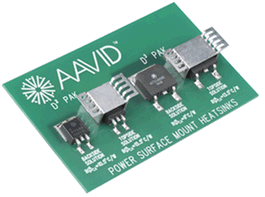
- Passive aluminum or copper fins attached to hot components
- Size and fin design depends on available airflow
- May require thermal interface materials
- Can be board-mounted or chassis-mounted
2. Forced Air Cooling
- Fans or blowers to increase airflow across the PCB
- Requires careful design of airflow paths
- Adds power consumption and potential noise
- May need dust filtration in some environments
3. Liquid Cooling
- Cold plates or heat pipes for very high power density
- Used in high-performance computing and power electronics
- More complex and expensive than air cooling
- Excellent for compact designs with limited airflow
Material Selection for Thermal Management
1. PCB Substrate Materials
- Standard FR-4: Low cost but poor thermal performance
- High-Tg FR-4: Better thermal stability at elevated temperatures
- Polyimide: Good thermal stability but expensive
- Ceramic-filled laminates: Improved thermal conductivity
- Metal core substrates: Best thermal performance
2. Copper Features
- Standard 1oz copper sufficient for many applications
- 2oz or heavier copper for power circuits
- Thicker copper improves current capacity and heat spreading
- Copper weight affects manufacturing cost and process
3. Solder Mask Considerations
- Some solder mask formulations affect heat dissipation
- Selective solder mask removal over copper heatsinks
- Thermal resistance of solder mask material
- Color choice affects radiative cooling (black is optimal)
Thermal Simulation and Analysis
Modern PCB design relies heavily on thermal simulation:
- Computational Fluid Dynamics (CFD): Models airflow and convection
- Finite Element Analysis (FEA): Predicts temperature distribution
- Thermal Resistance Networks: Simplified component-level analysis
Simulation helps identify hot spots before prototyping, saving time and cost. Many PCB design tools now integrate thermal analysis capabilities.
Design for Manufacturing (DFM) Considerations
Thermal management features must align with manufacturing capabilities:
- Minimum via size and spacing requirements
- Copper balance requirements for multilayer boards
- Limitations on copper weight for fine-pitch components
- Thermal relief design for wave soldering
- Heatsink mounting and clearance requirements
Reliability Considerations
Proper thermal design enhances product reliability:
- Component derating for temperature effects
- Thermal cycling and fatigue analysis
- Material CTE (Coefficient of Thermal Expansion) matching
- Solder joint reliability at elevated temperatures
- Long-term effects of thermal stress on components
Case Studies in PCB Thermal Management
1. High-Power LED Lighting
LED PCBs often use metal core substrates with:
- Optimized thermal via patterns under LED packages
- Direct mounting to aluminum housings
- Minimal thermal resistance paths
- High copper weights in the circuit layers
2. Power Electronics
Switch-mode power supplies require:
- Careful placement of switching transistors
- Thick copper traces for high current paths
- Heatsinks for rectifiers and regulators
- Thermal relief for wave soldered components
3. High-Density Computing
Server motherboards implement:
- Multilayer boards with dedicated thermal layers
- Complex heatsink arrangements
- Optimized airflow channels
- Temperature monitoring and fan control
Future Trends in PCB Thermal Management
Emerging technologies are shaping the future of PCB cooling:
- Embedded Cooling Channels: Microfluidic cooling within PCBs
- Graphene and Nanomaterials: Ultra-high conductivity materials
- 3D Printed Heat Exchangers: Custom cooling structures
- Phase-Change Materials: For transient thermal loads
- Smart Thermal Management: Active control systems
Best Practices Summary
- Start thermal planning early in the design process
- Use thermal simulation to identify potential issues
- Distribute heat sources evenly across the board
- Maximize copper utilization for heat spreading
- Implement thermal vias under hot components
- Consider specialized materials for high-power designs
- Verify thermal performance with prototype testing
- Design for worst-case thermal scenarios
- Account for thermal effects on electrical performance
- Document thermal design requirements clearly
Conclusion
Effective PCB heat dissipation design requires a holistic approach that considers materials, layout techniques, component selection, and system-level cooling solutions. As electronic devices continue to push the boundaries of power density, thermal management will remain a critical challenge for PCB designers. By applying the principles and strategies outlined in this article, engineers can create reliable, high-performance electronic products that meet their thermal requirements throughout the product lifecycle.
The field of PCB thermal management continues to evolve with new materials, manufacturing techniques, and simulation tools. Staying informed about these developments and understanding the fundamental heat transfer principles will enable designers to tackle increasingly demanding thermal challenges in modern electronics.