Perfect fusion of circuit boards and laser welding technology
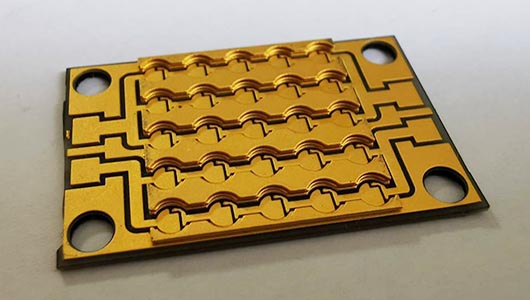
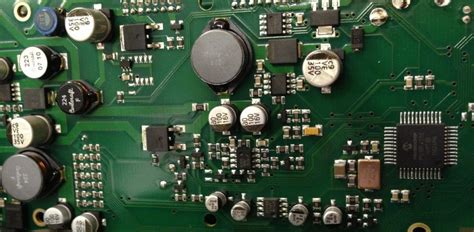
Perfect fusion of circuit boards and laser welding technology. With the development of the electronics industry, the integration of circuit boards is getting higher and higher, the density of electronic devices on circuit boards is getting higher and higher, and the size of electronic devices is getting smaller and smaller. Many electronic devices cannot withstand the overall high temperature of wave soldering and reflow soldering and need to be soldered independently. Traditional electric soldering irons are prone to affect other components due to their low degree of automation, low efficiency, and large size, and therefore cannot adapt to the development of the electronics industry.
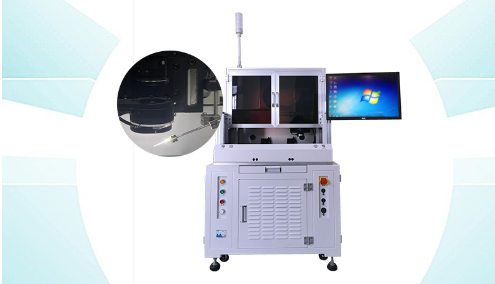
Under this premise, laser welding, a non-contact, high-energy, and high-density welding method, has great advantages. Laser welding has high efficiency and is particularly suitable for precision welding of tiny parts. At present, Zichen Laser provides a circuit board laser welding system with high welding efficiency and accuracy for circuit board welding, which improves the efficiency of automated production for enterprises.
Laser welding method
According to the different output methods of the laser beam, laser welding can be divided into pulse laser welding and continuous laser welding. According to the formation characteristics of laser welding welds, laser welding can be divided into thermal conduction welding and deep melting welding. Thermal conduction welding uses low laser power, takes a long time to form a molten pool, and has a shallow melting depth, so it is mostly used for welding small parts; deep melting welding uses high laser power density, and the metal melting speed in the laser radiation area is fast. The melting of the metal is accompanied by strong vaporization, which can obtain a weld with a large melting depth and a large depth-width ratio. With the emergence of a variety of new lasers, the intelligence of laser welding equipment and the flexibility of processing have been significantly improved, and the cost of lasers has also been significantly reduced.
PCB circuit board laser welding machine heats the surface of the workpiece through laser radiation, and the surface heat diffuses to the inside through heat conduction. By controlling the width, energy, peak power and repetition frequency of the laser pulse, the workpiece is melted to form a specific molten pool. Due to its unique advantages, it has been successfully used in the precision welding of micro and small parts and the welding of thin-walled plates.
Circuit board laser welding process
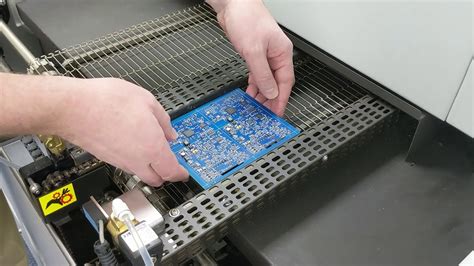
After the circuit board laser welding machine assembles the electronic device and the circuit board and enters the welding station, under the control of the controller, the visual device first visually locates the welding position, and then moves the welding wire to the above welding position through the wire feeding mechanism. The laser welder emits laser to the welding position and starts heating. At the same time, the temperature controller monitors the welding position and measures the temperature of the welding wire after being irradiated by the laser. When the temperature increases to above the melting temperature of the welding wire, the wire feeding mechanism starts to feed the welding wire at the set speed. At the same time, the temperature controller monitors the welding temperature. When the welding temperature is higher than the set temperature, the controller reduces the output power of the laser welder. When the welding temperature is lower than the set temperature, the laser welder output power is increased, so that the welding temperature is always kept within the set area to prevent the temperature from being too high to damage the workpiece and the temperature from being too low to complete the welding. In summary, the working process principle of the circuit board laser welding machine provided by Zichen Laser is introduced.
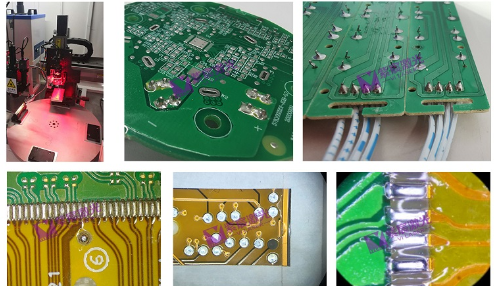
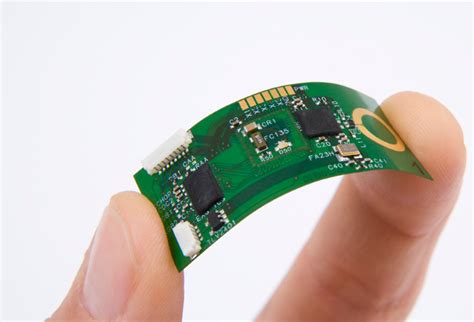
In today’s era of the Internet of Things, the application of circuit boards is an indispensable part. Circuit boards are mainly used in: communications, digital, MP3, DVD, computer motherboards, notebook motherboards, network equipment boards, instrument control boards, switches, routers, set-top boxes, digital cameras, printers, radios and all other high-precision products.