Printed Circuit Board (PCB) Capacitors: An In-Depth Analysis
Introduction
Printed Circuit Board (PCB) capacitors are fundamental components in modern electronics, playing a crucial role in the functionality and reliability of electronic devices. These capacitors are integrated directly into the PCB, providing essential functions such as filtering, decoupling, energy storage, and timing. This article delves into the various aspects of PCB capacitors, including their types, materials, design considerations, applications, and future trends.
Types of PCB Capacitors
1. Ceramic Capacitors
Ceramic capacitors are the most commonly used type of PCB capacitors due to their small size, high reliability, and low cost. They are made from ceramic materials with high dielectric constants, allowing for high capacitance values in a compact form factor. Ceramic capacitors are available in various classes, including Class 1 (high stability and low losses) and Class 2 (higher capacitance but less stable).
2. Electrolytic Capacitors
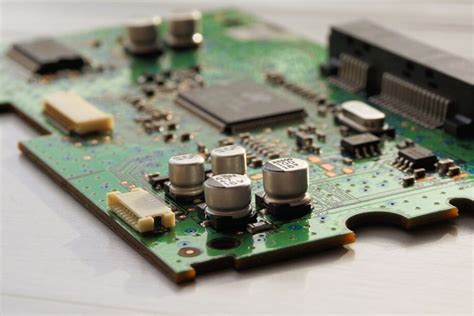
Electrolytic capacitors are known for their high capacitance values, making them suitable for applications requiring large energy storage. They are polarized, meaning they must be connected with the correct polarity to avoid damage. Aluminum electrolytic capacitors are the most common type, but tantalum electrolytic capacitors are also widely used due to their higher reliability and smaller size.
3. Tantalum Capacitors
Tantalum capacitors are a subtype of electrolytic capacitors that use tantalum metal as the anode. They offer high capacitance per unit volume, excellent stability, and low leakage current. However, they are more expensive than aluminum electrolytic capacitors and require careful handling to avoid reverse polarity and overvoltage conditions.
4. Film Capacitors
Film capacitors use a thin plastic film as the dielectric material. They are known for their high insulation resistance, low dielectric absorption, and excellent frequency response. Film capacitors are often used in applications requiring high precision and stability, such as audio circuits and power supply filtering.
5. Supercapacitors
Supercapacitors, also known as ultracapacitors, are specialized capacitors with extremely high capacitance values, often in the range of farads. They are used in applications requiring rapid charge/discharge cycles and high energy density, such as backup power systems and energy harvesting.
Materials and Construction
1. Dielectric Materials
The dielectric material is a critical component of any capacitor, determining its electrical properties. Common dielectric materials used in PCB capacitors include:
- Ceramic: High dielectric constant, suitable for high-frequency applications.
- Aluminum Oxide: Used in electrolytic capacitors, providing high capacitance.
- Tantalum Pentoxide: Offers high capacitance and stability in tantalum capacitors.
- Plastic Films: Such as polyester, polypropylene, and polycarbonate, used in film capacitors for their excellent electrical properties.
2. Electrode Materials
The electrodes in PCB capacitors are typically made from conductive materials such as:
- Metals: Aluminum, tantalum, and nickel are commonly used in electrolytic and tantalum capacitors.
- Conductive Polymers: Used in some modern capacitors to replace liquid electrolytes, improving reliability and performance.
3. Encapsulation
PCB capacitors are often encapsulated to protect them from environmental factors such as moisture, dust, and mechanical stress. Encapsulation materials include epoxy resins, silicone, and thermoplastics.
Design Considerations
1. Capacitance Value
The capacitance value is a primary consideration in capacitor selection, determined by the application’s requirements. High capacitance values are needed for energy storage and filtering, while lower values are sufficient for decoupling and timing applications.
2. Voltage Rating
The voltage rating of a capacitor must exceed the maximum voltage it will encounter in the circuit to prevent breakdown and failure. Designers must consider both the operating voltage and any potential voltage spikes or transients.
3. Temperature Coefficient
The temperature coefficient indicates how the capacitance value changes with temperature. This is particularly important in applications with wide temperature ranges, such as automotive and industrial electronics.
4. Equivalent Series Resistance (ESR)
ESR is the internal resistance of a capacitor, affecting its performance in high-frequency applications. Low ESR is desirable for applications such as power supply filtering and decoupling.
5. Size and Footprint
The physical size and footprint of the capacitor must fit within the constraints of the PCB layout. Miniaturization is a key trend in electronics, driving the development of smaller capacitors with higher performance.
6. Reliability and Lifespan
Reliability is critical in many applications, particularly in industries such as aerospace, medical, and automotive. Factors affecting reliability include the quality of materials, manufacturing processes, and operating conditions.
Applications of PCB Capacitors
1. Power Supply Filtering
PCB capacitors are widely used in power supply circuits to filter out noise and ripple, ensuring a stable and clean voltage supply to sensitive components.
2. Decoupling
Decoupling capacitors are placed close to integrated circuits (ICs) to provide a local energy source, reducing noise and improving signal integrity.
3. Timing and Oscillation
Capacitors are essential in timing circuits, such as RC oscillators and timers, where they control the frequency and duration of signals.
4. Energy Storage
In applications such as backup power systems and energy harvesting, capacitors store energy and release it when needed.
5. Signal Coupling and Decoupling
Capacitors are used to couple AC signals between stages of an amplifier while blocking DC components. They also decouple different parts of a circuit to prevent interference.
6. RF and Microwave Circuits
In high-frequency applications, such as RF and microwave circuits, capacitors are used for impedance matching, filtering, and tuning.
Future Trends in PCB Capacitors
1. Miniaturization
The trend towards smaller and more compact electronic devices is driving the development of miniaturized capacitors with higher performance. Advances in materials and manufacturing techniques are enabling the production of capacitors with smaller footprints and higher capacitance values.
2. High-Frequency Performance
As electronic devices operate at increasingly higher frequencies, there is a growing demand for capacitors with low ESR and high-frequency performance. New dielectric materials and electrode designs are being developed to meet these requirements.
3. Enhanced Reliability
Reliability is a key focus in industries such as automotive, aerospace, and medical electronics. Future capacitors will likely feature improved materials and construction techniques to enhance their lifespan and performance under harsh conditions.
4. Integration with Active Components
The integration of capacitors with active components, such as transistors and diodes, is an emerging trend. This integration can reduce the overall size of the circuit and improve performance by minimizing parasitic effects.
5. Sustainable Materials
With increasing environmental concerns, there is a push towards using sustainable and eco-friendly materials in capacitor manufacturing. Research is ongoing to develop biodegradable and recyclable dielectric materials.
6. Advanced Manufacturing Techniques
Additive manufacturing, such as 3D printing, is being explored for the production of capacitors. This technology allows for the creation of complex geometries and customized designs, potentially leading to new capacitor configurations and improved performance.
Conclusion
PCB capacitors are indispensable components in modern electronics, providing essential functions such as filtering, decoupling, energy storage, and timing. With a wide range of types, materials, and designs, they cater to diverse applications across various industries. As technology advances, the development of miniaturized, high-performance, and reliable capacitors will continue to drive innovation in electronics. Future trends such as integration with active components, sustainable materials, and advanced manufacturing techniques promise to further enhance the capabilities and applications of PCB capacitors.