Protecting PCBs from Environmental Conditions Through Coating
Introduction
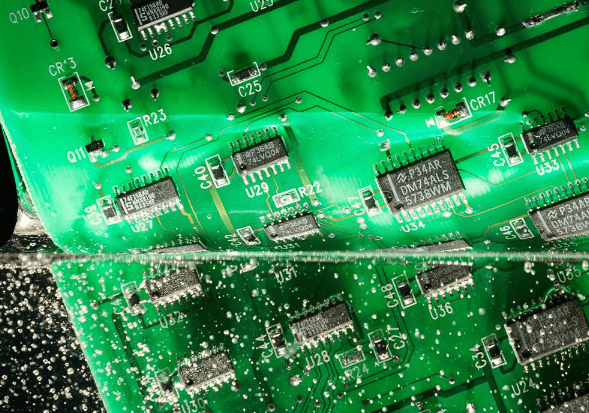
Printed Circuit Boards (PCBs) are the backbone of modern electronics, found in everything from consumer devices to industrial machinery and aerospace systems. However, PCBs are often exposed to harsh environmental conditions such as moisture, dust, chemicals, and temperature fluctuations, which can lead to corrosion, short circuits, and eventual failure. To enhance their durability and reliability, protective coatings are applied to PCBs. This article explores the importance of PCB coatings, the types of coatings available, application methods, and best practices for ensuring long-term protection.
Why Coat PCBs?
PCBs operate in diverse environments, and exposure to the following conditions can degrade their performance:
- Moisture and Humidity – Causes oxidation, dendritic growth, and short circuits.
- Dust and Particulate Contamination – Can lead to electrical leakage and overheating.
- Chemical Exposure – Industrial environments may expose PCBs to corrosive chemicals.
- Thermal Stress – Repeated heating and cooling cycles can cause solder joint failures.
- Mechanical Stress – Vibration and shock can damage components and traces.
A well-applied conformal coating acts as a barrier against these factors, extending the PCB’s lifespan and ensuring reliable operation.
Types of PCB Coatings
Several types of conformal coatings are used in PCB protection, each with distinct properties suited for different applications.
1. Acrylic Resin (AR)
- Properties: Easy to apply, fast drying, and offers good moisture resistance.
- Advantages: Removable for repairs, cost-effective, and UV-resistant.
- Limitations: Limited chemical and abrasion resistance.
- Applications: Consumer electronics, automotive electronics.
2. Silicone Resin (SR)
- Properties: Flexible, high-temperature resistant, and excellent moisture protection.
- Advantages: Performs well in extreme temperatures (-55°C to 200°C), good dielectric properties.
- Limitations: Difficult to remove, prone to attracting dust.
- Applications: High-temperature environments, LED lighting, aerospace.
3. Urethane (Polyurethane, PU)
- Properties: Excellent chemical and abrasion resistance.
- Advantages: Strong protection against solvents and fuels.
- Limitations: Hard to remove, requires chemical stripping.
- Applications: Automotive, marine, and industrial electronics.
4. Epoxy Resin
- Properties: Hard, rigid coating with excellent moisture and chemical resistance.
- Advantages: Provides strong mechanical protection.
- Limitations: Difficult to rework, can crack under thermal stress.
- Applications: Harsh industrial environments, embedded systems.
5. Parylene (Vapor Deposition Coating)
- Properties: Ultra-thin, pinhole-free polymer coating.
- Advantages: Excellent chemical and moisture barrier, biocompatible.
- Limitations: Expensive, requires specialized equipment.
- Applications: Medical devices, military, and aerospace electronics.
Application Methods
The effectiveness of a PCB coating depends on proper application. Common methods include:
1. Brushing
- Process: Manual application using a brush.
- Advantages: Low cost, suitable for small-scale repairs.
- Disadvantages: Inconsistent thickness, labor-intensive.
2. Spraying (Aerosol or Spray Gun)
- Process: Coating is sprayed onto the PCB.
- Advantages: Faster than brushing, good for medium-scale production.
- Disadvantages: Overspray can waste material, requires masking.
3. Dipping
- Process: PCB is submerged in a coating solution.
- Advantages: Uniform coverage, efficient for high-volume production.
- Disadvantages: Excess coating may pool, requires draining.
4. Selective Coating
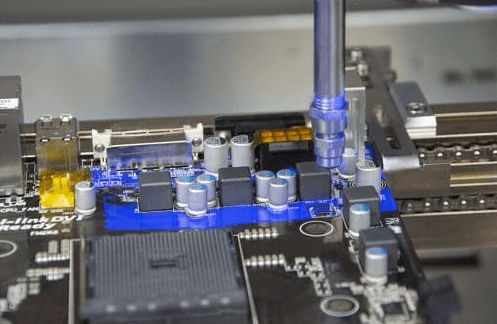
- Process: Robotic dispensers apply coating only to specific areas.
- Advantages: Precision application, avoids coating connectors or heat sinks.
- Disadvantages: High initial cost, requires programming.
5. Vapor Deposition (Parylene)
- Process: PCBs are placed in a vacuum chamber where Parylene is deposited as a gas.
- Advantages: Ultra-thin, uniform coating.
- Disadvantages: Expensive, limited to specialized applications.
Best Practices for PCB Coating
To ensure optimal protection, follow these best practices:
- Clean the PCB First – Remove flux residues, dust, and oils to ensure proper adhesion.
- Mask Critical Areas – Protect connectors, test points, and heat-sensitive components.
- Control Coating Thickness – Too thin = inadequate protection; too thick = cracking or delamination.
- Cure Properly – Follow manufacturer guidelines for drying/curing time and temperature.
- Inspect for Defects – Check for bubbles, uneven coverage, or uncovered areas.
- Test Electrical Performance – Ensure the coating does not interfere with circuit functionality.
Testing and Reliability
After coating, PCBs should undergo reliability testing, including:
- Humidity Testing (e.g., 85°C/85% RH for 1,000 hours)
- Thermal Cycling (-40°C to +125°C)
- Chemical Resistance Testing (exposure to solvents, acids, etc.)
- Dielectric Withstanding Voltage Test (ensures insulation integrity)
Conclusion
Applying protective coatings to PCBs is essential for ensuring long-term reliability in harsh environments. The choice of coating—whether acrylic, silicone, urethane, epoxy, or Parylene—depends on the specific application requirements. Proper application techniques, thorough cleaning, and rigorous testing further enhance performance. As electronics continue to advance, innovations in conformal coatings will play a crucial role in improving durability across industries.
By implementing the right coating strategy, manufacturers can significantly reduce PCB failures, lower maintenance costs, and enhance product longevity in demanding conditions.