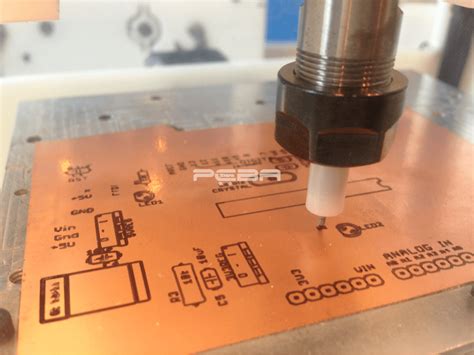
Rogers hdi pcb circuit board
Understanding The Basics Of Rogers HDI PCB Circuit Boards
Rogers HDI PCB circuit boards represent a significant advancement in the field of printed circuit board technology, offering numerous benefits for high-frequency and high-speed applications.
To understand the basics of Rogers HDI PCB circuit boards, it is essential to first grasp the fundamental concepts of both HDI (High-Density Interconnect) technology and the unique properties of Rogers materials.
High-Density Interconnect (HDI) technology is a method used to create more compact and efficient circuit boards by incorporating finer lines and spaces, smaller vias,
and higher connection pad density. This technology allows for the integration of more components in a smaller area, which is particularly advantageous in modern electronic devices that demand miniaturization without compromising performance. HDI PCBs are characterized by their use of microvias, blind vias, and buried vias, which facilitate the interconnection of multiple layers within the board, thereby enhancing electrical performance and reliability.
Rogers Corporation, a renowned manufacturer of high-performance materials, produces a range of laminates and prepregs specifically designed for high-frequency and high-speed applications. These materials are known for their excellent dielectric properties, low signal loss, and superior thermal management capabilities. Rogers materials, such as the RO4000 and RO3000 series, are widely used in applications that require stable electrical performance over a broad frequency range, including telecommunications, aerospace, and advanced computing.
When combining HDI technology with Rogers materials, the resulting Rogers HDI PCB circuit boards offer a unique set of advantages.
The high-density interconnects enable the design of complex circuits with reduced signal paths, which minimizes signal loss and electromagnetic interference (EMI). This is particularly critical in high-frequency applications where signal integrity is paramount. Additionally, the superior thermal properties of Rogers materials ensure that the circuit boards can operate reliably under high-power conditions, making them suitable for demanding environments.
Moreover, the use of Rogers materials in HDI PCBs enhances the overall mechanical stability of the boards.
These materials exhibit low coefficients of thermal expansion (CTE), which means they are less prone to dimensional changes under temperature variations. This stability is crucial for maintaining the integrity of the interconnections and preventing issues such as delamination or warping, which can compromise the performance and longevity of the circuit board.
Furthermore, Rogers HDI PCB circuit boards are highly customizable, allowing designers to tailor the board’s properties to meet specific application requirements.
The versatility of Rogers materials, combined with the precision of HDI technology, enables the creation of bespoke solutions that can address the unique challenges of various industries. For instance, in the telecommunications sector, Rogers HDI PCBs can support the high data rates and low latency demands of modern communication systems, while in the aerospace industry, they can withstand the harsh environmental conditions encountered during flight.
In conclusion, understanding the basics of Rogers HDI PCB circuit boards involves recognizing the synergistic benefits of HDI technology and Rogers materials. These advanced circuit boards offer enhanced electrical performance, superior thermal management, and exceptional mechanical stability, making them ideal for high-frequency and high-speed applications. As technology continues to evolve, the demand for compact, efficient, and reliable circuit boards will only increase, and Rogers HDI PCB circuit boards are well-positioned to meet these growing needs.
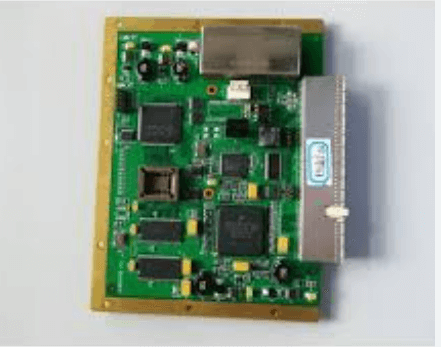
Advantages Of Using Rogers HDI PCB In Modern Electronics
Rogers HDI (High-Density Interconnect) PCB circuit boards have become increasingly prominent in the realm of modern electronics, offering a multitude of advantages that cater to the evolving demands of contemporary technology. One of the primary benefits of using Rogers HDI PCB is its ability to support higher component density. This is particularly crucial as electronic devices continue to shrink in size while simultaneously increasing in functionality. The compact nature of HDI PCBs allows for more components to be placed on a single board, thereby enhancing the overall performance and capability of the device.
In addition to supporting higher component density, Rogers HDI PCBs are known for their superior electrical performance.
The materials used in these circuit boards, such as Rogers’ advanced laminates, exhibit excellent dielectric properties and low signal loss. This ensures that the signal integrity is maintained even at high frequencies, which is essential for applications in telecommunications, aerospace, and other high-speed electronic systems. Consequently, devices that utilize Rogers HDI PCBs can achieve faster data transmission rates and more reliable performance.
Moreover, the thermal management capabilities of Rogers HDI PCBs are noteworthy.
Effective thermal management is critical in preventing overheating and ensuring the longevity of electronic components. Rogers materials are designed to dissipate heat efficiently, thereby reducing the risk of thermal-related failures. This is particularly beneficial in high-power applications where heat generation is a significant concern. By maintaining optimal operating temperatures, Rogers HDI PCBs contribute to the overall reliability and durability of electronic devices.
Another significant advantage of Rogers HDI PCBs is their mechanical robustness.
The advanced materials used in these circuit boards provide excellent mechanical strength and stability, which is essential for withstanding the physical stresses encountered during manufacturing and operation. This robustness ensures that the PCBs can endure various environmental conditions, including vibration, shock, and temperature fluctuations, making them suitable for use in demanding applications such as automotive and industrial electronics.
Furthermore, the design flexibility offered by Rogers HDI PCBs is a key factor in their widespread adoption.
The ability to incorporate multiple layers and fine lines allows for more complex and intricate circuit designs. This flexibility enables engineers to create innovative solutions that meet the specific requirements of their applications. Additionally, the use of microvias and blind/buried vias in HDI PCBs facilitates the creation of more compact and efficient designs, further enhancing the performance and functionality of the final product.
The environmental benefits of using Rogers HDI PCBs should not be overlooked.
The materials used in these circuit boards are often more environmentally friendly compared to traditional PCB materials. Rogers Corporation is committed to sustainability and strives to minimize the environmental impact of its products. By choosing Rogers HDI PCBs, manufacturers can contribute to reducing electronic waste and promoting more sustainable practices in the electronics industry.
In conclusion, the advantages of using Rogers HDI PCB circuit boards in modern electronics are manifold. From supporting higher component density and superior electrical performance to offering excellent thermal management and mechanical robustness, these circuit boards are well-suited to meet the demands of contemporary technology. The design flexibility and environmental benefits further underscore their value, making Rogers HDI PCBs a preferred choice for engineers and manufacturers seeking to develop cutting-edge electronic devices. As technology continues to advance, the role of Rogers HDI PCBs in shaping the future of electronics is poised to become even more significant.
Design Tips For Optimizing Rogers HDI PCB Performance
When designing Rogers HDI (High-Density Interconnect) PCB circuit boards, optimizing performance is paramount to ensure reliability and efficiency in high-frequency applications. The unique properties of Rogers materials, such as low dielectric constant and low loss tangent, make them ideal for high-speed and high-frequency circuits. However, to fully leverage these advantages, several design considerations must be meticulously addressed.
Firstly, understanding the material properties of Rogers laminates is crucial.
These materials are known for their excellent thermal stability and low signal loss, which are essential for maintaining signal integrity at high frequencies. Designers should select the appropriate Rogers material based on the specific requirements of their application, considering factors such as dielectric constant, thermal conductivity, and mechanical stability. This selection process is foundational, as it directly impacts the overall performance of the PCB.
Transitioning to the layout design, it is imperative to minimize signal loss and crosstalk.
One effective strategy is to use controlled impedance traces. By carefully designing the trace width and spacing, and considering the dielectric properties of the Rogers material, designers can achieve the desired impedance, thereby reducing signal reflections and ensuring signal integrity. Additionally, maintaining consistent trace geometry throughout the PCB is essential to avoid impedance discontinuities, which can degrade performance.
Moreover, the use of microvias in HDI PCBs offers significant advantages in terms of space optimization and signal integrity.
Microvias, being smaller than traditional vias, allow for higher routing density and shorter signal paths, which is particularly beneficial in high-frequency applications. However, it is important to ensure that the microvias are properly filled and plated to avoid reliability issues. The choice of via fill material and plating process should be compatible with Rogers materials to maintain the integrity of the PCB.
Thermal management is another critical aspect of optimizing Rogers HDI PCB performance.
High-frequency circuits often generate significant heat, which can affect the performance and longevity of the PCB. Effective thermal management strategies include the use of thermal vias, heat sinks, and thermal interface materials. Additionally, the thermal conductivity of the Rogers material should be considered during the design phase to ensure efficient heat dissipation.
Signal integrity can also be enhanced by careful consideration of the power distribution network (PDN).
A well-designed PDN minimizes voltage fluctuations and noise, which are detrimental to high-frequency performance. Techniques such as using multiple ground planes, decoupling capacitors, and proper placement of power and ground vias can significantly improve the stability of the PDN. Ensuring a low-inductance path for the return current is also vital for maintaining signal integrity.
Furthermore, electromagnetic interference (EMI) and electromagnetic compatibility (EMC) are critical concerns in high-frequency PCB design.
Shielding techniques, such as using ground planes and guard traces, can help mitigate EMI. Additionally, proper grounding and isolation of high-frequency components can prevent unwanted coupling and interference. Designers should also consider the placement of components and routing of traces to minimize EMI and ensure compliance with EMC standards.
In conclusion, optimizing the performance of Rogers HDI PCB circuit boards requires a comprehensive understanding of material properties, meticulous layout design, effective thermal management, robust power distribution, and careful consideration of EMI and EMC. By addressing these factors, designers can fully exploit the advantages of Rogers materials, ensuring high performance and reliability in high-frequency applications.
Comparing Rogers HDI PCB To Traditional PCB Technologies
Rogers HDI PCB (High-Density Interconnect Printed Circuit Board) technology represents a significant advancement in the field of electronics, offering numerous advantages over traditional PCB technologies. To understand the benefits and distinctions of Rogers HDI PCBs, it is essential to compare them with conventional PCB technologies, focusing on aspects such as material properties, design capabilities, performance, and applications.
One of the primary differences between Rogers HDI PCBs and traditional PCBs lies in the materials used.
Traditional PCBs typically employ FR-4, a composite material made of woven fiberglass cloth with an epoxy resin binder. While FR-4 is cost-effective and widely used, it has limitations in terms of dielectric properties and thermal performance. In contrast, Rogers HDI PCBs utilize advanced materials such as Rogers’ proprietary laminates, which offer superior dielectric constants, lower loss tangents, and better thermal management. These material properties make Rogers HDI PCBs particularly suitable for high-frequency and high-speed applications, where signal integrity and thermal stability are critical.
Another key distinction is the design capabilities afforded by Rogers HDI PCBs.
Traditional PCBs often rely on through-hole technology, which can limit the density and complexity of the circuit design. In contrast, HDI technology employs microvias, blind vias, and buried vias, allowing for more intricate and compact designs. This capability is particularly advantageous in modern electronic devices, where space is at a premium, and the demand for miniaturization is ever-increasing. The use of microvias in Rogers HDI PCBs enables designers to create multi-layer boards with higher component density, thereby enhancing the overall functionality and performance of the device.
Performance is another area where Rogers HDI PCBs excel compared to traditional PCBs.
The advanced materials used in Rogers HDI PCBs provide better signal integrity, reduced electromagnetic interference (EMI), and improved thermal management. These attributes are crucial in applications such as telecommunications, aerospace, and automotive industries, where reliability and performance are paramount. Additionally, the ability to incorporate multiple layers and high-density interconnects in Rogers HDI PCBs allows for faster signal transmission and reduced signal loss, further enhancing the performance of the electronic device.
The applications of Rogers HDI PCBs are diverse and span various high-tech industries.
In telecommunications, for instance, the demand for high-speed data transmission and low-latency communication necessitates the use of advanced PCB technologies like Rogers HDI. Similarly, in the aerospace industry, the need for lightweight, high-performance, and reliable electronic systems makes Rogers HDI PCBs an ideal choice. The automotive industry also benefits from Rogers HDI PCBs, particularly in the development of advanced driver-assistance systems (ADAS) and electric vehicles (EVs), where compact and efficient electronic systems are essential.
In conclusion, Rogers HDI PCB technology offers significant advantages over traditional PCB technologies in terms of material properties, design capabilities, performance, and applications. The use of advanced materials, coupled with the ability to create high-density and multi-layer designs, makes Rogers HDI PCBs a superior choice for modern electronic devices. As the demand for miniaturization, high-speed communication, and reliable performance continues to grow, Rogers HDI PCBs are poised to play a crucial role in the advancement of electronic technologies across various industries.