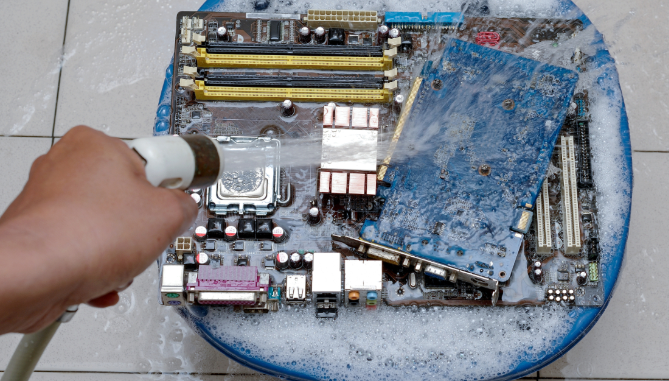
Rs components pcb manufacturing
Innovations In PCB Manufacturing At RS Components
RS Components has long been a pivotal player in the electronics industry, providing a comprehensive range of products and services to engineers and manufacturers worldwide.
One of the most significant areas where RS Components has made substantial advancements is in printed circuit board (PCB) manufacturing.
The innovations in this field have not only enhanced the quality and reliability of PCBs but have also streamlined the manufacturing process, making it more efficient and cost-effective.
To begin with, RS Components has embraced cutting-edge technologies to improve the precision and accuracy of PCB manufacturing.
The adoption of advanced computer-aided design (CAD) software has revolutionized the way PCBs are designed. This software allows for intricate and complex designs to be created with a high degree of accuracy, ensuring that the final product meets the exact specifications required. Furthermore, the integration of automated design rule checking (DRC) within these CAD tools helps in identifying potential design flaws early in the process, thereby reducing the likelihood of errors during manufacturing.
In addition to design innovations, RS Components has also invested in state-of-the-art manufacturing equipment.
The use of automated machinery for tasks such as drilling, plating, and soldering has significantly increased the efficiency of the production process. These machines are capable of performing repetitive tasks with a high level of precision, which not only speeds up production but also minimizes the risk of human error. Moreover, the implementation of surface mount technology (SMT) has allowed for the placement of smaller and more densely packed components on PCBs, leading to more compact and efficient designs.
Another notable innovation at RS Components is the adoption of environmentally friendly manufacturing practices.
The company has made a concerted effort to reduce the environmental impact of PCB production by implementing processes that minimize waste and energy consumption. For instance, the use of lead-free soldering techniques and the recycling of materials have become standard practices within their manufacturing facilities. These initiatives not only contribute to sustainability but also ensure compliance with stringent environmental regulations.
Furthermore, RS Components has leveraged the power of digitalization to enhance the overall manufacturing process.
The implementation of Industry 4.0 principles, such as the Internet of Things (IoT) and big data analytics, has enabled real-time monitoring and optimization of production lines. By collecting and analyzing data from various stages of the manufacturing process, RS Components can identify bottlenecks, predict maintenance needs, and optimize resource allocation. This data-driven approach not only improves efficiency but also enhances the quality and reliability of the final product.
In addition to these technological advancements, RS Components places a strong emphasis on quality control.
The company employs rigorous testing procedures to ensure that each PCB meets the highest standards of performance and reliability. Automated optical inspection (AOI) and X-ray inspection systems are used to detect defects that may not be visible to the naked eye. These systems provide a thorough examination of the PCBs, ensuring that any issues are identified and rectified before the products reach the customer.
In conclusion, the innovations in PCB manufacturing at RS Components have significantly transformed the industry. Through the adoption of advanced design tools, state-of-the-art manufacturing equipment, environmentally friendly practices, and digitalization, RS Components has set a new benchmark for quality and efficiency. These advancements not only benefit the company but also provide engineers and manufacturers with the tools they need to create cutting-edge electronic devices. As the industry continues to evolve, RS Components remains at the forefront, driving innovation and setting new standards in PCB manufacturing.
How RS Components Ensures Quality In PCB Production
RS Components, a leading distributor of electronic, electrical, and industrial components, has established a reputation for ensuring high-quality standards in printed circuit board (PCB) production. The company’s commitment to quality is evident through its meticulous selection of materials, advanced manufacturing processes, and rigorous testing protocols. By adhering to these stringent measures, RS Components guarantees that its PCBs meet the highest industry standards, thereby providing reliable and efficient solutions for various applications.
To begin with, RS Components places significant emphasis on the selection of raw materials.
The company collaborates with reputable suppliers to source high-grade substrates, copper foils, and other essential materials. This careful selection process ensures that the foundational elements of the PCBs are of superior quality, which is crucial for the overall performance and durability of the final product. Furthermore, RS Components conducts thorough inspections of incoming materials to verify their compliance with specified standards, thereby preventing any potential issues that could arise from substandard inputs.
In addition to material selection, RS Components employs state-of-the-art manufacturing techniques to produce its PCBs.
The company utilizes advanced machinery and equipment, such as automated optical inspection (AOI) systems, laser direct imaging (LDI) technology, and precision drilling machines. These cutting-edge tools enable the production of highly accurate and consistent PCBs, minimizing the risk of defects and ensuring optimal functionality. Moreover, RS Components continuously invests in research and development to stay abreast of the latest technological advancements, thereby enhancing its manufacturing capabilities and maintaining a competitive edge in the market.
Transitioning from manufacturing to quality control, RS Components implements a comprehensive testing regimen to verify the integrity and performance of its PCBs.
The company conducts a series of tests, including electrical testing, thermal cycling, and environmental stress screening, to identify any potential weaknesses or failures. Electrical testing, for instance, involves checking for continuity and isolation to ensure that the circuits are correctly connected and insulated. Thermal cycling tests expose the PCBs to extreme temperature variations to assess their resilience and reliability under different operating conditions.
Environmental stress screening, on the other hand, subjects the PCBs to various environmental factors, such as humidity and vibration, to evaluate their durability and robustness.
Furthermore, RS Components adheres to internationally recognized quality standards, such as ISO 9001 and IPC-A-600, to ensure that its PCBs meet the stringent requirements of various industries. The company’s commitment to these standards is reflected in its systematic approach to quality management, which encompasses all aspects of the production process, from design and development to manufacturing and testing. By maintaining compliance with these standards, RS Components not only guarantees the quality of its PCBs but also instills confidence in its customers regarding the reliability and performance of its products.
In conclusion, RS Components’ dedication to quality in PCB production is evident through its meticulous selection of materials, advanced manufacturing processes, and rigorous testing protocols. By adhering to these stringent measures, the company ensures that its PCBs meet the highest industry standards, providing reliable and efficient solutions for a wide range of applications. This unwavering commitment to quality not only enhances the performance and durability of its products but also solidifies RS Components’ position as a trusted leader in the electronics industry.

The Role Of RS Components In Sustainable PCB Manufacturing
RS Components has established itself as a pivotal player in the realm of sustainable PCB (Printed Circuit Board) manufacturing, a sector that is increasingly prioritizing environmental responsibility. As the demand for electronic devices continues to surge, the need for sustainable practices in PCB manufacturing has never been more critical. RS Components, a leading distributor of electronic, electrical, and industrial components, has taken significant strides to address this imperative.
One of the primary ways RS Components contributes to sustainable PCB manufacturing is through the promotion and distribution of eco-friendly materials.
Traditional PCB manufacturing often involves the use of hazardous substances such as lead and brominated flame retardants, which pose significant environmental and health risks. RS Components has been at the forefront of advocating for the use of alternative materials that are less harmful to the environment. By offering a wide range of lead-free soldering materials and halogen-free laminates, RS Components enables manufacturers to produce PCBs that are compliant with stringent environmental regulations such as the Restriction of Hazardous Substances (RoHS) directive.
In addition to providing eco-friendly materials, RS Components also emphasizes the importance of energy-efficient manufacturing processes.
The company collaborates with manufacturers to implement advanced technologies that reduce energy consumption during PCB production. For instance, RS Components supports the adoption of surface-mount technology (SMT), which is more energy-efficient compared to traditional through-hole technology. By facilitating the transition to such technologies, RS Components helps manufacturers minimize their carbon footprint and reduce operational costs.
Furthermore, RS Components plays a crucial role in promoting the concept of the circular economy within the PCB manufacturing industry.
The circular economy model focuses on extending the lifecycle of products through recycling, reusing, and refurbishing. RS Components offers a comprehensive range of services that support this model, including the provision of high-quality refurbished components and the facilitation of component recycling programs. By encouraging manufacturers to adopt circular economy practices, RS Components helps reduce electronic waste and conserve valuable resources.
Another significant aspect of RS Components’ contribution to sustainable PCB manufacturing is its commitment to education and awareness.
The company actively engages with industry stakeholders to disseminate knowledge about sustainable practices and the latest advancements in eco-friendly technologies. Through webinars, workshops, and technical articles, RS Components provides valuable insights and practical guidance to manufacturers, enabling them to make informed decisions that align with sustainability goals. This educational outreach not only fosters a culture of environmental responsibility but also drives innovation in sustainable PCB manufacturing.
Moreover, RS Components’ dedication to sustainability extends to its own operations.
The company has implemented various initiatives to reduce its environmental impact, such as optimizing its supply chain logistics to minimize carbon emissions and adopting energy-efficient practices in its warehouses and offices. By leading by example, RS Components demonstrates its unwavering commitment to sustainability and sets a benchmark for other companies in the industry.
In conclusion, RS Components plays a multifaceted role in advancing sustainable PCB manufacturing. Through the promotion of eco-friendly materials, support for energy-efficient technologies, advocacy for the circular economy, and commitment to education and awareness, RS Components significantly contributes to the industry’s efforts to reduce its environmental footprint. As the electronics industry continues to evolve, the role of RS Components in championing sustainability will undoubtedly remain indispensable.
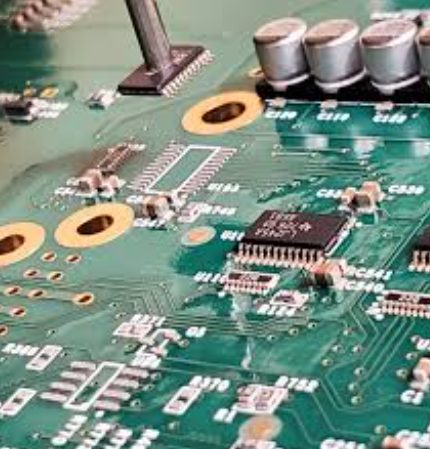
RS Components’ Advanced PCB Design Tools And Resources
RS Components has long been a trusted name in the electronics industry, providing a comprehensive range of products and services to engineers and designers worldwide. Among its many offerings, RS Components’ advanced PCB design tools and resources stand out as particularly valuable for professionals engaged in printed circuit board (PCB) manufacturing. These tools and resources are designed to streamline the design process, enhance accuracy, and ultimately improve the quality of the final product.
One of the key advantages of using RS Components’ PCB design tools is the integration of sophisticated software solutions that cater to various stages of the design and manufacturing process.
For instance, the DesignSpark PCB software, a free-to-use tool provided by RS Components, offers a user-friendly interface combined with powerful features. This software allows designers to create complex schematics, layout PCBs, and even perform simulations to test the functionality of their designs before moving to the manufacturing stage. The ability to visualize and simulate designs in a virtual environment significantly reduces the risk of errors and ensures that the final product meets the required specifications.
In addition to software tools, RS Components provides access to an extensive library of components and design resources.
This library includes a vast array of electronic components, each with detailed specifications and datasheets. By having immediate access to this information, designers can make informed decisions about component selection, ensuring compatibility and optimal performance. Furthermore, the availability of 3D models and footprints for many components simplifies the process of integrating them into PCB layouts, saving valuable time and effort.
Another notable resource offered by RS Components is their comprehensive range of design guides and technical articles.
These resources cover a wide array of topics, from basic PCB design principles to advanced techniques and best practices. By leveraging this wealth of knowledge, designers can stay up-to-date with the latest industry trends and methodologies, enhancing their skills and improving the quality of their work. Moreover, the technical support provided by RS Components ensures that any questions or issues encountered during the design process can be promptly addressed, further facilitating a smooth and efficient workflow.
Transitioning from design to manufacturing, RS Components also offers a suite of services aimed at simplifying the production process.
Their PCB prototyping service, for example, allows designers to quickly and cost-effectively produce small batches of PCBs for testing and validation purposes. This service is particularly beneficial for iterative design processes, where multiple revisions may be required before finalizing the design. By providing rapid turnaround times and high-quality prototypes, RS Components enables designers to accelerate their development cycles and bring products to market faster.
Furthermore, RS Components’ partnerships with leading PCB manufacturers ensure that customers have access to reliable and high-quality production services.
These partnerships enable seamless transitions from prototyping to full-scale production, with the assurance that the final product will meet stringent quality standards. Additionally, the ability to source all necessary components and materials through RS Components simplifies the supply chain, reducing lead times and minimizing the risk of delays.
In conclusion, RS Components’ advanced PCB design tools and resources offer a comprehensive solution for professionals engaged in PCB manufacturing. From powerful design software and extensive component libraries to expert technical support and reliable production services, RS Components provides everything needed to streamline the design and manufacturing process. By leveraging these tools and resources, designers can enhance their efficiency, improve the quality of their work, and ultimately achieve greater success in their projects.