s Leading PCB Manufacturers Shaping Global Electronics
Key Takeaways
When navigating the PCB manufacturing landscape, understanding core insights can help you identify reliable partners and optimize your supply chain. Leading PCB manufacturing companies prioritize advanced technologies like high-density interconnect (HDI) boards and flexible circuits, which are critical for next-gen electronics. Cost efficiency remains a decisive factor—while Asia-Pacific dominates with ~70% of global production, North American hubs excel in rapid prototyping and low-volume precision.
Here’s a quick comparison of regional strengths:
| Region | Key Advantage | Typical PCB Manufacturing Cost |
|---|---|---|
| Asia-Pacific | Scalability & volume discounts | $0.05–$0.20 per square inch |
| North America | Speed & compliance | $0.20–$0.50 per square inch |
For businesses, balancing PCB manufacturing business priorities—whether scaling production or ensuring IP protection—determines regional partnerships. Emerging trends, such as AI-driven quality control and sustainable materials, further reshape market dynamics. By aligning your needs with these takeaways, you can strategically leverage global expertise while mitigating risks.
Top 10 Global PCB Manufacturers 2023
When evaluating PCB manufacturing leaders in 2023, you’ll find that innovation and scalability define the industry’s top players. Companies like Unimicron, Zhen Ding Tech, and TTM Technologies dominate due to their ability to balance PCB manufacturing cost efficiency with cutting-edge production capabilities. These firms leverage advanced automation and material science to meet rising demand for high-density interconnect (HDI) boards, critical for next-gen electronics.
“Investing in precision engineering and sustainable practices isn’t optional—it’s how leading PCB manufacturing companies stay ahead in a hyper-competitive market,” notes an industry analyst.
Asia-Pacific remains the epicenter of PCB manufacturing business growth, with Taiwanese and Chinese firms accounting for over 60% of global output. However, North American manufacturers are gaining traction by specializing in aerospace and defense applications, where stringent quality standards justify higher production costs. To optimize your supply chain, consider diversifying suppliers across regions to mitigate geopolitical risks while maintaining cost-effectiveness.
Key factors separating top-tier manufacturers include R&D investment in flexible PCBs and IoT-compatible designs, as well as adherence to environmental regulations like RoHS compliance. Whether you’re prototyping or scaling production, partnering with these innovators ensures access to technologies that redefine what’s possible in electronics.
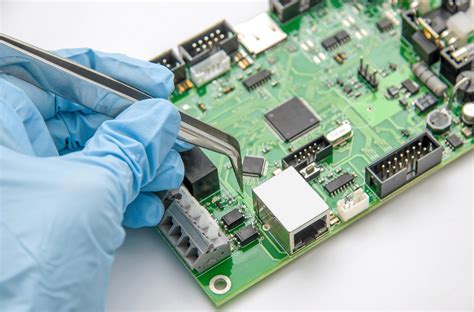
Innovative PCB Companies Driving Electronics
When exploring how modern devices become smarter and more compact, you’ll find PCB manufacturing innovations at the core. Leading PCB manufacturing companies are redefining electronics through advanced techniques like high-density interconnect (HDI) designs and flexible PCBs, enabling thinner smartphones, wearable tech, and IoT devices. By optimizing PCB manufacturing cost through automated production and eco-friendly materials, these firms balance affordability with precision—critical for scaling next-gen applications.
You might wonder how smaller players compete. The answer lies in niche specialization: startups are leveraging additive manufacturing to prototype complex boards faster, while established brands invest in AI-driven quality control. This shift isn’t just about technology—it’s reshaping the PCB manufacturing business model, with partnerships between OEMs and fabricators becoming tighter to accelerate time-to-market.
What’s next? Companies integrating embedded components and 3D-printed circuits are pushing boundaries, ensuring your gadgets stay ahead of performance demands. Whether reducing energy loss in automotive systems or enhancing signal integrity for 5G infrastructure, innovation in PCB manufacturing remains the silent force powering global electronics evolution.
Comparing Leading Circuit Board Innovators
When evaluating PCB manufacturing leaders, you’ll notice distinct approaches to balancing innovation with PCB manufacturing cost efficiency. Companies like Unimicron and TTM Technologies prioritize high-density interconnect (HDI) boards for advanced electronics, while Shennan Circuits focuses on scalable solutions for mass production. These PCB manufacturing companies leverage automation and AI-driven quality control to minimize defects, directly impacting long-term operational costs.
Geographic specialization also plays a role: Asia-Pacific firms often excel in cost-competitive volume production, whereas North American innovators emphasize rapid prototyping for aerospace and defense sectors. For businesses optimizing their PCB manufacturing business strategy, understanding these regional strengths helps align partnerships with technical and budgetary needs.
Emerging trends, such as sustainable materials and additive manufacturing, further differentiate leaders. For instance, Ibiden’s eco-friendly substrates reduce waste, appealing to environmentally conscious clients. By analyzing how top players integrate these advancements, you gain insights into balancing performance, scalability, and cost—critical factors when selecting partners in the evolving PCB manufacturing landscape.
Key Trends in PCB Manufacturing Advancements
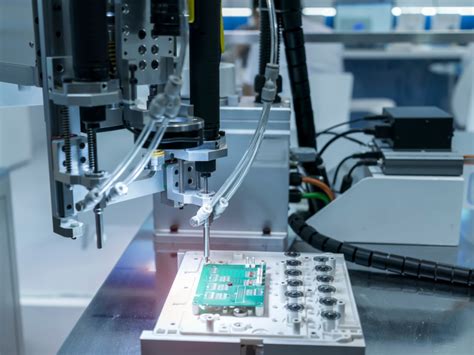
As global electronics demand evolves, PCB manufacturing is undergoing transformative shifts driven by technological innovation and sustainability imperatives. Automation now dominates production floors, with advanced robotics streamlining processes like laser drilling and solder paste application, reducing PCB manufacturing cost while improving precision. Leading PCB manufacturing companies are adopting high-density interconnect (HDI) designs to meet miniaturization needs, enabling thinner boards with higher component density for wearables and IoT devices.
Meanwhile, the push for eco-friendly practices is reshaping material choices, as manufacturers integrate halogen-free substrates and biodegradable soldermask to comply with global environmental regulations. This shift not only aligns with circular economy goals but also introduces new cost structures for the PCB manufacturing business, balancing premium materials with long-term operational savings.
Another critical trend is the rise of AI-driven quality control, where machine learning algorithms detect microscopic defects in real time, slashing error rates by up to 40%. For businesses, this means fewer recalls and enhanced reliability in mission-critical applications like automotive and aerospace.
Finally, geopolitical factors are influencing supply chain strategies, with companies diversifying production hubs to mitigate risks. While Asia-Pacific remains dominant, North American and European PCB manufacturing investments are growing, driven by regional demand for secure, localized electronics ecosystems. These advancements collectively ensure PCBs stay at the heart of tomorrow’s smart technologies.
North America’s Top PCB Production Hubs
When evaluating PCB manufacturing capabilities, North America’s production hubs stand out for their precision-driven ecosystems and proximity to cutting-edge tech industries. Regions like Silicon Valley, Texas’s semiconductor corridor, and the Great Lakes’ industrial belt host strategically positioned PCB manufacturing companies that cater to aerospace, automotive, and telecommunications sectors. These hubs leverage advanced automation and stringent quality standards to balance PCB manufacturing cost efficiency with high-reliability outputs—critical for industries where failure rates must stay near zero.
While Asia-Pacific dominates global volume, North American players differentiate through rapid prototyping, onshoring advantages, and compliance with U.S. defense contracts. For example, firms in Arizona and Michigan are pioneering embedded component technologies, reducing assembly layers while boosting performance. If you’re managing a PCB manufacturing business, partnering with these hubs offers access to skilled engineers and shorter lead times for low-to-mid-volume batches. However, rising material tariffs and energy costs require careful supply chain diversification to maintain competitiveness.
As demand grows for IoT and 5G-compatible boards, these regions are investing in ultra-high-density interconnect (HDI) processes, ensuring North America remains a key innovator in next-gen electronics.
Emerging Technologies in PCB Industry 2023
The PCB manufacturing landscape is undergoing a seismic shift in 2023, driven by breakthroughs that redefine efficiency and precision. Additive manufacturing techniques, such as 3D-printed circuitry, are enabling PCB manufacturing companies to create complex, multi-layered designs with reduced material waste. Meanwhile, advancements in embedded component technology allow passive components like resistors and capacitors to be integrated directly into substrates, slashing PCB manufacturing cost while improving reliability.
Artificial intelligence (AI) is now optimizing production workflows, predicting defects in real time, and automating quality control—critical for scaling PCB manufacturing business operations. Innovations like ultra-high-density interconnect (HDI) boards cater to the demand for compact, high-performance electronics, particularly in wearables and IoT devices.
Sustainability is also reshaping priorities. Bio-based substrates and lead-free soldering processes are gaining traction, aligning with global environmental regulations. For businesses, adopting these technologies isn’t just about staying competitive—it’s about future-proofing supply chains amid fluctuating material costs and geopolitical pressures. As hybrid manufacturing models emerge, balancing automation with localized production hubs will define success in this rapidly evolving sector.
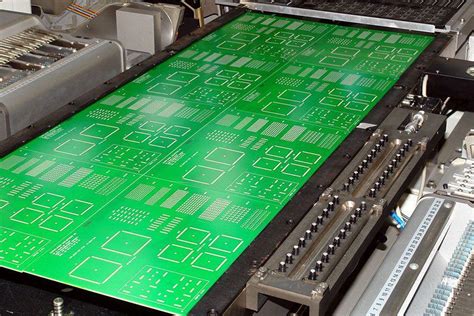
Global Electronics and PCB Innovation Trends
As you examine market leaders in electronics, it’s clear that advancements in PCB manufacturing are reshaping how devices function. Innovations like miniaturized circuitry, flexible substrates, and embedded components now dominate high-density designs, enabling sleeker smartphones and smarter IoT systems. PCB manufacturing companies are prioritizing sustainability, with many adopting recyclable materials and energy-efficient processes to reduce PCB manufacturing cost while meeting environmental regulations.
The rise of 5G and AI has accelerated demand for multilayer boards and high-frequency materials, pushing manufacturers to balance precision with scalability. If you’re exploring the PCB manufacturing business, consider how automation and AI-driven quality control are cutting production errors by over 30%, according to industry reports. Meanwhile, geopolitical shifts are prompting firms to diversify supply chains, with Southeast Asia emerging as a hub for cost-effective yet reliable fabrication.
To stay competitive, focus on partnerships with innovators offering rapid prototyping or hybrid rigid-flex solutions. These trends not only redefine technical benchmarks but also create opportunities to optimize PCB manufacturing cost without compromising performance—a critical advantage as global electronics evolve toward faster, smaller, and more interconnected systems.
Conclusion
As you navigate the evolving landscape of PCB manufacturing, it becomes clear that partnering with the right PCB manufacturing companies is critical to staying competitive. The balance between innovation and PCB manufacturing cost remains a key challenge, particularly as emerging technologies demand more complex designs. While Asia-Pacific leaders continue to dominate production scales, North American hubs are gaining traction by prioritizing automation and sustainability—a strategic advantage for businesses aiming to reduce long-term operational risks.
Cost-efficiency and technical expertise now define success in the PCB manufacturing business, with leading players investing in AI-driven quality control and advanced materials. Whether you’re sourcing prototypes or scaling production, understanding regional strengths and market trends ensures smarter decisions. By aligning with manufacturers that prioritize both R&D and cost transparency, you position your projects to thrive amid shifting global demands. The future of electronics hinges on these partnerships, making informed choices today essential for tomorrow’s innovations.
FAQs
How do you choose reliable PCB manufacturing companies for critical projects?
Look for certifications like ISO 9001 and IPC-A-600 compliance, which ensure adherence to quality standards. Evaluate their expertise in handling advanced technologies like HDI or flexible PCB manufacturing, and review client testimonials for consistency in delivery timelines.
What drives PCB manufacturing cost variations across regions?
Material quality, layer complexity, and order volume significantly impact pricing. Labor expenses and regulatory compliance (e.g., RoHS directives) also contribute, with PCB manufacturing hubs in Asia-Pacific often offering cost advantages due to scaled operations.
Why are Asia-Pacific firms dominating the PCB manufacturing business?
High-tech infrastructure, skilled labor pools, and government incentives enable rapid prototyping and mass production. Companies in China, Taiwan, and South Korea lead in high-density interconnect (HDI) and multilayer boards, catering to global electronics demand.
How can startups minimize risks in PCB manufacturing?
Partner with firms offering design-for-manufacturing (DFM) feedback and small-batch prototyping. Prioritize transparency in PCB manufacturing cost breakdowns and opt for suppliers with agile turnaround times to accommodate iterative design changes.
What emerging technologies are reshaping the PCB manufacturing business?
Additive printing, embedded components, and AI-driven quality control are accelerating innovation. These advancements reduce material waste in PCB manufacturing while enhancing circuit density for IoT and 5G applications.
Explore Custom PCB Solutions for Your Needs
Looking for tailored PCB manufacturing services? Click here to discover how Andwin PCB can optimize your production.