Semi rigid flex pcb
Advantages Of Semi Rigid Flex PCB In Modern Electronics
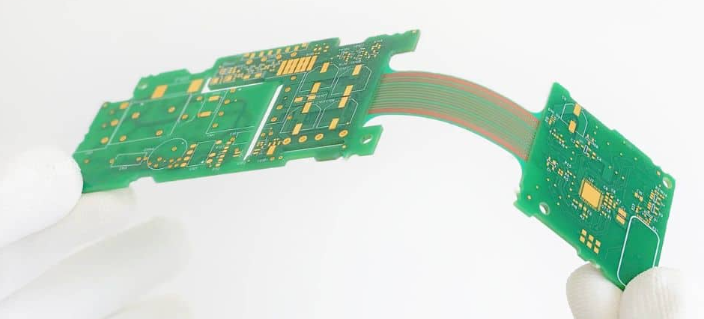
Semi-rigid flex PCBs, a hybrid of rigid and flexible circuit boards, have become increasingly significant in modern electronics due to their unique advantages. These advanced circuit boards combine the best features of both rigid and flexible PCBs, offering a versatile solution for a wide range of applications.
One of the primary benefits of semi-rigid flex PCBs is their ability to provide enhanced mechanical stability while maintaining flexibility.
This dual characteristic allows for more complex and compact designs, which is particularly valuable in the development of modern electronic devices where space is at a premium.
Moreover, the integration of rigid and flexible sections within a single PCB reduces the need for connectors and cables, which can be a source of potential failure.
By eliminating these components, semi-rigid flex PCBs enhance the overall reliability and durability of electronic devices. This is especially crucial in applications where long-term performance and dependability are essential, such as in aerospace, medical devices, and military equipment. Additionally, the reduction in connectors and cables contributes to a decrease in the overall weight of the device, which is a significant advantage in portable and wearable electronics.
Another notable advantage of semi-rigid flex PCBs is their ability to withstand harsh environmental conditions.
The flexible sections of these PCBs can absorb and dissipate mechanical stress, reducing the risk of damage from vibrations, shocks, and thermal expansion. This makes them ideal for use in environments where electronic devices are subjected to extreme conditions, such as automotive and industrial applications. Furthermore, the materials used in the construction of semi-rigid flex PCBs are often chosen for their resistance to chemicals and moisture, further enhancing their suitability for challenging environments.
In addition to their mechanical and environmental benefits, semi-rigid flex PCBs also offer significant advantages in terms of electrical performance.
The elimination of connectors and cables not only improves reliability but also reduces signal loss and interference. This results in better signal integrity and faster data transmission, which are critical factors in high-speed and high-frequency applications. The ability to design complex circuits with multiple layers also allows for greater functionality and integration, enabling the development of more sophisticated electronic systems.
The manufacturing process of semi-rigid flex PCBs, while more complex than that of traditional rigid or flexible PCBs, offers opportunities for cost savings in the long run.
The reduction in the number of components and the simplification of assembly processes can lead to lower production costs and shorter lead times. Additionally, the improved reliability and durability of semi-rigid flex PCBs can result in lower maintenance and replacement costs over the lifespan of the device.
In conclusion, the advantages of semi-rigid flex PCBs in modern electronics are manifold. Their combination of mechanical stability and flexibility allows for innovative and compact designs, while their enhanced reliability and durability make them suitable for a wide range of demanding applications. The ability to withstand harsh environmental conditions and provide superior electrical performance further underscores their value in the development of advanced electronic systems. As technology continues to evolve, the role of semi-rigid flex PCBs in enabling the next generation of electronic devices is likely to become even more prominent.
Design Considerations For Semi Rigid Flex PCB
When designing a semi-rigid flex PCB, several critical considerations must be taken into account to ensure optimal performance and reliability. The unique structure of semi-rigid flex PCBs, which combines the flexibility of a flex circuit with the rigidity of a traditional PCB, necessitates a thorough understanding of both mechanical and electrical design principles.
Firstly, material selection is paramount.
The choice of materials impacts not only the flexibility and durability of the PCB but also its thermal and electrical properties. Typically, polyimide is used for the flexible sections due to its excellent thermal stability and mechanical strength. For the rigid sections, FR4 is commonly employed because of its robustness and cost-effectiveness. However, the transition between these materials must be carefully managed to avoid stress concentrations that could lead to mechanical failure.
In addition to material selection, the layout of the circuit must be meticulously planned.
The flexible sections should be designed to accommodate bending and movement without causing undue stress on the conductive traces. This often involves using curved traces instead of sharp angles, which can act as stress risers and lead to cracking or delamination. Furthermore, the placement of components should be strategically considered to minimize the impact of mechanical stress. Components should ideally be placed on the rigid sections, leaving the flexible areas free to bend and flex as needed.
Thermal management is another crucial aspect of semi-rigid flex PCB design.
The combination of different materials with varying thermal expansion coefficients can lead to thermal stress, which can compromise the integrity of the PCB. To mitigate this, designers must ensure that the thermal expansion properties of the materials are compatible and that adequate thermal relief is provided. This may involve incorporating thermal vias or using heat sinks to dissipate excess heat.
Signal integrity is also a key consideration, particularly for high-speed applications.
The flexible sections of the PCB can introduce impedance variations, which can affect signal quality. To address this, designers must carefully control the impedance of the traces by adjusting their width and spacing, as well as the dielectric properties of the materials used. Additionally, shielding and grounding techniques may be employed to minimize electromagnetic interference and crosstalk.
Manufacturability is another important factor to consider.
The complexity of semi-rigid flex PCBs can pose challenges during the manufacturing process. It is essential to work closely with the PCB manufacturer to ensure that the design can be produced reliably and cost-effectively. This may involve optimizing the design for the specific capabilities of the manufacturer, such as their ability to handle fine pitch components or their expertise in producing complex multilayer boards.
Finally, testing and validation are critical to ensure the reliability of the semi-rigid flex PCB.
This involves subjecting the PCB to a range of mechanical and environmental tests to verify its performance under real-world conditions. Flexural testing, thermal cycling, and vibration testing are commonly used to assess the durability and robustness of the PCB. Additionally, electrical testing is conducted to ensure that the PCB meets the required performance specifications.
In conclusion, designing a semi-rigid flex PCB requires a comprehensive understanding of both mechanical and electrical design principles. By carefully considering material selection, layout, thermal management, signal integrity, manufacturability, and testing, designers can create reliable and high-performance PCBs that meet the demands of modern electronic applications.

Applications Of Semi Rigid Flex PCB In Medical Devices
Semi-rigid flex PCBs, a hybrid of rigid and flexible circuit boards, have become increasingly significant in the medical device industry due to their unique combination of flexibility and durability.
These advanced circuit boards are designed to meet the stringent requirements of medical applications, where reliability, precision, and compactness are paramount. The integration of semi-rigid flex PCBs into medical devices has revolutionized the way these devices are designed and manufactured, leading to enhanced performance and patient outcomes.
One of the primary applications of semi-rigid flex PCBs in medical devices is in diagnostic equipment.
These circuit boards are essential in devices such as MRI machines, CT scanners, and ultrasound equipment, where they facilitate the transmission of high-frequency signals with minimal interference. The flexibility of these PCBs allows for intricate designs that can fit into compact spaces, while their rigidity ensures stable connections and reliable performance. This combination is crucial in diagnostic equipment, where even the slightest malfunction can lead to inaccurate results and potentially harmful consequences for patients.
In addition to diagnostic equipment, semi-rigid flex PCBs are also widely used in therapeutic devices.
For instance, in implantable medical devices such as pacemakers and neurostimulators, the compact and flexible nature of these PCBs allows for miniaturization, making the devices less invasive and more comfortable for patients. The durability of semi-rigid flex PCBs ensures that these life-saving devices can withstand the harsh conditions within the human body, including exposure to bodily fluids and varying temperatures. This reliability is critical, as any failure in these devices can have severe implications for patient health.
Moreover, semi-rigid flex PCBs play a vital role in wearable medical devices, which are becoming increasingly popular for continuous health monitoring.
Devices such as glucose monitors, heart rate monitors, and fitness trackers rely on these advanced circuit boards to provide accurate and real-time data. The flexibility of semi-rigid flex PCBs allows these devices to conform to the contours of the human body, enhancing comfort and wearability. At the same time, their rigidity ensures that the electronic components remain securely connected, providing consistent and reliable performance.
Furthermore, the use of semi-rigid flex PCBs extends to surgical instruments and robotic surgery systems.
In these applications, the precision and reliability of the circuit boards are of utmost importance. Semi-rigid flex PCBs enable the development of sophisticated surgical tools that can perform intricate procedures with high accuracy. The flexibility of these PCBs allows for the creation of compact and lightweight instruments, which are easier for surgeons to handle and maneuver. Additionally, the rigidity ensures that the electronic components within these instruments remain stable, reducing the risk of malfunctions during critical surgical procedures.
In conclusion, the applications of semi-rigid flex PCBs in medical devices are vast and varied, encompassing diagnostic equipment, therapeutic devices, wearable health monitors, and surgical instruments. The unique combination of flexibility and durability offered by these circuit boards makes them ideal for the demanding requirements of the medical field. As technology continues to advance, the role of semi-rigid flex PCBs in medical devices is expected to grow, leading to further innovations and improvements in patient care. The integration of these advanced circuit boards into medical technology not only enhances the performance and reliability of medical devices but also contributes to better health outcomes and improved quality of life for patients.
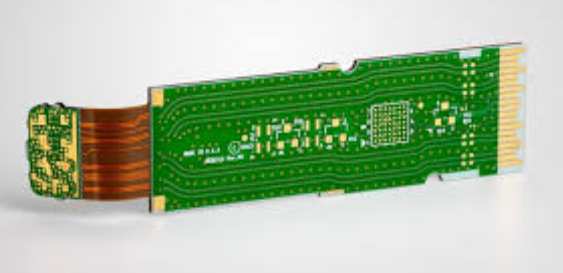
Manufacturing Process Of Semi Rigid Flex PCB
The manufacturing process of semi-rigid flex PCBs is a sophisticated and intricate procedure that combines the benefits of both rigid and flexible circuit boards. This hybrid technology is increasingly popular in various industries due to its ability to provide enhanced reliability, reduced weight, and improved performance in complex electronic assemblies. To understand the manufacturing process, it is essential to delve into the various stages involved, from material selection to final testing.
Initially, the process begins with the selection of appropriate materials.
Semi-rigid flex PCBs typically consist of a combination of rigid and flexible substrates. The rigid sections are usually made from materials such as FR4, a type of fiberglass-reinforced epoxy laminate, while the flexible sections are composed of polyimide, known for its excellent thermal stability and flexibility. The choice of materials is crucial as it directly impacts the board’s performance, durability, and overall functionality.
Following material selection, the next step involves the design and layout of the PCB.
Advanced computer-aided design (CAD) software is employed to create detailed schematics and layouts, ensuring that the circuit paths are accurately defined. This stage is critical as it determines the electrical connectivity and mechanical structure of the final product. Designers must meticulously plan the placement of components, vias, and traces to optimize the board’s performance and ensure seamless integration between the rigid and flexible sections.
Once the design is finalized, the manufacturing process moves on to the fabrication of the individual layers.
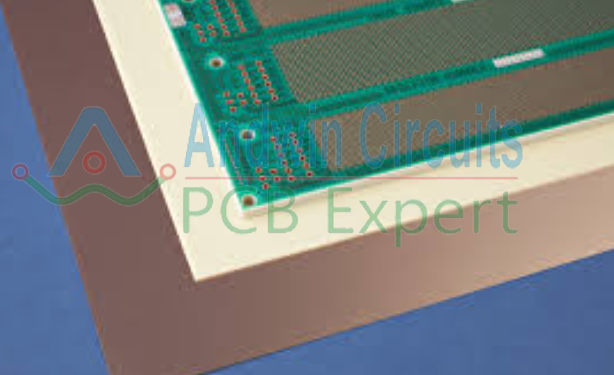
For the rigid sections, standard PCB fabrication techniques are employed, including the lamination of copper-clad laminates, photoresist application, and etching to create the desired circuit patterns. In contrast, the flexible sections require a different approach. Polyimide films are laminated with copper foils, and a similar photolithographic process is used to define the circuit traces. The flexible layers are then subjected to a series of chemical treatments to enhance their adhesion and durability.
After the individual layers are fabricated, the next phase involves the assembly of the semi-rigid flex PCB.
This step requires precise alignment and bonding of the rigid and flexible sections. Advanced bonding techniques, such as adhesive bonding or thermal compression bonding, are employed to ensure a robust and reliable connection between the different substrates. The bonding process is critical as it determines the mechanical integrity and flexibility of the final product.
Subsequently, the assembled PCB undergoes a series of drilling and plating processes to create vias and through-holes, which facilitate electrical connections between the different layers.
Precision drilling machines are used to create the required holes, and these are then plated with copper to establish reliable electrical pathways. This stage is followed by the application of solder masks and surface finishes, which protect the circuit traces and provide a suitable surface for component soldering.
The final stages of the manufacturing process involve component assembly and testing.
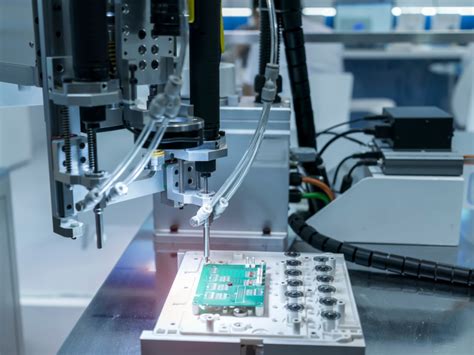
Surface mount technology (SMT) and through-hole technology (THT) are commonly used to place and solder electronic components onto the PCB. Automated pick-and-place machines ensure accurate component placement, while reflow soldering and wave soldering techniques are employed to secure the components in place. Once assembly is complete, the PCB undergoes rigorous testing to verify its electrical performance, mechanical integrity, and overall functionality. Testing methods include automated optical inspection (AOI), in-circuit testing (ICT), and functional testing to ensure that the final product meets the required specifications and quality standards.
In conclusion, the manufacturing process of semi-rigid flex PCBs is a complex and multi-faceted procedure that demands precision, expertise, and advanced technology. From material selection and design to fabrication, assembly, and testing, each stage plays a crucial role in producing high-quality, reliable, and versatile circuit boards that meet the demands of modern electronic applications.