The Evolution and Importance of PCB CAD in Modern Electronics Design
Introduction
Printed Circuit Board (PCB) design is a critical aspect of modern electronics, enabling the development of compact, efficient, and reliable electronic devices. The use of Computer-Aided Design (CAD) software for PCB design has revolutionized the electronics industry, allowing engineers to create complex circuits with precision and efficiency. This article explores the significance of PCB CAD, its evolution, key features, and future trends.
1. The Role of PCB CAD in Electronics Design
PCB CAD software is an essential tool for designing circuit boards, allowing engineers to:
- Create Schematic Diagrams – Define the electrical connections between components.
- Design PCB Layouts – Arrange components and route traces efficiently.
- Simulate and Verify Designs – Test functionality before manufacturing.
- Generate Manufacturing Files – Produce Gerber files, drill files, and assembly instructions.
Without PCB CAD tools, designing modern high-density, multilayer PCBs would be nearly impossible. These tools help reduce errors, improve productivity, and shorten development cycles.
2. Evolution of PCB CAD Software
The history of PCB CAD reflects advancements in computing and electronics:
Early Days (1960s–1980s)
- The first PCB design tools were manual, requiring engineers to draw circuits on paper or use tape for trace layouts.
- Early computer-based systems (e.g., Tango, Protel) introduced basic schematic capture and autorouting.
Growth of Commercial CAD (1990s–2000s)
- Tools like Altium Designer, Cadence Allegro, and Mentor Graphics PADS emerged, offering advanced features like multilayer routing and signal integrity analysis.
- The shift from through-hole to surface-mount technology (SMT) increased the need for precise CAD tools.
Modern Era (2010s–Present)
- Cloud-based PCB design (e.g., Altium 365, KiCad Cloud) enables collaboration.
- AI-assisted routing and real-time design rule checks (DRC) improve efficiency.
- Integration with 3D modeling (e.g., Fusion 360, SolidWorks PCB) allows mechanical and electrical co-design.
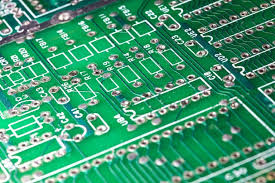
kicad-pcb
3. Key Features of PCB CAD Software
Modern PCB CAD tools offer numerous functionalities to streamline design:
Schematic Capture
- Allows engineers to define circuit connections before layout.
- Supports hierarchical schematics for complex designs.
Component Libraries
- Pre-built libraries for resistors, capacitors, ICs, and connectors.
- Custom component creation for specialized parts.
Autorouting and Manual Routing
- Autorouters (e.g., topological, shape-based) speed up trace placement.
- Manual routing ensures critical signals (high-speed, RF) are optimized.
Design Rule Checking (DRC)
- Validates spacing, trace width, and manufacturing constraints.
- Prevents errors like short circuits or insufficient clearances.
Signal Integrity Analysis
- Simulates crosstalk, impedance, and EMI effects.
- Essential for high-speed digital and RF circuits.
3D Visualization and MCAD Integration
- Enables collision detection with mechanical enclosures.
- Supports STEP file exports for full-system modeling.
Manufacturing Outputs
- Generates Gerber files, NC drill files, and BOMs (Bill of Materials).
- Supports panelization for mass production.
4. Popular PCB CAD Tools
Several software options dominate the market, each with unique strengths:
1. Altium Designer
- Industry-leading tool with powerful routing and simulation.
- Cloud collaboration via Altium 365.
2. KiCad
- Free and open-source, widely used in hobbyist and professional projects.
- Supports schematic capture, PCB layout, and 3D viewing.
3. Cadence Allegro
- Preferred for high-speed and complex PCB designs.
- Advanced signal integrity and power analysis.
4. Autodesk Eagle
- Popular among startups and makers due to its Fusion 360 integration.
- Subscription-based with a free limited version.
5. OrCAD (by Cadence)
- Strong schematic capture and simulation (PSpice).
- Used in academia and enterprise environments.
5. Challenges in PCB CAD Design
Despite advancements, engineers face several challenges:
High-Speed Design Constraints
- Managing signal integrity in GHz-range circuits.
- Minimizing EMI and ensuring proper grounding.
Miniaturization and HDI PCBs
- Designing with microvias and ultra-fine pitch components.
- Thermal management in densely packed boards.
DFM (Design for Manufacturing) Compliance
- Ensuring designs meet fabrication and assembly capabilities.
- Avoiding errors like acid traps or insufficient solder mask clearance.
Collaboration Across Teams
- Synchronizing electrical and mechanical design changes.
- Version control in large-scale projects.
6. Future Trends in PCB CAD
The future of PCB CAD is shaped by emerging technologies:
AI and Machine Learning
- AI-driven autorouting optimizes trace placement.
- Predictive error detection before manufacturing.
Cloud-Based and Collaborative Design
- Real-time multi-user editing (e.g., Altium 365).
- Integration with PLM (Product Lifecycle Management) systems.
Advanced Simulation and Virtual Prototyping
- Real-time signal and thermal analysis.
- Digital twin technology for pre-production validation.
Flexible and Stretchable PCBs
- CAD tools adapting to bendable and wearable electronics.
- New materials and design rules for unconventional form factors.
Conclusion
PCB CAD software has transformed electronics design, enabling faster, more reliable, and complex PCB development. From early manual drafting to AI-assisted cloud platforms, the evolution of PCB CAD continues to push the boundaries of innovation. As technology advances, future tools will further integrate AI, collaboration, and advanced simulation, shaping the next generation of electronic devices.
For engineers and designers, mastering PCB CAD remains an essential skill, ensuring the successful realization of cutting-edge electronics in industries ranging from consumer tech to aerospace and medical devices.