The Role of Functional Circuit Testing (FCT) in PCB Assembly
Introduction
Printed Circuit Board (PCB) assembly is a complex process that requires multiple stages of testing to ensure product quality and reliability. Among various testing methodologies, Functional Circuit Testing (FCT) has emerged as a critical final verification step before electronic products leave the manufacturing facility. This 2000-word article explores the importance, implementation, challenges, and future trends of FCT in PCB assembly.
Understanding FCT in PCB Assembly
Functional Circuit Testing is a comprehensive testing approach that verifies whether an assembled PCB performs all its intended functions according to design specifications. Unlike other testing methods that focus on structural integrity or individual components, FCT evaluates the complete system under conditions that simulate actual operation.
Key Characteristics of FCT:
- Validates the entire PCB assembly as a functional unit
- Simulates real-world operating conditions
- Tests software/firmware interaction with hardware
- Verifies input/output behavior against specifications
- Often includes performance and stress testing elements
The Importance of FCT in Modern Electronics Manufacturing
As electronic products become more complex with higher component density and sophisticated functionality, FCT plays an increasingly vital role in quality assurance:
- Final Quality Gate: FCT serves as the last line of defense before products ship to customers, catching defects that might have escaped earlier testing stages.
- System-Level Validation: While In-Circuit Testing (ICT) verifies individual components and connections, FCT ensures all components work together as intended.
- Firmware Verification: Many modern PCBs require software to function properly. FCT validates both hardware and its interaction with embedded software.
- Regulatory Compliance: Many industries require functional testing to meet safety and performance standards.
- Cost Reduction: Identifying functional defects at the manufacturing stage prevents expensive field failures and recalls.

FCT Implementation in PCB Assembly
1. Test System Architecture
A typical FCT system consists of:
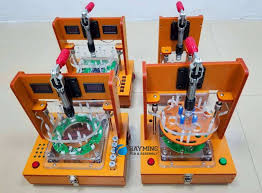
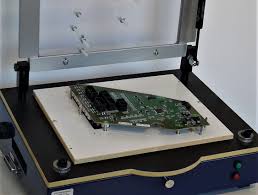
- Test Fixture: Custom interface that physically connects to the PCB
- Stimulus Generation: Provides power, signals, and inputs to the unit under test
- Measurement Instruments: Capture outputs and performance parameters
- Control Computer: Runs test sequences and evaluates results
- Software Framework: Manages test procedures, data collection, and reporting
2. Test Development Process
Developing an effective FCT program involves:
- Requirements Analysis: Understanding all functional specifications
- Test Case Design: Creating scenarios that verify each requirement
- Fixture Design: Engineering the physical interface to the PCB
- Software Development: Coding the test sequences and analysis algorithms
- Validation: Ensuring the test itself is accurate and reliable
3. Common FCT Approaches
a. Benchtop Testing
Manual verification using standard lab equipment. Suitable for prototypes and low-volume production.
b. Automated FCT Systems
Dedicated test stations that automatically execute comprehensive test sequences. Used in medium to high-volume production.
c. Combination Systems
Hybrid approaches that may combine FCT with other test methods like ICT or boundary scan.
Key Parameters Tested in FCT
- Power Characteristics
- Current draw in various modes
- Power-up/power-down sequencing
- Voltage regulation accuracy
- Digital Functionality
- Logic operations
- Communication interfaces (I2C, SPI, UART, USB)
- Processor/memory interactions
- Analog Performance
- Signal quality and integrity
- Sensor accuracy
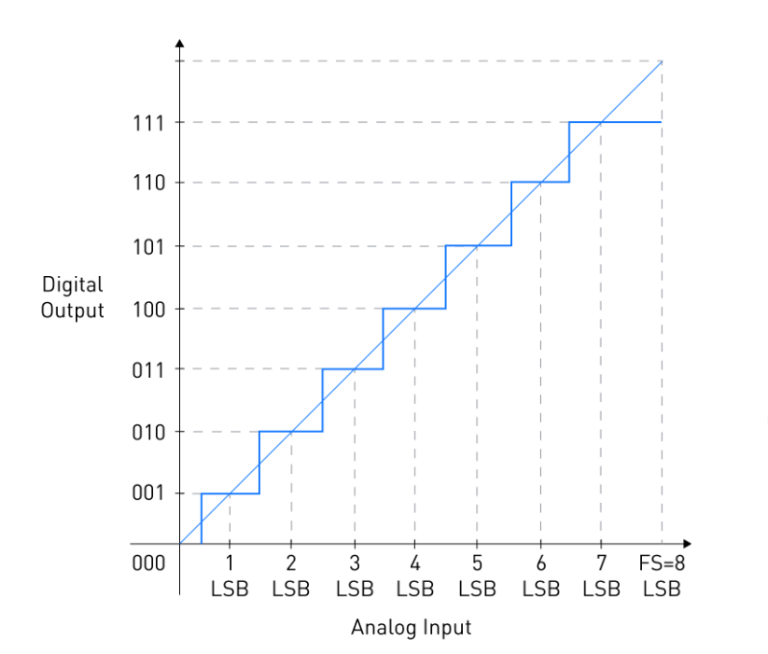
- Analog-to-digital conversion
- RF Functionality (for wireless devices)
- Transmitter power and modulation
- Receiver sensitivity
- Antenna performance
- Mechanical Functions
- Button/switch response
- Connector reliability
- Moving part operation
- Environmental Response
- Performance under temperature variations
- Vibration and shock resistance
- EMI/EMC characteristics
Challenges in FCT Implementation
Despite its importance, implementing effective FCT presents several challenges:
- Complexity Management
Modern electronics combine numerous functions in compact designs, making comprehensive testing difficult. - Test Coverage
Achieving 100% functional coverage is often impractical. Engineers must prioritize critical functions. - Fixture Costs
Custom test fixtures, especially for high-density boards, can be expensive to develop and maintain. - Software Dependencies
FCT often requires stable firmware, which may still be in development during initial production. - Test Time Optimization
Balancing thoroughness with production throughput requirements is an ongoing challenge. - False Failures
Distinguishing between actual product defects and test system issues requires careful design.
Best Practices for Effective FCT
- Early Involvement
Include test engineering in the PCB design phase to ensure testability. - Modular Design
Create test systems with reusable components to reduce development time and cost. - Comprehensive Documentation
Maintain detailed records of test procedures, results, and failure analysis. - Continuous Improvement
Regularly update test programs based on field failure data and production feedback. - Operator Training
Ensure personnel understand test procedures and can properly interpret results. - Data Analytics
Implement systems to collect and analyze test data for process improvement.
FCT vs. Other Testing Methods
Understanding how FCT complements other PCB testing approaches is essential:
- In-Circuit Test (ICT)
- Focuses on individual components and connections
- Excellent for manufacturing defects but limited functional verification
- Boundary Scan
- Tests digital interconnects using JTAG
- Useful for inaccessible nodes but doesn’t validate analog functions
- Automated Optical Inspection (AOI)
- Checks for visible assembly defects
- No electrical functional verification
- Burn-in Testing
- Stresses components to identify early failures
- Typically performed after functional verification
FCT integrates with these methods to provide a complete quality assurance strategy.
Industry-Specific FCT Considerations
Different industries have unique FCT requirements:
- Consumer Electronics
- Emphasis on cost-effective, high-volume testing
- Often requires quick test cycles to maintain throughput
- Automotive
- Demands rigorous reliability testing
- Must account for extreme environmental conditions
- Medical Devices
- Requires extensive documentation for regulatory compliance
- Zero-tolerance for critical failures
- Aerospace/Defense
- Needs to verify operation under harsh conditions
- Often requires MIL-STD or other specialized testing protocols
- Industrial Equipment
- Focuses on long-term reliability
- May require validation of safety interlocks and protections
Emerging Trends in FCT Technology
The field of functional testing continues to evolve with several notable trends:
- Smart Factory Integration
FCT systems are becoming networked components in Industry 4.0 environments, sharing data with other manufacturing systems. - Adaptive Testing
Machine learning algorithms analyze historical test data to optimize test sequences and identify potential failure patterns. - Virtual Commissioning
Digital twin technology allows test programs to be developed and validated before physical prototypes are available. - Increased Automation
Robotic handlers and automated test equipment are reducing manual intervention in FCT processes. - IoT-Enabled Testing
Embedded test capabilities allow for ongoing functional monitoring throughout product lifecycles. - AI-Assisted Diagnostics
Advanced algorithms help quickly diagnose root causes of functional failures.
The Future of FCT in PCB Assembly
As electronic products continue advancing, FCT will face new challenges and opportunities:
- Higher Frequency Testing
With 5G and millimeter-wave applications, RF testing becomes more critical and challenging. - Power Electronics Verification
Growing demand for energy-efficient designs requires more sophisticated power characterization. - Security Validation
Functional testing must include verification of hardware security features and vulnerabilities. - Flexible Electronics Testing
New form factors like flexible PCBs demand innovative test fixture solutions. - Sustainable Testing
Pressure to reduce energy consumption during testing and minimize waste from test equipment.
Conclusion
Functional Circuit Testing remains an indispensable part of PCB assembly, ensuring that electronic products meet their design specifications and perform reliably in real-world conditions. As product complexity increases and time-to-market pressures grow, the importance of well-designed FCT systems will only continue to rise. By understanding current best practices and staying abreast of emerging trends, manufacturers can implement FCT strategies that balance thoroughness, speed, and cost-effectiveness—ultimately delivering higher quality products to market.
The future of FCT lies in smarter, more adaptive systems that leverage advances in automation, data analytics, and artificial intelligence. These developments will help address the challenges posed by increasingly complex electronic systems while maintaining the rigorous quality standards that modern consumers and industries demand.