Through-Hole PCB Assembly: Precision Techniques for Modern Manufacturing
Key Takeaways
Modern PCB assembly processes rely on specialized through-hole PCB assembly equipment to achieve high precision in industrial electronics manufacturing. Key advancements include automated component insertion systems that streamline through-hole technology (THT) workflows, reducing human error and enhancing throughput. For PCBA reliability, precision soldering techniques such as wave soldering and selective soldering ensure robust electrical connections while minimizing thermal stress on components.
"Consistent temperature profiling is critical for THT soldering success. Deviations as small as 5°C can lead to cold joints or component damage."
A comparative analysis of traditional vs. modern THT equipment highlights efficiency gains:
| Parameter | Traditional Equipment | Modern Automated Systems |
|---|---|---|
| Placement Accuracy | ±0.2 mm | ±0.05 mm |
| Throughput Rate | 800 components/hour | 2,500 components/hour |
| Defect Rate | 1.2% | 0.3% |
Quality control integrates automated optical inspection (AOI) and X-ray verification to detect soldering defects or misaligned leads. For industrial PCB assembly scalability, manufacturers adopt modular equipment designs that support rapid reconfiguration for diverse THT board geometries.
Pro Tip: Regularly calibrate insertion force settings on automated systems to prevent component cracking, especially for fragile axial or radial leads.
By optimizing PCBA workflows with advanced THT machinery, manufacturers achieve sub-100 ppm defect rates while maintaining compliance with MIL-STD-883 standards for harsh-environment applications.
Modern Through-Hole Assembly Machinery
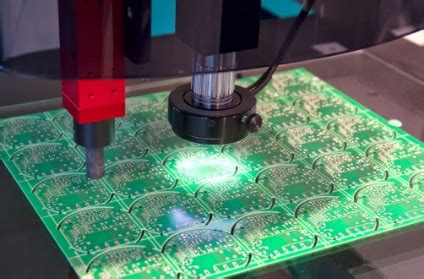
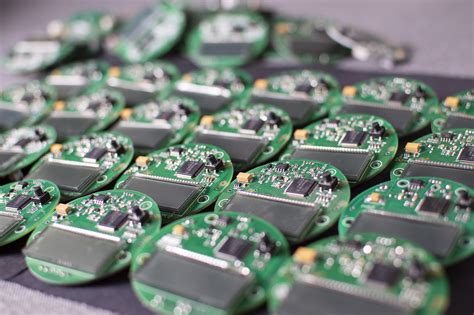
Modern PCB assembly processes rely on specialized machinery to achieve precision in through-hole technology (THT). Advanced automated insertion systems now integrate vision-guided robotics, enabling rapid placement of axial, radial, and DIP components with micron-level accuracy. These systems are designed to handle high-mix, low-volume production demands while maintaining compatibility with legacy designs, making them indispensable for industries requiring durable interconnects.
Central to PCBA efficiency is the synergy between component insertion and soldering workflows. Dual-stage wave soldering machines, equipped with adjustable nozzles and nitrogen inerting, ensure consistent joint formation across complex boards. Innovations like dynamic thermal profiling mitigate warping risks in heat-sensitive substrates, while inline flux application systems optimize adhesion. For high-density assemblies, selective soldering tools provide targeted heat delivery, reducing energy waste.
Modular machinery architectures further enhance adaptability, allowing manufacturers to reconfigure lines for varying board geometries or component types. Real-time monitoring via IoT-enabled sensors tracks insertion force, solder temperature, and cycle times, enabling predictive maintenance. As through-hole assembly evolves, these advancements solidify THT’s role in applications demanding mechanical robustness, from industrial controls to aerospace systems.
Precision Soldering for THT Components
Achieving reliable electrical connections in through-hole PCB assembly hinges on mastering temperature-controlled soldering processes. Unlike surface-mount technology, THT components require precise heat management to form durable solder joints without damaging heat-sensitive materials. Modern PCBA workflows employ automated soldering systems with closed-loop thermal profiling, ensuring consistent results across high-volume production runs. Selective soldering machines, for instance, use programmable nozzles to apply solder exclusively to designated through-holes, minimizing waste and cross-contamination risks.
Critical to this process is the interplay between solder alloy composition and flux chemistry. Lead-free alloys, mandated by RoHS compliance, demand tighter temperature windows (typically 250–270°C) to maintain proper wetting behavior. Advanced flux formulations mitigate oxidation while improving capillary action, enabling solder to flow evenly through plated holes. Automated optical inspection (AOI) systems then verify joint integrity, flagging defects like cold joints or insufficient fill. For mixed-technology boards combining THT and SMD components, modular soldering stations allow sequential processing without compromising either assembly method. These refinements ensure PCB assembly meets industrial reliability standards, even in harsh operating environments.
Automated PCB Component Insertion
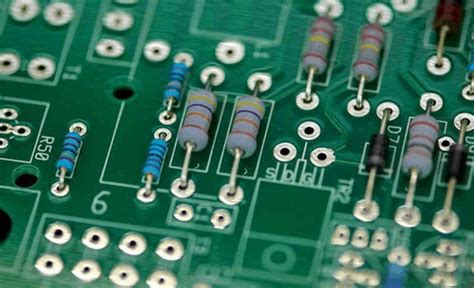
Modern PCB assembly workflows rely on automated insertion systems to achieve precision and repeatability in through-hole technology (THT) applications. These systems integrate robotic actuators, programmable logic controllers (PLCs), and vision-guided alignment tools to place axial, radial, and DIP components at speeds exceeding 25,000 placements per hour. Advanced PCBA lines employ dual-stage machines that simultaneously handle insertion and pre-forming of component leads, reducing cycle times while maintaining ±0.05mm positional accuracy.
A critical advancement lies in adaptive feeder mechanisms, which dynamically adjust to component tolerances, minimizing misinsertions even with legacy parts. For high-reliability industries like aerospace or medical devices, closed-loop feedback systems validate each insertion force and depth, ensuring compliance with IPC-A-610 standards. Hybrid configurations further combine automated insertion with selective soldering units, creating seamless transitions between PCB assembly stages. This integration not only reduces human error but also optimizes thermal management during subsequent soldering phases, a key factor in preventing pad lifting or solder joint fractures.
By leveraging modular designs, manufacturers can scale PCBA throughput while retaining flexibility for low-volume, high-mix production—a balance critical for industries transitioning toward IoT and industrial automation solutions.
Quality Control in THT Manufacturing
Effective quality assurance in through-hole PCB assembly requires a multi-layered approach combining automated systems and rigorous inspection protocols. Modern PCBA workflows integrate automated optical inspection (AOI) systems to detect solder joint defects, component misalignment, or missing leads with micron-level precision. For high-reliability applications, in-circuit testing (ICT) validates electrical continuity across through-hole connections, while functional testing simulates real-world operating conditions to ensure compliance with industry standards like IPC-A-610.
Critical process parameters, including solder bath temperature and wave soldering dwell time, are continuously monitored through IoT-enabled sensors to maintain process stability. Advanced PCB assembly facilities employ statistical process control (SPC) software to analyze production data, identifying trends that could indicate tool wear or material inconsistencies. For mixed-technology boards combining THT and SMD components, cross-sectional analysis verifies complete barrel fill in plated through-holes, a critical factor in mechanical durability.
Quality teams prioritize traceability, with laser marking systems encoding batch-specific data directly on PCBA substrates. This enables rapid root-cause analysis during failure investigations while supporting compliance with aerospace and medical device regulations. By integrating these measures, manufacturers achieve defect rates below 50 ppm in high-volume through-hole PCB assembly operations, balancing precision with production efficiency.
Industrial THT Implementation Strategies
Effective implementation of through-hole PCB assembly in industrial settings requires strategic alignment between equipment capabilities, process design, and quality objectives. For PCB assembly workflows integrating through-hole technology (THT), manufacturers must prioritize automated insertion systems that balance speed with precision, particularly for high-density boards. A critical success factor lies in optimizing thermal management during PCBA soldering phases, where controlled wave soldering profiles prevent component damage while ensuring robust electrical connections.
Transitioning from prototype to mass production demands rigorous workflow design, including modular fixturing for mixed-technology boards and real-time monitoring of insertion accuracy. Industries leveraging THT assembly often adopt hybrid approaches, combining automated axial/bypass insertion machines with manual oversight for irregular components. This dual strategy maintains flexibility without sacrificing throughput.
Another key element is the integration of predictive maintenance protocols for PCB assembly machinery, reducing downtime caused by worn insertion heads or misaligned solder pots. For PCBA teams, standardized documentation of solder bath chemistry and pin-to-hole tolerances ensures consistency across production batches. By aligning equipment calibration with industry-specific reliability standards—such as IPC-A-610 for solder joint integrity—manufacturers mitigate risks in demanding environments like automotive or aerospace applications.
Finally, cross-functional collaboration between design engineers and THT assembly technicians enables early identification of manufacturability challenges, such as lead bending requirements or heat-sensitive component placement. This proactive approach streamlines transitions from design to full-scale PCBA production while maintaining compliance with industrial quality benchmarks.
Optimizing Through-Hole Assembly Reliability
Achieving reliable through-hole PCB assembly requires balancing precision processes with robust quality assurance protocols. A critical aspect lies in selecting pcba-compatible equipment capable of maintaining consistent thermal profiles during soldering. Wave soldering systems, for instance, must be calibrated to ensure optimal solder flow while preventing thermal stress on sensitive components. This demands real-time monitoring of parameters such as conveyor speed, flux density, and preheat temperatures to avoid voids or cold joints.
Component insertion accuracy further impacts reliability, particularly when using automated PCB assembly tools. Advanced optical alignment systems minimize misplacement risks by verifying lead-to-hole positioning within micron-level tolerances. Post-insertion, automated inspection technologies like AOI (Automated Optical Inspection) cross-check pin protrusion lengths and solder fillet formation, flagging deviations before reflow stages.
In parallel, material selection plays a pivotal role. High-temperature laminates and lead-free solder alloys must align with the pcb assembly’s operational environment to prevent premature failure. For industrial applications, conformal coatings add an extra layer of protection against moisture and contaminants, enhancing long-term durability.
Finally, implementing preventive maintenance schedules for insertion machines and soldering equipment ensures sustained performance. Regular nozzle cleaning, solder pot dross removal, and mechanical wear analysis reduce downtime while preserving the precision required for high-yield pcba production. By integrating these strategies, manufacturers can systematically elevate the reliability of through-hole assemblies in mission-critical electronics.
Advanced THT Soldering Techniques
In PCB assembly, achieving reliable electrical connections in through-hole technology (THT) requires mastering precision soldering methods. Wave soldering remains the cornerstone for high-volume PCBA production, where boards pass over a molten solder wave to form consistent joints. For mixed-technology boards, adaptive selective soldering systems enable targeted application, minimizing thermal stress on sensitive components. Modern systems integrate real-time thermal profiling to maintain optimal solder flow temperatures (±2°C variance), critical for preventing cold joints or component damage. Automated flux application units now utilize closed-loop viscosity control, ensuring proper wetting across diverse THT geometries. Rework stations equipped with microprocessor-controlled irons (0.5-2.0mm tip range) address defect correction without compromising adjacent surface-mount devices. Quality assurance leverages automated optical inspection (AOI) with 3D solder joint analysis, detecting insufficient fill or bridging at rates exceeding 1,000 joints/minute. This rigorous approach to soldering process control directly supports the subsequent discussion of THT equipment maintenance best practices, forming an integrated quality chain from assembly to final testing.
THT Equipment Maintenance Best Practices
Effective maintenance of through-hole PCB assembly equipment ensures consistent performance in high-volume manufacturing environments. Regular preventative maintenance schedules for PCBA machinery should include lubrication of insertion heads, calibration of soldering irons, and inspection of conveyor systems. Automated insertion systems, critical for PCB assembly accuracy, require weekly alignment checks to prevent component misplacement. Thermal profiling tools must validate oven temperatures daily, as even minor deviations can compromise solder joint integrity in through-hole technology (THT) applications.
For PCBA equipment such as wave soldering machines, nozzle cleaning and flux residue removal are essential to avoid clogging and contamination. Implementing a predictive maintenance strategy using vibration analysis or thermal imaging can identify wear patterns in motors and actuators before failures occur. Technician training programs should emphasize proper handling of insertion tools and solder pots to extend equipment lifespan. Documentation of maintenance activities, aligned with ISO 9001 standards, provides traceability for quality audits and process optimization. By integrating these practices, manufacturers minimize downtime while maintaining the precision required for industrial PCB assembly workflows.
Conclusion
As manufacturing demands evolve, PCB assembly processes leveraging through-hole technology (THT) continue to demonstrate their enduring value in industrial applications. Modern PCBA workflows integrate precision machinery with advanced quality assurance protocols, ensuring robust performance in high-reliability environments. While surface-mount technology dominates miniaturized designs, THT remains indispensable for components requiring mechanical stability or handling high power loads.
The synergy between automated insertion systems and refined soldering techniques underscores the technical sophistication of contemporary PCB assembly lines. Manufacturers prioritizing thermal management and joint integrity achieve superior product longevity, even in demanding operational conditions. Furthermore, rigorous inspection methodologies—such as automated optical inspection (AOI) and X-ray analysis—maintain defect rates at industry-leading lows.
By aligning equipment calibration schedules with predictive maintenance strategies, PCBA providers optimize throughput without compromising precision. This balanced approach ensures through-hole assemblies meet both current industrial standards and future scalability requirements. As innovation progresses, the fusion of legacy reliability with cutting-edge automation will solidify THT’s role in next-generation electronics manufacturing.
Frequently Asked Questions
What distinguishes through-hole technology (THT) from surface-mount technology (SMT) in PCB assembly?
While SMT mounts components directly onto a PCB’s surface, THT involves inserting leads into pre-drilled holes and soldering them on the opposite side. This method remains critical for high-power components and applications requiring mechanical durability, making PCB assembly processes more robust for industrial environments.
How does automated equipment improve through-hole PCB assembly efficiency?
Modern PCBA workflows leverage automated insertion machines and selective soldering systems to handle high-volume production. These systems reduce human error, ensure consistent solder joint quality, and accelerate throughput—key for meeting tight manufacturing deadlines.
What quality control measures are essential for THT manufacturing?
Rigorous visual inspections, automated optical inspection (AOI), and X-ray testing verify solder joint integrity and component alignment. Additionally, thermal profiling during soldering ensures optimal PCB assembly reliability, preventing defects like cold joints or tombstoning.
Can through-hole components coexist with SMT in hybrid assemblies?
Yes, many PCBA designs combine THT and SMT to balance mechanical strength and miniaturization. Hybrid assemblies require precise process sequencing, often involving wave soldering for THT parts after SMT placement to avoid reflow damage.
What maintenance practices prolong the lifespan of THT equipment?
Regular nozzle cleaning on insertion machines, calibration of soldering robots, and lubrication of conveyor systems minimize downtime. Proactive maintenance ensures consistent performance in high-mix PCB assembly environments.
Ready to Optimize Your Through-Hole PCB Assembly Process?
For tailored solutions in PCBA manufacturing, please click here to explore our advanced equipment and technical expertise.