What are the symptoms of damage to components on PCB?
Electronic components have a lifespan. In addition to its own structure and properties, it is also closely related to its use environment and the role it plays in the circuit.
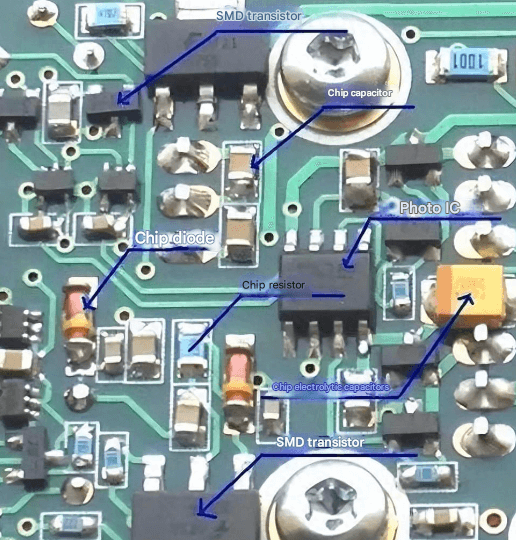
Electronic components in the circuit are divided into strong and weak. The ranking of electronic component resistance is as follows:
Resistors, inductors, capacitors, semiconductor devices (including diodes, triodes, field tubes, integrated circuits), that is, under the same working conditions, semiconductor devices have the highest probability of damage.
When looking for faulty components, diodes, triodes, field tubes, integrated circuits, etc. should be checked first. Generally, semiconductor devices are more likely to be broken down when damaged. The multimeter diode buzzer range should measure any two pins of these devices with a minimum PN junction resistance of about 500. If the buzzer is 80%, it is broken and can be removed and tested again to confirm.
In the circuit, components working under high voltage, high current and high power are undoubtedly under great pressure and are more likely to be damaged. They are also key components and functional components of the circuit.
Wherever there is a high current, there will be a lot of heat (Joule-Lenz law – heat is proportional to the square of the current), so all components with heat sinks are vulnerable parts. High-power resistors are also vulnerable parts. In the circuit, fuses and fuse resistors are the least secure components. First of all, because of their low melting point, they are easy to break. And because they are the insurance for others, they rush to the front line and act as guards, so they break first when they break.
There are ways for components to be damaged, such as overvoltage damage, overcurrent damage, and of course mechanical damage. Overvoltage damage is like lightning strikes, which break down bridge rectifiers. Overcurrent damage is like thermal breakdown of display line tubes.
There is no obvious change in the appearance of components damaged by overvoltage, but all the parameters have changed. The surface temperature of components damaged by overcurrent is very high, and there are obvious changes such as cracks, discoloration, and small pits. In severe cases, the circuit board around the component turns yellow and black.
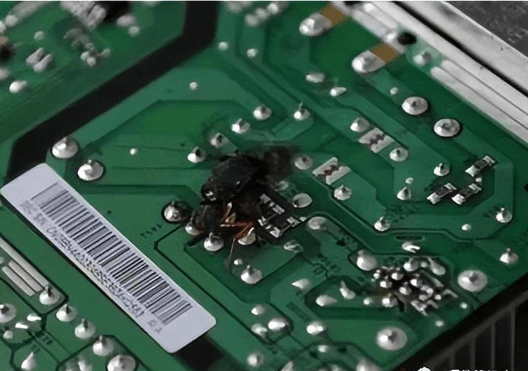
Common electronic components can be tested with a digital multimeter when they look normal.
Resistors: This is very simple, test whether the resistance is correct.
Diodes: Use a digital multimeter to test the voltage drop of the PN junction, and compare it with a good diode of the same model.
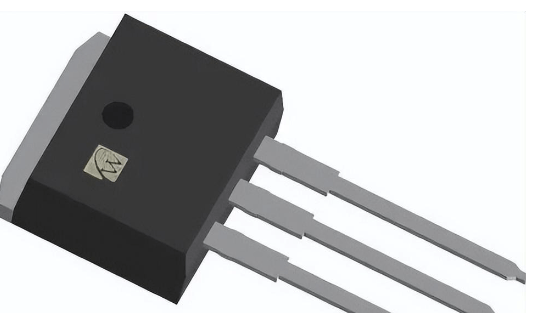
Transistors: Whether it is an N tube or a P tube, a digital multimeter can be used to measure and test whether the two PN junctions are normal.
Field effect tube: Test whether the PN junction of the internal diode of the field effect tube is normal, and test whether GD and GS are short-circuited.
Capacitors: Non-polar capacitors, short-circuit or desoldering, severe leakage or resistance effect.
The effective characteristics of electrolytic capacitors are: short-circuit breakdown, increased leakage, reduced capacity or open circuit.
Inductors: The effective characteristics are: broken wire, desoldering
Chip: The internal structure of the integrated circuit is complex and has many functions. If any part is damaged, it cannot work normally. There are also two types of damage to the integrated circuit: complete damage and poor thermal stability. When it is completely damaged, it can be removed and compared with the normal integrated circuit of the same model to measure the forward and reverse resistance of each pin to the ground. It is always possible to find that one or several pins have abnormal resistance. For those with poor thermal stability, the suspected integrated circuit can be cooled with anhydrous alcohol when the equipment is working. If the fault occurs later or no longer occurs, it can be determined. Usually, it can only be eliminated by replacing a new integrated circuit.
Whether it is a fault caused by natural wear and tear or a fault caused by human damage, it can generally be attributed to three types of faults: open circuit of circuit contacts, damage to electronic components and software failure. If the contact is open, it is generally easier to repair if the wire is broken, the plug-in is disconnected, the contact is poor, etc. The damage of electronic components (except for obvious burnout and heating) is generally difficult to be discovered by observers. In many cases, it must be detected and judged with the help of instruments. Therefore, for technicians, it is necessary to first understand the characteristics of the effectiveness of various devices. This is extremely important for repairing circuit faults and improving repair efficiency.