What causes PCB nail heads?
Today, we received a question about the causes of PCB nail heads. It’s a good question, so we’ll explain them in detail.
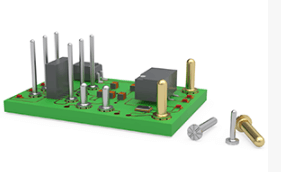
PCB nail heads are nail-like components used to secure and connect PCBs. They are typically made of metal, such as copper or steel, and are shaped to be inserted and secured to the circuit board. These nail heads can be connected to wires, components, or sockets on the circuit board through methods such as soldering or pressure-fitting, achieving both electrical and mechanical connection.
So why do PCB nail heads occur? We’ve compiled the following five reasons:
Excessive solder paste: If too much or uneven solder paste is applied to the PCB, nail heads may form during soldering.
Excessive soldering temperature or prolonged soldering time: High temperatures or prolonged soldering times can cause the solder paste to over-melt, resulting in nail heads.
Inaccurate component installation: If a component is incorrectly positioned or oriented on the PCB, concentrated pressure may occur during soldering, leading to nail heads.
PCB design issues: Design factors such as routing rules, pad size, and component spacing may also affect the occurrence of nail heads.
Material issues: Low-quality solder paste or components may increase the risk of nail heads.
To avoid nail heads, take the following preventative measures:
Control the amount of solder paste and apply it evenly.
Strictly control soldering temperature and time, and adhere to correct soldering parameters.
Ensure correct component installation and precisely control soldering pressure.
Consider routing rules and component spacing during the PCB design phase, adhering to best design practices.
Use high-quality solder paste and component materials.
Perform appropriate inspection and quality control, including visual inspection and X-ray inspection.
The above is the information on PCB nail heads compiled by the editor of Jieduobang. We hope this helps you when you encounter PCB nail head issues.