What is the PCB coating material?
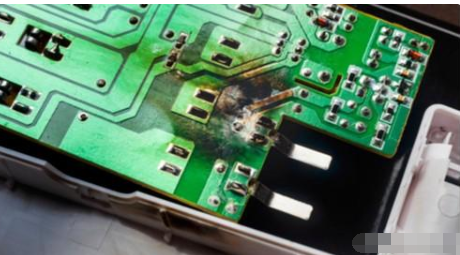
The water vapor film on the uncoated printed circuit board also provides favorable conditions for the growth and corrosion of the metal. Other common adverse effects include reducing the dielectric strength of the medium and affecting high-frequency signals. What kind of coating material does the PCB manufacturer use? What are the precautions?
Dust, stains and other environmental pollutants that fall on the surface of the assembly will absorb moisture and aggravate the above-mentioned effects. Conductive particles (such as metal debris) on the board surface will also cause circuit bridging. The conformal coating properly used by the PCB manufacturer can prevent all these harmful effects.
Coating materials of PCB manufacturers
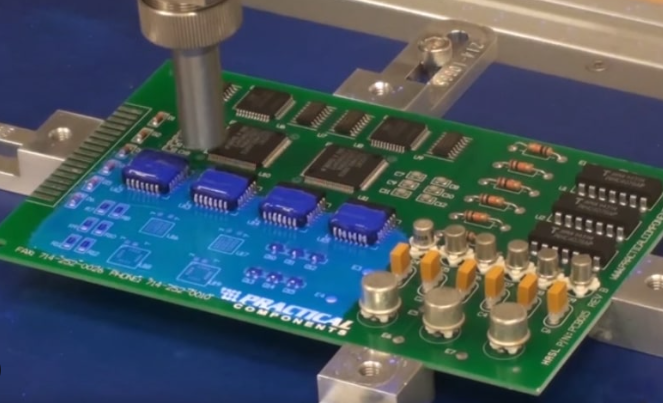
IPC-CC-830: Technical specifications and performance requirements for electrical insulating compounds for printed circuit assembly (material specifications for industrial use). MIL-I-46058C: Insulating compounds, electrical properties (US Department of Defense, material specifications). MIL-P-28809: Printed wiring assembly (US Department of Defense, inspection standard for conformal coating assembly). UL746E: Polymeric Materials – For Electronic Equipment Evaluation (Underwriters Laboratories Approved).
PCB manufacturers consider conformal coatings to be semi-permeable membranes that allow a small amount of moisture to penetrate the coating. Therefore, if the coating is exposed to a humid environment for a long time, its insulation resistance will decrease. This is a common feature of all coating films.
One of the main purposes of applying conformal coatings on printed circuit boards is to provide electrical insulation. Therefore, the cured coating must have sufficient dielectric strength and insulation resistance to meet the requirements of safety design over the entire operating temperature range of the assembly and the expected operating environment. In the application of circuit board products, dielectric constant and loss factor (Q value) may become important selection parameters.
Coating process of circuit boards
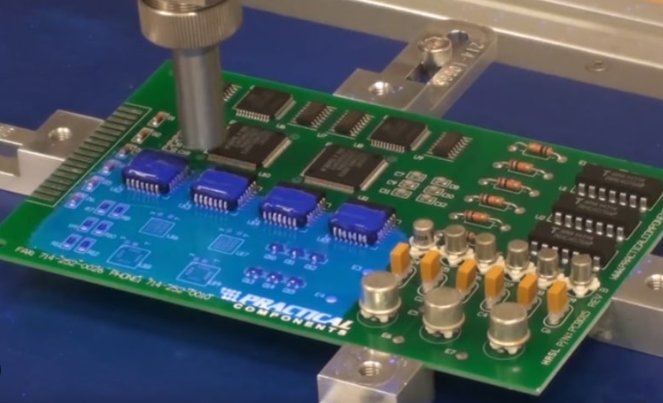
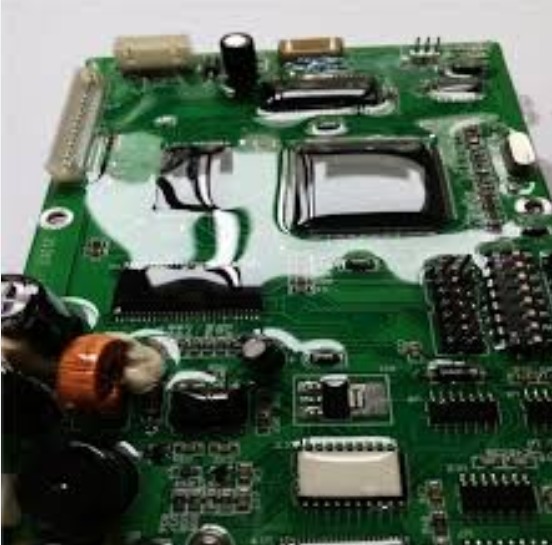
Manufacturing is concerned with the full cost, processing time, safety, health and environmental pollution of circuit board conformal coating. The size of the production volume will determine whether the coating process is manual or automatic. Then consider the cost issue. The cost model can be used to establish an estimate of the return on investment, such as the cost allocation of automatic equipment. Automated systems are suitable for fast drying and fast curing coating materials, while for manual coating, production cycle may be a consideration.
Ease of handling during rework (stripping and recoating) and repair is an important advantage of conformal coating materials, but resistance to solvents and chemicals can be an important trade-off. These conflicts need to be negotiated between circuit board design engineering and production. Similar trade-offs exist in safety, health, and environmental factors.
The shelf life (how long the coating can be stored in a sealed container) and the service life (how long the coating can be used normally after opening the can or mixing) of the coating are also factors to consider. Short service life can result in a large amount of material waste and, more importantly, inconsistent coating thickness due to the rapid increase in viscosity (resistance to flow) of the material in the can. Two-component coatings generally have short service lives, while one-component systems generally have long service lives that approach the shelf life.