Why PCB Boards Must Be Baked Before SMT Assembly
Introduction
In the world of electronics manufacturing, Surface Mount Technology (SMT) has become the dominant method for assembling printed circuit boards (PCBs). However, one critical preparatory step that is often overlooked or misunderstood is the baking (or pre-baking) of PCBs prior to the SMT process. This article explores in detail why PCB baking is essential, the scientific principles behind it, the potential consequences of skipping this step, and best practices for proper PCB baking procedures.
The Moisture Absorption Problem in PCBs
PCB Laminate Composition
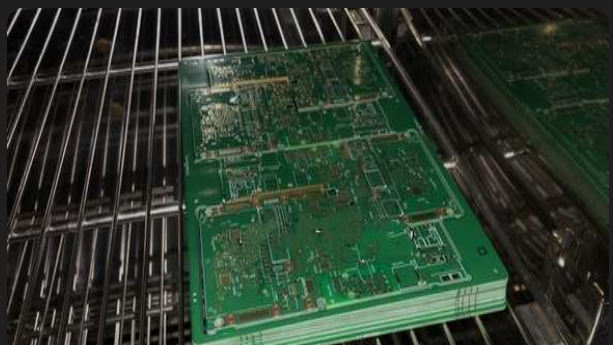
Modern PCBs are typically made from composite materials, most commonly FR-4, which consists of woven fiberglass cloth with an epoxy resin binder. These materials, while excellent for electrical insulation and mechanical stability, are inherently hygroscopic—meaning they naturally absorb moisture from the environment.
How Moisture Enters PCB Materials
Moisture absorption occurs through several mechanisms:
- Porosity of Materials: Even seemingly solid PCB laminates have microscopic pores that allow water molecules to penetrate
- Hydrophilic Components: The resin systems and glass fibers in PCBs have molecular structures that attract water
- Environmental Exposure: From the moment PCBs are manufactured until they reach assembly, they’re exposed to ambient humidity
Factors Affecting Moisture Absorption
The rate and amount of moisture absorption depend on:
- Storage conditions (temperature and humidity)
- Exposure time
- PCB thickness and layer count
- Laminate material properties
- Surface finishes
The Science Behind PCB Baking
Moisture Diffusion Principles
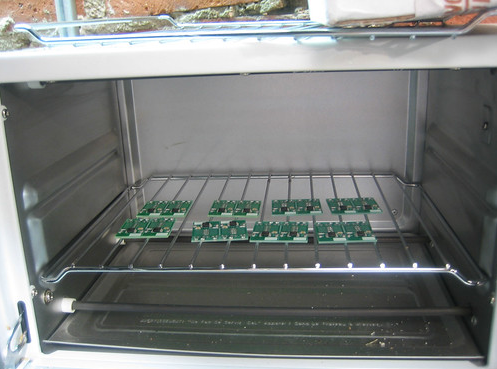
Moisture in PCBs follows Fick’s laws of diffusion. The baking process essentially reverses this diffusion, driving moisture out of the board through:
- Increased Temperature: Raising the temperature increases the vapor pressure of absorbed water
- Low Humidity Environment: Baking is typically done in dry ovens to create a concentration gradient favoring moisture removal
- Time: Sufficient duration allows complete moisture diffusion to the surface and evaporation
Glass Transition Temperature (Tg) Considerations
The baking temperature must be carefully selected based on the PCB’s Tg:
- Below Tg: The polymer matrix remains rigid, limiting moisture movement
- Above Tg: The polymer becomes more flexible, allowing faster moisture removal but risking material damage
Most standard FR-4 PCBs (Tg ~130-140°C) are baked at 105-125°C to stay safely below Tg while effectively removing moisture.
Consequences of Not Baking PCBs Before SMT
Popcorn Effect During Reflow
The most dramatic failure occurs when absorbed moisture turns to steam during the high-temperature reflow soldering process (typically 220-260°C). This rapid phase change can cause:
- Delamination: Separation of PCB layers
- Blistering: Surface bubbles or eruptions
- Voiding: In solder joints due to gas expansion
- Cracks: In both the PCB and components
Solder Defects and Quality Issues
Even without catastrophic failures, moisture can lead to:
- Poor wetting and solder joint defects
- Increased voiding in BGA joints
- Tombstoning of small components
- Solder balling and splattering
Long-term Reliability Problems
Moisture-related issues may not be immediately apparent but can cause:
- Increased electrochemical migration
- Reduced insulation resistance
- Accelerated aging and degradation
- Intermittent failures in field operation
Impact on Yield and Costs
Skipping PCB baking often results in:
- Higher defect rates during assembly
- Increased rework and scrap costs
- Potential field failures and warranty claims
- Damage to brand reputation
PCB Baking Process Parameters
Temperature Guidelines
Typical baking temperatures:
- Standard FR-4: 105-125°C
- High Tg materials: Up to 150°C (but verify with manufacturer)
- Flexible PCBs: Lower temperatures (80-100°C)
Duration Requirements
Baking time depends on:
- PCB thickness: 2-4 hours for 1.6mm boards, longer for thicker PCBs
- Moisture sensitivity level (MSL)
- Initial moisture content
- Storage history
As a general rule:
- <2mm thickness: 4 hours minimum
- 2-4mm: 6-8 hours
- >4mm: 8-12 hours or more
Handling After Baking
Critical post-baking considerations:
- Time between baking and assembly (typically <24 hours)
- Proper storage in dry cabinets or with desiccant
- Handling procedures to prevent reabsorption
Industry Standards and Guidelines
IPC Standards
Key relevant standards include:
- IPC-1601: Printed Board Handling and Storage Guidelines
- IPC/JEDEC J-STD-033: Handling, Packing, Shipping and Use of Moisture/Reflow Sensitive Components
- IPC-1602: Guidelines for Baking of Printed Circuit Boards
Moisture Sensitivity Levels (MSL)
PCBs are classified similarly to components:
- MSL 1: Unlimited floor life (<30°C/85% RH)
- MSL 2: 1 year floor life
- MSL 3: 168 hours
- MSL 4: 72 hours
- MSL 5: 48 hours
- MSL 5a: 24 hours
- MSL 6: Mandatory bake before use (time on label)
Special Cases and Considerations
High-Density Interconnect (HDI) PCBs
HDI boards with thin cores and microvias require special attention:
- More susceptible to moisture damage
- May need lower baking temperatures
- Often require controlled cooling after baking
Heavy Copper and Multilayer Boards
Thick copper and high layer counts present challenges:
- Longer baking times needed
- Risk of uneven drying
- Potential for thermal stress
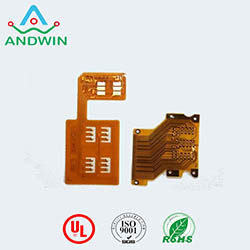
Flexible and Rigid-Flex PCBs
Special considerations for flexible materials:
- Lower baking temperatures (typically 80-100°C)
- Concerns about material degradation
- Dimensional stability issues
Baking Equipment and Methods
Industrial Baking Solutions
Common baking equipment includes:
- Convection ovens (most common)
- Vacuum ovens (for sensitive boards)
- Infrared systems (for rapid heating)
- Batch vs. continuous systems
Process Control Requirements
Critical parameters to monitor and control:
- Temperature uniformity (±5°C)
- Air circulation
- Exhaust humidity
- Temperature ramp rates
Alternative Approaches to PCB Baking
Dry Storage Solutions
For operations with frequent PCB use:
- Dry cabinets (maintain <10% RH)
- Nitrogen storage
- Desiccant systems
Moisture Barrier Packaging
When baking isn’t immediately possible:
- Vacuum sealing
- Moisture barrier bags with desiccants
- Humidity indicator cards
Conclusion
PCB baking before SMT assembly is not merely a recommended best practice—it’s a critical step that ensures product quality, manufacturing yield, and long-term reliability. The science behind moisture absorption and removal explains why this process is necessary, while industry experience demonstrates the severe consequences of neglecting proper baking procedures.
As PCB technology continues to advance with finer features, more complex materials, and higher density interconnects, the importance of proper moisture management only increases. Manufacturers must develop and follow appropriate baking protocols tailored to their specific PCB types, storage conditions, and production requirements.
By understanding and implementing proper PCB baking procedures, electronics manufacturers can avoid costly defects, improve product reliability, and maintain high quality standards in an increasingly competitive marketplace. The small investment in time and equipment for proper PCB baking pays substantial dividends in reduced scrap, rework, and field failures.