78% of hardware failures are caused by welding problems
Have you been entangled in the failure analysis of circuit boards for a long time? Do you spend a lot of energy in the process of sample debugging? Have you doubted your original correct design?
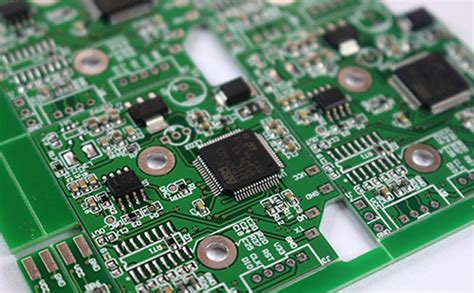
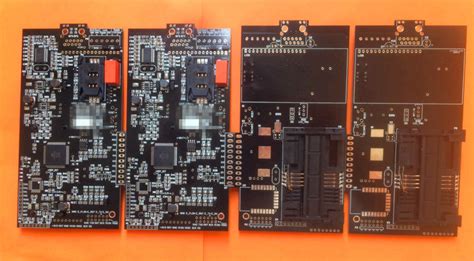
Perhaps many hardware engineers have had similar psychological dialogues. Data show that 78% of hardware failures are caused by poor welding and wrong material patches. As a result, engineers spend a lot of time and energy in sample debugging and analysis, delaying the progress of the project. If the cause of the failure cannot be found for a while, engineers will doubt their original correct design, causing themselves to go astray in the incorrect direction of thinking. When actually debugging hardware, engineers often consider many profound potential causes, but are unwilling to doubt whether welding is reliable enough, but often “the safest place is the most dangerous place”. Engineers will habitually think that simple things like welding will not cause many seemingly complex problems. Once such a problem occurs, they will also habitually consider the robustness of the software and the rationality of the design of the hardware circuit. For example,
Case 1: Due to the poor soldering of a certain signal in the DDR high-speed signal part, the system seems to work normally when transmitting ordinary small amounts of data.
However, when performing burst operations with large amounts of data, such as high-definition movie playback and operating system loading, errors will often be reported. This is often mistaken for software problems, and software engineers have been checking the code for a long time without results.
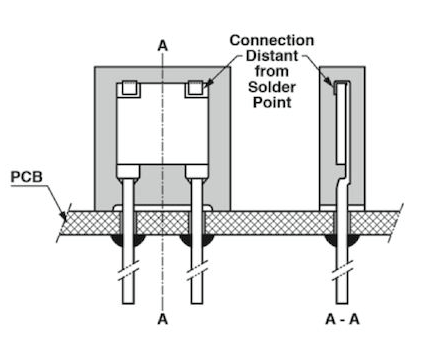
Case 2: Due to improper time and temperature control during welding, the plastic structure inside connectors such as LCD and USB melts and deforms due to high temperature
, causing a certain signal to be accidentally disconnected, so that the LCD has no display and the USB has no communication, which is mistakenly believed to be a software driver problem.
Case 3: Next to the CPU power supply, there are a large number of densely distributed decoupling capacitors.
Due to the excess solder during the welding process, a certain capacitor short-circuited, resulting in hardware engineers spending a lot of time to check the cause of the short circuit one by one.
Case 4: High-speed signal interface connector: Due to the poor soldering of a certain signal, the system can work at a lower bus frequency. Once the bus speed is increased, the system immediately reports an error. The cause of such a problem is basically difficult to locate.
Case 5: Due to poor welding of the inductor part, the PWM dimming function of the LED failed.
Engineers spent a lot of time to confirm whether it was a software or hardware problem.
Welding seems simple, but it is also made up of many work details and steps, and these links are also linked to each other. Any error in any link will lead to the final problem. Massembly, a company specializing in sample patch welding, has creatively added its own quality inspection links in the overall patch workflow, such as material selection, marking, printing, patch, and furnace, which effectively reduces the possibility of hardware failure.
Therefore, during the hardware debugging process, it is recommended that engineers first observe the welding quality of your prototype. 1. Is the material correct? 2. Is the pin position correct? 3. Is there any tin connection, empty soldering, or virtual soldering? 4. Is the solder paste full and reflective after passing through the furnace? 5. Is the PCB board brown? 6. Does the structural part of the connector melt at high temperature? 7. Does the chip position correspond to the silk screen?
After checking the “simple” items above, focus your energy on those “advanced” issues!