
circuit board substrate
What is a substrate?
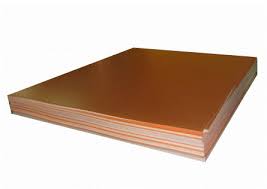
What is a substrate? A substrate is the basic material for manufacturing PCBs. When we usually say what a substrate is, we mean a copper-clad laminate.
This article introduces what a substrate is, the development history of substrates, and the classification method and implementation standards of substrates.
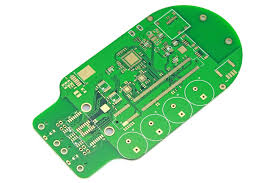
1. What is a substrate?
Today, printed circuit boards have become an indispensable component of most electronic products. Single-sided and double-sided printed circuit boards are made of substrate materials – copper-clad laminates (Copper-(2lad I. aminates, CCI. ), selectively perform hole processing, chemical copper plating, electroplating copper, etching and other processing to obtain the required circuit pattern.
The manufacture of another type of multi-layer printed circuit board is also based on the inner core thin copper clad foil board as the base, and the conductive graphic layer and the prepreg (Pregpr’eg) are alternately laminated and bonded together at one time to form more than 3 layers of conductive graphic layer interconnection.
Therefore, it can be seen that as the substrate material in the manufacture of printed circuit boards, both copper clad foil boards and prepregs play a very important role in printed circuit boards. It has three functions of conduction, insulation and support.
The performance, quality, processability in manufacturing, manufacturing cost, manufacturing level, etc. of printed circuit boards, It depends largely on the substrate material.
GET PCB MANUFACTURING AND ASSEMBLY QUOTE NOW!
2. Development history of substrate
The technology and production of substrate materials have gone through half a century of development, and the annual output in the world has reached 290 million square meters. This development moment is driven by the innovation and development of electronic complete products, semiconductor manufacturing technology, electronic installation technology, and printed circuit board technology.
Since the copper-clad board made of phenolic resin substrate began to be put into practical use in 1943, the development of substrate materials has been very rapid. In 1959, Texas Instruments produced the first integrated circuit, which put forward higher high-density assembly requirements for printed circuit boards, and then promoted the production of multilayer boards.
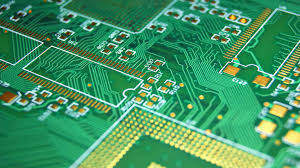
In 1961, Hazeltine Corpot of the United States ation successfully developed a multilayer board technology using metallized through-hole process. In 1977, BT resin achieved industrial production, providing a new type of substrate material with high and low Tg for the development of multilayer boards in the world.
In 1990, IBM Japan announced a new multilayer board technology using photosensitive resin as an insulating layer. In 1997, high-density interconnected multilayer board technology including multilayer boards entered a mature stage of development.
At the same time, plastic packaging substrates represented by BGA and CSP have developed rapidly. In the late 1990s, some new substrates such as green flame retardants that do not contain bromine and antimony quickly emerged and entered the market.
After more than 40 years of development, my country’s substrate materials industry has now formed a production scale with an annual output value of about 9 billion yuan. In 2000, the total output of copper-clad laminates in mainland my country reached 64 million square meters, creating an output value of 5.5 billion yuan.
Among them, the output of paper-based copper-clad laminates has ranked third in the world. However, there is still a considerable gap with foreign advanced countries in terms of technical level, product variety, and especially the development of new substrates.
3. Classification of substrates
Generally, substrate materials for printed circuit boards can be divided into two categories: rigid substrate materials and flexible substrate materials. An important variety of general rigid substrate materials is copper-clad laminates.
It is made of reinforcing materials (Reinforeing Material), impregnated with resin adhesives, dried, cut, and stacked into blanks, and then covered with copper foil, using steel plates as molds, and processed by high temperature and high pressure in hot presses. The semi-cured sheets used in general multi-layer boards are semi-finished products of copper-clad laminates during the production process (mostly glass cloth impregnated with resin and dried).
There are many ways to classify copper-clad laminates. Generally, according to the different reinforcing materials of the board, it can be divided into five categories: paper base, glass fiber cloth base, composite base (CEM series), laminated multilayer board base and special material base (ceramic, metal core base, etc.).
If classified according to the different resin adhesives used in the board, the common paper-based CCI. There are various types such as phenolic resin (XPc, XxxPC, FR-1, FR-2, etc.), epoxy resin (FE-3), polyester resin, etc. Common glass fiber cloth-based CCLs include epoxy resin (FR-4, FR-5), which is currently the most widely used type of glass fiber cloth base. In addition, there are other special resins (with glass fiber cloth, polyamide fiber, non-woven fabrics, etc. as additional materials): bismaleimide modified triazine resin (BT), polyimide resin (PI), diphenylene ether resin (PPO), maleic anhydride imide-styrene resin (MS), polycyanate resin, polyolefin resin, etc.
According to the flame retardant performance of CCL, it can be divided into flame retardant (UL94-VO, UL94-V1) and non-flame retardant (UL94-HB).
In the past one or two years, with more attention paid to environmental protection issues, a new type of CCL without bromine has been separated from the flame retardant CCL, which can be called “green flame retardant CCL”. With the rapid development of electronic product technology, higher performance requirements are placed on CCL. Therefore, from the performance classification of CCL, it is divided into general performance CCL, low dielectric constant CCL, high heat resistance CCL (general board L is above 150℃), low thermal expansion coefficient CCL (generally used on packaging substrates) and other types.
GET PCB AND ASSEMBLY SERVICE QUOTE NOW!
4. Standards for substrate implementation
With the development and continuous progress of electronic technology, new requirements are constantly put forward for printed circuit board substrate materials, thereby promoting the continuous development of copper clad board standards. At present, the main standards for substrate materials are as follows.
1) National standards for substrates At present, the national standards for substrate materials in my country are GB/T4721-4722 1992 and GB 4723-4725-1992. The copper clad laminate standard in Taiwan is the CNS standard, which was formulated based on the Japanese JIS standard and was issued in 1983.
2) Other national standards The main standards are: Japan’s JIS standards, the United States’ ASTM, NEMA, MIL, IPc, ANSI, UL standards, the United Kingdom’s Bs standards, Germany’s DIN, VDE standards, France’s NFC, UTE standards, Canada’s CSA standards, Australia’s AS standards, the former Soviet Union’s FOCT standards, international IEC standards, etc., see the table for details
Summary of national standards names Standard abbreviation-Standard name-Standard-setting department
JIS-Japanese Industrial Standards-(Financial) Japan Standards Association
ASTM-American Society for Testing and Materials
NEMA-National Electrical Manufacturers Association-National Electrical Manufacturers Association
MH-US Military Standards-Department of Defense Military Specific tions and Standards
IPC-The Institrue for Interoonnecting and packing EIectronics Circuits
ANSl-American National Standards Institute