
4 pcb capabilities
The 4 pcb capabilities of PCB manufacturing, namely high-density interconnection (HDI), multi-layer boards, flexible and rigid-flex composite boards, and the application of high-frequency materials, form the cornerstone of current electronic product performance and reliability.
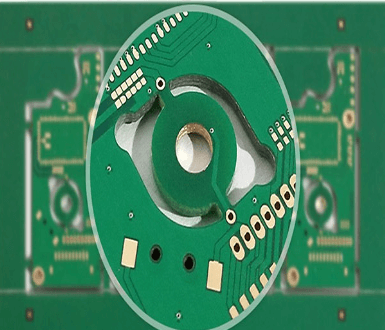
Application of HDI technology
The application of HDI technology enables PCB to achieve higher circuit density in limited space. Through technologies such as microvias, blind vias, and buried vias, HDI PCB can significantly reduce the size and weight of the circuit board while improving signal transmission speed and electrical performance. This is especially important for portable devices such as smartphones and tablets, which need to pack more functions into a small form factor.
Advances in multilayer board technology further drive PCB manufacturing complexity and functionality
Advances in multilayer board technology have further driven the complexity and functionality of PCB manufacturing. Multilayer boards allow circuit designers to achieve more complex circuit layouts and higher electrical performance by stacking multiple conductive layers in a single PCB. Multilayer boards are commonly used in high-performance computers, servers, and communications equipment that handle large amounts of data and require high reliability. Through multilayer board technology, designers can optimize signal paths, reduce electromagnetic interference, and improve overall system stability.
The emergence of flexible and rigid-flex boards provides more flexibility for PCB design.
Flexible boards can bend and fold, making them suitable for applications that require special shapes and space constraints, such as wearable devices and medical devices. Rigid-flexible boards combine the advantages of rigid boards and flexible boards, providing the mechanical strength of rigid boards and the flexibility of flexible boards. Such hybrid structures are widely used in fields such as aerospace and automotive electronics because of their ability to provide reliable performance in complex environments.
The application of high-frequency materials is becoming increasingly important in PCB manufacturing.
With the development of wireless communication technology, the demand for high-frequency signal transmission continues to increase. High-frequency materials, such as polytetrafluoroethylene (PTFE) and ceramic substrates, have low dielectric constant and low loss factor and can effectively support the transmission of high-frequency signals. These materials are widely used in 5G communication equipment, radar systems and high-frequency sensors, ensuring signal integrity and efficient operation of the system.
The complexity and precision of PCB manufacturing directly affects the performance and reliability of the final product. In order to ensure high-quality PCBs, manufacturers must have four key capabilities: design capabilities, material selection capabilities, manufacturing process capabilities, and quality control capabilities.
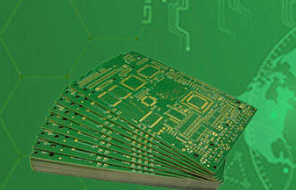
- Design capability is the foundation of PCB manufacturing.
A good PCB design not only needs to meet electrical performance requirements, but must also consider manufacturing feasibility and cost-effectiveness. Designers need to be proficient in various design software and have extensive circuit knowledge and experience. By optimizing circuit layout and rationally arranging component locations and routing, designers can effectively reduce electromagnetic interference and improve signal integrity. In addition, thermal management and mechanical strength need to be considered during the design stage to ensure the stability of the PCB in various working environments. - The ability to select materials is also crucial.
Different application scenarios have different requirements for PCB materials. For example, high-frequency circuits require low-loss dielectric materials, while high-power circuits require substrate materials with good thermal conductivity. Manufacturers must select appropriate materials based on specific needs to ensure PCB performance and reliability. In addition, environmental protection and sustainability are also important considerations in material selection. As environmental regulations become increasingly stringent, manufacturers need to choose materials that meet environmental standards to reduce their impact on the environment. - Manufacturing process capability is the key to achieving high-quality PCB.
Modern PCB manufacturing involves a variety of complex processes, including drilling, etching, lamination, surface treatment, etc. Every process step requires precise control to ensure the quality of the final product. For example, the drilling process requires high-precision equipment and technology to ensure the accuracy of hole diameter and position; the etching process requires precise control of etching time and temperature to ensure that the width and spacing of the lines meet the design requirements. Advanced manufacturing equipment and technology, as well as strict process control, are the guarantee for achieving high-quality PCB. - Quality control capabilities run through the entire process of PCB manufacturing.
Manufacturers need to establish a complete quality management system, and every link from raw material inspection, production process monitoring to final product testing needs to be strictly controlled. By using advanced inspection equipment and technologies, such as automatic optical inspection (AOI), X-ray inspection (X-ray), etc., manufacturers can promptly discover and correct defects in production to ensure that each PCB meets design and quality requirements. In addition, continuous improvement and optimization of the quality management system will help improve production efficiency and product quality, and enhance market competitiveness.
To sum up, the 4 capabilities in PCB manufacturing – design capabilities, material selection capabilities, manufacturing process capabilities and quality control capabilities – complement each other and jointly determine the final quality and performance of PCB. Only with these key capabilities can manufacturers stand out in the fierce market competition and meet customer demand for high-quality electronic products.