
Rogers pcb material dielectric constant
Understanding The Dielectric Constant Of Rogers PCB Materials
Rogers PCB materials are renowned in the electronics industry for their superior performance, particularly in high-frequency applications. One of the critical parameters that define the performance of these materials is the dielectric constant, also known as the relative permittivity. Understanding the dielectric constant of Rogers PCB materials is essential for engineers and designers who aim to optimize the performance of their electronic circuits.
The dielectric constant is a measure of a material’s ability to store electrical energy in an electric field.
It is a dimensionless quantity that compares the permittivity of the material to the permittivity of a vacuum. In simpler terms, it indicates how much electric charge a material can store relative to a vacuum. For Rogers PCB materials, the dielectric constant typically ranges from 2.2 to 10.2, depending on the specific type of material used. This range allows for a wide variety of applications, from low-frequency analog circuits to high-frequency microwave and RF circuits.
One of the primary reasons why the dielectric constant is so crucial in PCB design is its impact on signal integrity.
A higher dielectric constant can lead to increased signal delay and potential signal loss, which can be detrimental in high-speed applications. Conversely, a lower dielectric constant generally results in faster signal propagation and reduced signal loss. Therefore, selecting the appropriate Rogers PCB material with the right dielectric constant is vital for ensuring optimal signal performance.
Moreover, the dielectric constant also affects the impedance of transmission lines on the PCB.
Impedance matching is critical for minimizing reflections and ensuring efficient signal transmission. Rogers PCB materials with a stable dielectric constant over a wide frequency range are particularly valuable in this regard, as they help maintain consistent impedance and signal integrity across different operating conditions.
In addition to signal integrity and impedance considerations, the dielectric constant also influences the thermal performance of the PCB.
Materials with a higher dielectric constant tend to have higher thermal conductivity, which can be beneficial for dissipating heat in high-power applications. This thermal management capability is another reason why Rogers PCB materials are favored in demanding environments, such as aerospace and defense applications.
Furthermore, the dielectric constant of Rogers PCB materials is not static; it can vary with frequency, temperature, and humidity.
Therefore, it is essential to consider these factors during the design phase. For instance, in high-frequency applications, even slight variations in the dielectric constant can lead to significant changes in signal behavior. Rogers PCB materials are designed to offer minimal variation in dielectric constant across a wide range of frequencies and environmental conditions, providing designers with a reliable and predictable performance.
In conclusion, the dielectric constant of Rogers PCB materials is a fundamental parameter that significantly impacts the performance of electronic circuits. By understanding and carefully selecting the appropriate dielectric constant, engineers can optimize signal integrity, impedance matching, and thermal management in their designs. The stability and reliability of Rogers PCB materials make them an excellent choice for a wide range of applications, from consumer electronics to high-frequency communication systems. As technology continues to advance, the importance of selecting the right PCB material with the appropriate dielectric constant will only become more critical in achieving superior electronic performance.
Comparing Dielectric Constants In Different Rogers PCB Materials
When selecting materials for printed circuit boards (PCBs), one of the critical factors to consider is the dielectric constant, which significantly influences the performance of high-frequency circuits. Rogers Corporation, a leading manufacturer of high-performance PCB materials, offers a range of products with varying dielectric constants to meet diverse application requirements. Understanding the differences in dielectric constants among these materials is essential for engineers and designers aiming to optimize their circuit designs.
The dielectric constant, also known as the relative permittivity, is a measure of a material’s ability to store electrical energy in an electric field.
It directly affects the signal propagation speed and impedance of the PCB. A higher dielectric constant generally results in slower signal propagation, while a lower dielectric constant allows for faster signal transmission. Rogers PCB materials are engineered to provide specific dielectric properties, catering to various high-frequency and high-speed applications.
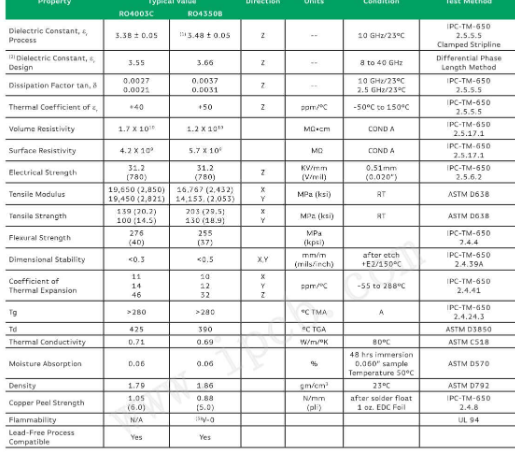
One of the most commonly used Rogers materials is the RO4000 series, which includes RO4003C and RO4350B.
These materials are known for their stable dielectric constants, typically around 3.38 for RO4003C and 3.48 for RO4350B. The slight difference in dielectric constants between these two materials can influence the choice depending on the specific requirements of the application. For instance, RO4003C is often preferred for applications requiring a lower dielectric constant to achieve faster signal speeds, while RO4350B might be chosen for its slightly higher dielectric constant and better thermal performance.
Transitioning to another popular series, the Rogers RT/duroid materials, such as RT/duroid 5880 and RT/duroid 6002, offer even lower dielectric constants.
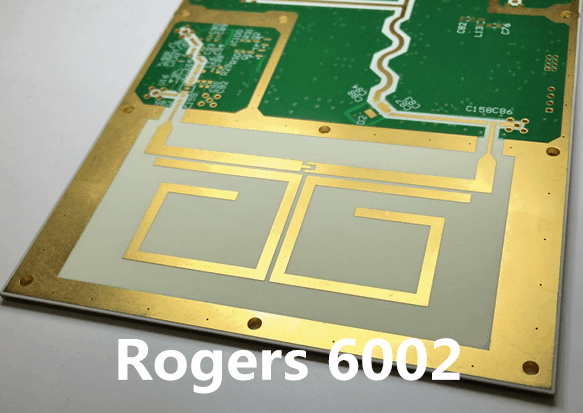
RT/duroid 5880 has an exceptionally low dielectric constant of approximately 2.20, making it ideal for high-frequency applications where minimal signal loss and high-speed transmission are crucial. On the other hand, RT/duroid 6002, with a dielectric constant of around 2.94, provides a balance between low dielectric constant and mechanical stability, making it suitable for a wide range of microwave and millimeter-wave applications.
Furthermore, Rogers offers the RO3000 series, including materials like RO3003 and RO3010, which are designed for demanding high-frequency applications.
RO3003 has a dielectric constant of about 3.00, providing excellent electrical performance and stability over a wide frequency range. In contrast, RO3010, with a higher dielectric constant of approximately 10.2, is used in applications where miniaturization and high capacitance are required, such as in certain types of antennas and filters.
In addition to these series, Rogers also provides the RO6000 series, which includes materials like RO6002 and RO6010.
These materials are engineered for high-frequency applications requiring specific dielectric properties. RO6002, with a dielectric constant of around 2.94, offers low loss and stable performance, while RO6010, with a dielectric constant of approximately 10.2, is used in applications where high dielectric constant is advantageous for size reduction and performance enhancement.
In conclusion, the dielectric constant of Rogers PCB materials varies across different series and products, each tailored to meet specific application needs. By carefully selecting the appropriate Rogers material based on its dielectric constant, engineers can optimize the performance of their high-frequency circuits, ensuring efficient signal transmission and reliable operation. Understanding these differences and their implications is crucial for making informed decisions in PCB material selection, ultimately leading to better-performing electronic devices.
Impact Of Dielectric Constant On High-Frequency PCB Performance
The dielectric constant of a material is a critical parameter in the design and performance of high-frequency printed circuit boards (PCBs). Rogers Corporation, a leading manufacturer of high-performance PCB materials, offers a range of products with varying dielectric constants to meet the specific needs of high-frequency applications. Understanding the impact of dielectric constant on PCB performance is essential for engineers and designers working in fields such as telecommunications, aerospace, and advanced computing.
The dielectric constant, also known as the relative permittivity, is a measure of a material’s ability to store electrical energy in an electric field.
It directly influences the signal propagation speed and impedance of the PCB. A higher dielectric constant typically results in slower signal propagation, which can be advantageous or detrimental depending on the application. For high-frequency PCBs, materials with a low dielectric constant are often preferred because they enable faster signal transmission and reduce signal loss.
Rogers PCB materials are renowned for their low dielectric constants, which range from approximately 2.2 to 10.2.
This range allows designers to select the most appropriate material for their specific high-frequency application. For instance, Rogers RO3000 series materials, with a dielectric constant of around 3.0, are widely used in microwave and millimeter-wave applications due to their excellent electrical performance and stability over a wide frequency range.
The choice of dielectric constant also affects the impedance control of the PCB.
Impedance matching is crucial in high-frequency circuits to ensure maximum power transfer and minimize signal reflections. Materials with a consistent and predictable dielectric constant, such as those offered by Rogers, facilitate precise impedance control, which is vital for maintaining signal integrity. Variations in the dielectric constant can lead to impedance mismatches, resulting in signal degradation and increased electromagnetic interference (EMI).
Moreover, the dielectric constant influences the thermal management of high-frequency PCBs.
Materials with a lower dielectric constant generally exhibit lower dielectric losses, which translates to reduced heat generation during signal transmission. This characteristic is particularly important in high-power applications where excessive heat can compromise the reliability and longevity of the PCB. Rogers materials are engineered to provide a balance between low dielectric constant and excellent thermal performance, ensuring that high-frequency PCBs can operate efficiently under demanding conditions.
In addition to electrical and thermal considerations, the mechanical properties of the PCB material are also impacted by the dielectric constant.
Materials with a lower dielectric constant tend to have better dimensional stability, which is essential for maintaining the structural integrity of the PCB during manufacturing and operation. Rogers PCB materials are designed to offer superior mechanical stability, ensuring that the PCB can withstand the stresses of high-frequency applications without compromising performance.
In conclusion, the dielectric constant of Rogers PCB materials plays a pivotal role in determining the performance of high-frequency PCBs. By offering a range of materials with low and stable dielectric constants, Rogers enables designers to achieve optimal signal propagation, precise impedance control, efficient thermal management, and robust mechanical stability. As high-frequency applications continue to evolve and demand higher performance, the importance of selecting the right dielectric material cannot be overstated. Engineers and designers must carefully consider the dielectric constant when choosing PCB materials to ensure that their high-frequency circuits meet the stringent requirements of modern technology.
Selecting The Right Rogers PCB Material Based On Dielectric Constant
Selecting the right Rogers PCB material based on dielectric constant is a critical decision in the design and manufacturing of high-frequency printed circuit boards (PCBs). The dielectric constant, also known as the relative permittivity, is a measure of a material’s ability to store electrical energy in an electric field. This property significantly influences the performance of RF (radio frequency) and microwave circuits, making it essential to choose the appropriate Rogers PCB material to meet specific application requirements.
Rogers Corporation is renowned for its high-performance PCB materials, which are widely used in advanced electronic applications.
These materials are engineered to provide consistent dielectric properties, low loss, and excellent thermal management. When selecting a Rogers PCB material, the dielectric constant is a primary consideration because it affects signal integrity, impedance control, and overall circuit performance.
To begin with, the dielectric constant of a material impacts the speed at which an electrical signal propagates through the PCB.
A lower dielectric constant typically results in faster signal transmission, which is advantageous for high-speed digital and RF applications. Conversely, a higher dielectric constant can slow down signal propagation, which may be beneficial in certain analog applications where signal timing and synchronization are critical. Therefore, understanding the specific needs of the application is paramount in selecting the right material.
Moreover, the dielectric constant influences the impedance of transmission lines on the PCB.
Impedance matching is crucial for minimizing signal reflection and ensuring efficient power transfer between components. Rogers PCB materials with a stable dielectric constant over a wide frequency range are preferred for applications requiring precise impedance control. For instance, Rogers RO4350B and RO4003C are popular choices for RF and microwave circuits due to their consistent dielectric properties and low loss characteristics.
In addition to signal integrity and impedance control, the dielectric constant also affects the thermal performance of the PCB.
Materials with a higher dielectric constant generally exhibit better thermal stability, which is essential for applications operating in harsh environments or at elevated temperatures. Rogers materials such as RO3000 series and RO4000 series are designed to offer excellent thermal management while maintaining consistent dielectric properties.
Furthermore, the choice of Rogers PCB material based on dielectric constant should also consider manufacturability and cost.
While high-performance materials with low dielectric constants may offer superior electrical performance, they can be more challenging to process and may incur higher costs. Therefore, it is important to balance performance requirements with practical considerations such as ease of fabrication and budget constraints.
In conclusion, selecting the right Rogers PCB material based on dielectric constant involves a careful evaluation of the application’s specific needs, including signal integrity, impedance control, thermal performance, and manufacturability. By understanding the impact of dielectric constant on these factors, designers can make informed decisions that optimize the performance and reliability of their high-frequency circuits. Rogers Corporation’s extensive range of PCB materials provides designers with the flexibility to choose the most suitable material for their unique requirements, ensuring the success of their electronic designs.