
Pcb transformer
Designing Efficient PCB Transformers for Modern Electronics
Designing efficient PCB transformers for modern electronics requires a deep understanding of both the theoretical and practical aspects of transformer design. As electronic devices become increasingly compact and sophisticated, the demand for miniaturized, high-performance transformers has surged. These transformers, integral to power management and signal isolation, must be meticulously designed to meet stringent performance criteria while adhering to space constraints.
To begin with, the core material selection is paramount in determining the efficiency and performance of a PCB transformer.
Ferrite cores are commonly used due to their high magnetic permeability and low core losses at high frequencies. The choice of core material directly impacts the transformer’s ability to handle power and its overall efficiency. Additionally, the core shape and size must be optimized to fit within the limited space available on a printed circuit board (PCB) while still providing the necessary magnetic properties.
Winding configuration is another critical aspect of PCB transformer design.
The primary and secondary windings must be carefully designed to minimize losses and ensure efficient energy transfer. This involves selecting the appropriate wire gauge and insulation material to handle the expected current and voltage levels. Furthermore, the winding technique, whether it be layered, bifilar, or toroidal, can significantly influence the transformer’s performance. For instance, bifilar winding can reduce leakage inductance and improve coupling between windings, which is beneficial for high-frequency applications.
Thermal management is a crucial consideration in the design of PCB transformers.
As transformers operate, they generate heat, which must be effectively dissipated to prevent overheating and ensure reliable operation. This can be achieved through various means, such as incorporating thermal vias in the PCB design, using heat sinks, or selecting materials with high thermal conductivity. Proper thermal management not only enhances the transformer’s longevity but also maintains its efficiency under varying load conditions.
In addition to thermal considerations, electromagnetic interference (EMI) is a significant concern in PCB transformer design.
Transformers can be a source of EMI, which can adversely affect the performance of nearby electronic components. To mitigate this, designers can employ shielding techniques, such as using grounded copper planes or enclosing the transformer in a metallic shield. Additionally, careful layout of the PCB traces and components can help minimize EMI by reducing loop areas and ensuring proper grounding.
The integration of PCB transformers into modern electronics also necessitates compliance with industry standards and regulations.
These standards, such as those set by the International Electrotechnical Commission (IEC) and Underwriters Laboratories (UL), ensure that transformers meet safety and performance criteria. Adhering to these standards is essential for ensuring the reliability and safety of the final product.
Advancements in simulation and modeling tools have significantly enhanced the design process of PCB transformers.
These tools allow designers to predict the performance of a transformer under various conditions, enabling them to optimize the design before physical prototyping. This not only reduces development time and costs but also leads to more efficient and reliable transformers.
In conclusion, designing efficient PCB transformers for modern electronics is a complex task that requires careful consideration of core materials, winding configurations, thermal management, EMI mitigation, and regulatory compliance. By leveraging advanced simulation tools and adhering to best practices, designers can create transformers that meet the demanding requirements of contemporary electronic devices. As technology continues to evolve, the importance of efficient and reliable PCB transformers will only grow, underscoring the need for ongoing innovation and expertise in this field.
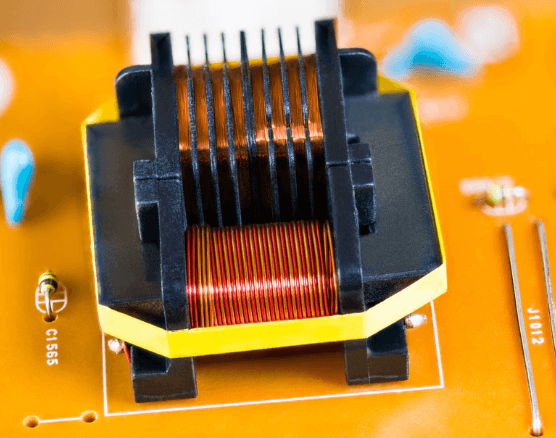
Top Challenges in PCB Transformer Manufacturing and Solutions
Printed Circuit Board (PCB) transformers are integral components in modern electronic devices, providing essential voltage transformation and isolation functions. However, the manufacturing of PCB transformers presents several challenges that can impact their performance, reliability, and cost-effectiveness. Addressing these challenges requires a comprehensive understanding of the underlying issues and the implementation of effective solutions.
One of the primary challenges in PCB transformer manufacturing is achieving high efficiency and minimal energy loss.
Transformers inherently experience losses due to core material properties and winding resistance. To mitigate these losses, manufacturers must carefully select core materials with low hysteresis and eddy current losses. Additionally, optimizing the winding design to reduce resistance and improve magnetic coupling is crucial. Advanced simulation tools can aid in designing windings that maximize efficiency while minimizing losses.
Thermal management is another significant challenge in PCB transformer manufacturing.
Transformers generate heat during operation, and inadequate heat dissipation can lead to overheating, reduced efficiency, and potential failure. Effective thermal management strategies include using materials with high thermal conductivity, such as copper for windings and thermally conductive substrates. Incorporating heat sinks and ensuring proper ventilation within the device can also help dissipate heat more effectively. Moreover, thermal simulations can predict hot spots and guide design modifications to enhance heat dissipation.
Miniaturization of electronic devices has driven the demand for smaller and more compact PCB transformers.
However, reducing the size of transformers while maintaining their performance poses a considerable challenge. Miniaturization often leads to increased power density, which can exacerbate thermal management issues and complicate the winding process. To address this, manufacturers can employ advanced manufacturing techniques such as microfabrication and precision winding. Additionally, using high-frequency materials and designs can enable smaller transformers to operate efficiently at higher frequencies, thus reducing their physical footprint.
Ensuring electromagnetic compatibility (EMC) is another critical aspect of PCB transformer manufacturing.
Transformers can generate electromagnetic interference (EMI) that can affect the performance of nearby electronic components. To mitigate EMI, manufacturers can implement shielding techniques, such as using grounded metal enclosures or incorporating ferrite cores. Proper layout design, including the strategic placement of components and routing of traces, can also minimize EMI. Conducting thorough EMC testing during the design and manufacturing stages ensures that the transformers meet regulatory standards and do not interfere with other electronic devices.
Reliability and durability are paramount in PCB transformer manufacturing, as these components often operate in demanding environments
. Factors such as mechanical stress, temperature fluctuations, and exposure to moisture can degrade transformer performance over time. To enhance reliability, manufacturers can use robust materials and protective coatings that resist environmental stressors. Implementing rigorous quality control measures, including automated optical inspection (AOI) and electrical testing, ensures that each transformer meets stringent performance criteria before deployment.
Cost considerations also play a significant role in PCB transformer manufacturing.
Balancing performance, reliability, and cost requires careful material selection and process optimization. Manufacturers can leverage economies of scale by standardizing designs and using automated manufacturing processes. Additionally, collaborating with suppliers to source high-quality materials at competitive prices can help reduce overall production costs without compromising quality.
In conclusion, PCB transformer manufacturing involves navigating a complex landscape of challenges, from efficiency and thermal management to miniaturization, EMC, reliability, and cost. By employing advanced design tools, innovative materials, and rigorous testing protocols, manufacturers can overcome these challenges and produce high-performance, reliable, and cost-effective PCB transformers. As technology continues to evolve, ongoing research and development will be essential in addressing emerging challenges and driving further advancements in PCB transformer manufacturing.

Innovative Materials for High-Performance PCB Transformers
Printed Circuit Board (PCB) transformers have become integral components in modern electronic devices, offering compact and efficient solutions for power conversion and signal isolation. The evolution of PCB transformers has been significantly influenced by advancements in materials science, which have led to the development of innovative materials that enhance their performance. These materials not only improve the efficiency and reliability of PCB transformers but also enable their application in a wider range of industries and environments.
One of the most significant advancements in PCB transformer materials is the development of high-frequency magnetic cores.
Traditional ferrite cores, while effective, have limitations in high-frequency applications due to their inherent magnetic losses. To address this, researchers have developed new magnetic materials such as nanocrystalline and amorphous alloys. These materials exhibit lower core losses at high frequencies, thereby improving the efficiency of PCB transformers. Additionally, their superior magnetic properties allow for the design of smaller and lighter transformers without compromising performance.
In conjunction with advanced magnetic cores, the use of high-temperature insulation materials has also revolutionized PCB transformer design.
Conventional insulation materials, such as epoxy resins, can degrade at elevated temperatures, leading to reduced transformer lifespan and reliability. However, the introduction of high-temperature polymers, such as polyimides and fluoropolymers, has mitigated these issues. These materials maintain their insulating properties at higher temperatures, ensuring the longevity and stability of PCB transformers even in demanding thermal environments.
Moreover, the integration of advanced conductive materials has further enhanced the performance of PCB transformers.
Copper has traditionally been the material of choice for windings due to its excellent electrical conductivity. However, the advent of new conductive materials, such as silver-plated copper and high-conductivity alloys, has provided additional benefits. These materials offer lower resistive losses and improved thermal management, which are crucial for high-power applications. Consequently, PCB transformers utilizing these advanced conductors can achieve higher efficiency and better thermal performance.
Another noteworthy innovation is the development of composite materials for PCB substrates.
The substrate material plays a critical role in the overall performance of PCB transformers, as it affects thermal management, mechanical stability, and electrical insulation. Traditional FR-4 substrates, while widely used, have limitations in high-frequency and high-temperature applications. To overcome these challenges, advanced composite materials such as metal-clad laminates and ceramic-filled polymers have been introduced. These substrates offer superior thermal conductivity, mechanical strength, and electrical insulation, making them ideal for high-performance PCB transformers.
Furthermore, the advent of additive manufacturing techniques has opened new possibilities for the fabrication of PCB transformers.
Additive manufacturing, or 3D printing, allows for the precise deposition of conductive and insulating materials, enabling the creation of complex transformer geometries that were previously unattainable. This technology not only enhances the design flexibility of PCB transformers but also reduces material waste and production costs. As a result, manufacturers can produce high-performance transformers with greater efficiency and customization.
In conclusion, the development of innovative materials has significantly advanced the performance and application range of PCB transformers. High-frequency magnetic cores, high-temperature insulation materials, advanced conductive materials, composite substrates, and additive manufacturing techniques have collectively contributed to the evolution of these critical components. As material science continues to progress, we can expect further enhancements in PCB transformer technology, leading to even more efficient, reliable, and versatile solutions for modern electronic systems.

Safety Standards and Testing Procedures for PCB Transformers
PCB transformers, integral components in various electronic devices, must adhere to stringent safety standards and undergo rigorous testing procedures to ensure their reliability and safety. These standards and procedures are essential to prevent potential hazards such as electrical shocks, fires, and equipment failures, which could have severe consequences for both users and the environment.
To begin with, the safety standards for PCB transformers are established by international and national regulatory bodies, such as the International Electrotechnical Commission (IEC) and the Underwriters Laboratories (UL).
These organizations set forth comprehensive guidelines that manufacturers must follow to certify their products. For instance, the IEC 61558 standard outlines the general requirements for safety, including insulation, dielectric strength, and thermal performance. Compliance with these standards is not merely a recommendation but a mandatory requirement for market entry in many regions.
In addition to adhering to these standards, manufacturers must also implement robust testing procedures to verify the safety and performance of PCB transformers.
One of the primary tests is the dielectric strength test, which assesses the transformer’s ability to withstand high voltage without breaking down. This test is crucial because it ensures that the insulation between the windings and the core can handle the operational voltages, thereby preventing electrical shorts and potential fires.
Moreover, thermal testing is another critical procedure that evaluates the transformer’s ability to dissipate heat effectively.
Excessive heat can degrade the insulation materials and other components, leading to premature failure or hazardous conditions. Therefore, thermal testing involves subjecting the transformer to its maximum rated load and monitoring its temperature rise to ensure it remains within safe limits. This test helps in identifying any design flaws that could lead to overheating and subsequent safety risks.
Furthermore, manufacturers must conduct mechanical stress tests to ensure the structural integrity of PCB transformers.
These tests simulate various physical stresses, such as vibrations and shocks, that the transformer might encounter during its operational life. By doing so, manufacturers can identify potential weaknesses in the design and materials, thereby enhancing the overall durability and safety of the product.
In addition to these standard tests, manufacturers often perform additional tests tailored to specific applications or customer requirements.
For example, in medical devices, PCB transformers must meet even more stringent safety criteria due to the critical nature of their applications. In such cases, additional tests, such as leakage current tests and electromagnetic compatibility (EMC) tests, are conducted to ensure the transformer does not interfere with other sensitive equipment and operates safely within the medical environment.
It is also worth noting that ongoing quality control is essential for maintaining the safety and reliability of PCB transformers.
Manufacturers must implement continuous monitoring and periodic re-testing of their products to ensure they consistently meet the required safety standards. This proactive approach helps in identifying any deviations or potential issues early, thereby preventing any compromise in safety.
In conclusion, the safety standards and testing procedures for PCB transformers are comprehensive and multifaceted, designed to ensure the highest levels of safety and reliability. By adhering to these standards and rigorously testing their products, manufacturers can mitigate potential hazards and provide safe, dependable transformers for various applications. This commitment to safety not only protects end-users but also enhances the overall trust and credibility of the manufacturers in the market.