
High speed usb pcb design
Optimizing Signal Integrity in High-Speed USB PCB Design
Optimizing signal integrity in high-speed USB PCB design is a critical aspect that demands meticulous attention to detail. As USB technology continues to evolve, the need for higher data transfer rates has become paramount, necessitating the design of printed circuit boards (PCBs) that can handle these speeds without compromising performance. To achieve this, several key factors must be considered, starting with the layout of the PCB itself.
One of the primary considerations in high-speed USB PCB design is the minimization of signal loss and interference.
This can be achieved by carefully planning the trace routing. Traces should be kept as short and direct as possible to reduce the potential for signal degradation. Additionally, maintaining consistent trace impedance is crucial. Impedance mismatches can lead to signal reflections, which can significantly degrade signal integrity. To ensure consistent impedance, designers often use controlled impedance traces, which involve precise calculations and careful selection of materials.
Another important aspect is the use of differential pairs for high-speed USB signals.
Differential signaling helps to reduce electromagnetic interference (EMI) and crosstalk, which are common issues in high-speed designs. By routing the differential pairs closely together and ensuring they are of equal length, designers can further enhance signal integrity. It is also essential to maintain a constant spacing between the differential pairs to avoid impedance variations.
Ground planes play a vital role in optimizing signal integrity.
A solid ground plane provides a return path for the signals, reducing the loop area and minimizing EMI. It is advisable to place the ground plane directly beneath the signal traces to create a low-inductance path. Additionally, stitching vias can be used to connect different ground planes, ensuring a continuous return path and further reducing EMI.
The choice of materials is another critical factor in high-speed USB PCB design.
High-frequency signals are more susceptible to losses caused by the dielectric material of the PCB. Therefore, selecting a low-loss dielectric material can help maintain signal integrity. Materials such as FR-4 are commonly used, but for higher performance, designers may opt for advanced materials like Rogers or Teflon.
Power integrity is equally important in high-speed USB PCB design.
Fluctuations in power supply can introduce noise into the system, affecting signal integrity. To mitigate this, designers should use decoupling capacitors strategically placed near the power pins of the USB components. These capacitors help to filter out noise and provide a stable power supply. Additionally, using a power plane can help distribute power evenly across the PCB, reducing voltage drops and ensuring consistent performance.
Thermal management is another consideration that cannot be overlooked.
High-speed USB components can generate significant heat, which can affect both signal integrity and the overall reliability of the PCB. Effective thermal management techniques, such as the use of thermal vias, heat sinks, and proper airflow, can help dissipate heat and maintain optimal operating conditions.
In conclusion, optimizing signal integrity in high-speed USB PCB design requires a comprehensive approach that encompasses careful trace routing, the use of differential pairs, effective grounding, appropriate material selection, power integrity management, and thermal considerations. By addressing these factors, designers can create PCBs that support high-speed USB data transfer rates while maintaining robust performance and reliability. As USB technology continues to advance, the importance of these design principles will only grow, underscoring the need for ongoing innovation and attention to detail in PCB design.
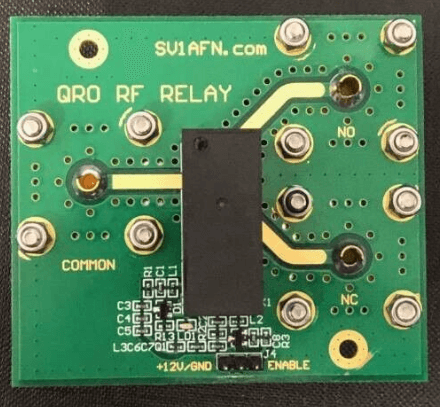
Best Practices for Layer Stackup in High-Speed USB PCBs
When designing high-speed USB printed circuit boards (PCBs), the layer stackup plays a crucial role in ensuring signal integrity, minimizing electromagnetic interference (EMI), and achieving optimal performance. A well-thought-out layer stackup can significantly enhance the functionality and reliability of high-speed USB circuits. To begin with, it is essential to understand the fundamental principles of layer stackup in high-speed PCB design. The primary objective is to create a structure that supports controlled impedance, reduces crosstalk, and provides effective power distribution. Typically, a high-speed USB PCB will consist of multiple layers, including signal layers, ground planes, and power planes. The arrangement and spacing of these layers are critical to achieving the desired electrical performance.
One of the best practices in layer stackup design is to place the signal layers adjacent to continuous ground planes.
This configuration helps to maintain a consistent impedance for high-speed signals, which is vital for minimizing signal reflections and ensuring signal integrity. By placing a ground plane next to a signal layer, the return path for the signal is kept short, thereby reducing the loop area and minimizing EMI. Additionally, it is advisable to use a symmetrical stackup, where the layers are mirrored around the center of the PCB. This symmetry helps to balance the mechanical stresses during the manufacturing process and ensures uniform electrical characteristics across the board.
Another important consideration is the separation between the signal layers and the ground planes.
The distance between these layers, known as the dielectric thickness, directly affects the impedance of the signal traces. To achieve controlled impedance, it is crucial to maintain a consistent dielectric thickness throughout the PCB. This can be accomplished by using high-quality materials with stable dielectric properties and by adhering to precise manufacturing tolerances. Furthermore, the use of multiple ground planes can enhance the performance of high-speed USB PCBs. By incorporating additional ground planes, designers can create a low-impedance return path for high-frequency signals, thereby reducing noise and crosstalk. These ground planes also provide effective shielding, which helps to mitigate EMI and improve overall signal quality.
In addition to ground planes, power planes play a vital role in high-speed USB PCB design.
Proper placement and decoupling of power planes are essential for maintaining a stable power supply and minimizing voltage fluctuations. It is recommended to place power planes adjacent to ground planes to create a low-inductance power distribution network. This configuration helps to reduce power supply noise and ensures a clean and stable power source for high-speed USB circuits. Moreover, the use of stitching vias can further enhance the performance of high-speed USB PCBs. Stitching vias are small conductive vias that connect adjacent ground planes, providing a low-impedance path for high-frequency currents. By strategically placing stitching vias around critical signal traces, designers can minimize ground bounce and improve signal integrity.
In conclusion, the layer stackup is a critical aspect of high-speed USB PCB design that directly impacts signal integrity, EMI, and overall performance. By following best practices such as placing signal layers adjacent to ground planes, maintaining consistent dielectric thickness, incorporating multiple ground planes, and optimizing power plane placement, designers can achieve optimal results. Additionally, the use of stitching vias can further enhance the performance of high-speed USB PCBs. By carefully considering these factors and implementing a well-designed layer stackup, designers can ensure the reliable and efficient operation of high-speed USB circuits.
Managing Power Delivery in High-Speed USB PCB Layouts
Managing power delivery in high-speed USB PCB layouts is a critical aspect of ensuring optimal performance and reliability. As USB technology has evolved, the demand for higher data transfer rates has necessitated more sophisticated power delivery mechanisms. This complexity arises from the need to maintain signal integrity and minimize electromagnetic interference (EMI), which can significantly impact the functionality of high-speed USB circuits.
To begin with, one must consider the power distribution network (PDN) within the PCB.
The PDN is responsible for delivering stable power to all components, and any fluctuations can lead to data errors or even hardware failures. Therefore, it is essential to design a robust PDN that can handle the high current demands of USB devices. This involves careful planning of power planes and the strategic placement of decoupling capacitors. Decoupling capacitors act as local energy reservoirs, providing immediate power to components and filtering out noise. Placing these capacitors close to the power pins of integrated circuits (ICs) can significantly enhance power stability.
Moreover, the layout of power and ground planes plays a pivotal role in managing power delivery.
A well-designed PCB will have solid, continuous power and ground planes to reduce impedance and ensure a low-inductance path for current flow. This is particularly important in high-speed USB designs, where even minor impedance mismatches can lead to signal degradation. Additionally, maintaining a consistent ground reference is crucial for minimizing EMI. By using a ground plane that spans the entire PCB, designers can create a return path for high-frequency signals, thereby reducing the potential for radiated emissions.
Transitioning to the topic of trace routing, it is imperative to follow best practices to maintain signal integrity.
High-speed USB signals should be routed as differential pairs, with controlled impedance to match the USB specification. Differential pairs help to cancel out noise and reduce crosstalk between adjacent traces. It is also advisable to keep these pairs as short and direct as possible, avoiding sharp bends and vias that can introduce reflections and signal loss. When vias are unavoidable, using back-drilled vias can help to minimize their impact on signal integrity.
Furthermore, power delivery considerations extend to the selection of components.
Voltage regulators, for instance, must be chosen with care to ensure they can supply the necessary current without introducing excessive noise. Low-dropout (LDO) regulators are often preferred in high-speed designs due to their ability to provide clean power with minimal ripple. Additionally, the use of ferrite beads can help to filter high-frequency noise from the power supply, further enhancing the stability of the PDN.
In addition to these design considerations, thermal management is another critical aspect of power delivery in high-speed USB PCB layouts.
High current densities can lead to significant heat generation, which, if not properly managed, can affect the performance and longevity of the components. Implementing thermal vias and heat sinks can help to dissipate heat effectively, ensuring that the PCB operates within safe temperature limits.
In conclusion, managing power delivery in high-speed USB PCB layouts requires a comprehensive approach that encompasses PDN design, trace routing, component selection, and thermal management. By adhering to best practices and leveraging advanced design techniques, engineers can create PCBs that not only meet the stringent requirements of high-speed USB standards but also deliver reliable and efficient performance.
Techniques for Minimizing EMI in High-Speed USB PCB Designs
In the realm of high-speed USB PCB design, minimizing electromagnetic interference (EMI) is paramount to ensuring signal integrity and overall system performance. As data transfer rates increase, the susceptibility to EMI also rises, necessitating meticulous design techniques to mitigate these effects.
One fundamental approach to minimizing EMI is through careful layer stack-up design.
By strategically placing power and ground planes adjacent to signal layers, designers can create a controlled impedance environment that reduces the potential for EMI. This configuration not only helps in maintaining signal integrity but also provides a return path for high-frequency currents, thereby minimizing radiated emissions.
Transitioning to trace routing, it is crucial to maintain consistent trace widths and avoid abrupt changes in direction.
Sharp bends and vias can act as antennas, radiating unwanted EMI. Instead, using smooth, gradual curves and minimizing the number of vias can significantly reduce these effects. Additionally, differential pair routing is a highly effective technique for high-speed USB signals. By routing the differential pairs closely together and ensuring they are of equal length, designers can take advantage of the inherent noise-canceling properties of differential signaling, thereby reducing EMI.
Another critical aspect is the implementation of proper grounding techniques.
A solid ground plane is essential for providing a low-impedance return path for high-frequency signals. This not only helps in reducing EMI but also enhances signal integrity. Stitching vias, which connect different ground planes, should be placed strategically to ensure a continuous ground path. This practice helps in minimizing ground loops and further reduces EMI.
Shielding is another effective method for EMI reduction. By enclosing sensitive components and traces within a grounded metal shield, designers can prevent external EMI from coupling into the circuit. This technique is particularly useful in environments with high levels of electromagnetic noise. However, it is important to ensure that the shield is properly grounded to avoid creating additional sources of EMI.
In addition to these physical design techniques, the choice of components plays a significant role in minimizing EMI. Using components with built-in EMI suppression features, such as ferrite beads and common-mode chokes, can help in filtering out high-frequency noise. These components should be placed as close to the source of EMI as possible to maximize their effectiveness.
Power supply decoupling is another critical consideration.
High-speed USB circuits are particularly sensitive to power supply noise, which can manifest as EMI. By placing decoupling capacitors close to the power pins of integrated circuits, designers can filter out high-frequency noise and provide a stable power supply. It is important to use capacitors with low equivalent series resistance (ESR) to ensure effective high-frequency filtering.
Finally, simulation and testing are indispensable in the design process.
Electromagnetic simulation tools can help in predicting potential EMI issues and allow designers to make necessary adjustments before physical prototyping. Once the PCB is fabricated, thorough testing using spectrum analyzers and other diagnostic tools is essential to verify that the design meets EMI requirements.
In conclusion, minimizing EMI in high-speed USB PCB designs requires a multifaceted approach that encompasses careful layer stack-up design, meticulous trace routing, effective grounding techniques, strategic shielding, judicious component selection, and thorough power supply decoupling. By integrating these techniques, designers can achieve robust, high-performance USB circuits that are resilient to electromagnetic interference.