
Pcb rf filter design
Understanding The Basics Of PCB RF Filter Design
In the realm of electronic design, the development of printed circuit board (PCB) radio frequency (RF) filters is a critical task that demands a comprehensive understanding of both theoretical principles and practical considerations. RF filters are essential components in communication systems, serving to selectively pass desired frequency signals while attenuating unwanted frequencies. This capability is crucial in ensuring signal integrity and minimizing interference, which are paramount in achieving optimal performance in RF applications.
To begin with, it is important to grasp the fundamental concepts underlying RF filter design.
At its core, an RF filter is a network of passive components—such as resistors, capacitors, and inductors—arranged in a specific configuration to achieve the desired frequency response. The design process typically starts with defining the filter’s specifications, which include parameters such as the cutoff frequency, bandwidth, insertion loss, and return loss. These specifications are dictated by the application’s requirements and the operating environment.
Once the specifications are established, the next step involves selecting the appropriate filter topology.
Common topologies include low-pass, high-pass, band-pass, and band-stop filters, each serving distinct purposes. For instance, a low-pass filter allows signals below a certain frequency to pass while attenuating higher frequencies, making it suitable for applications where high-frequency noise needs to be suppressed. Conversely, a band-pass filter is ideal for isolating a specific frequency band, which is often required in communication systems to separate different channels.
Transitioning from theory to practice, the implementation of RF filters on a PCB introduces additional challenges.
The physical layout of the PCB can significantly impact the filter’s performance due to parasitic effects such as stray capacitance and inductance. Therefore, careful attention must be paid to the placement and routing of components. Minimizing the length of signal paths and ensuring proper grounding are essential strategies to mitigate these parasitic effects. Additionally, the choice of substrate material and its dielectric properties can influence the filter’s behavior, necessitating careful selection based on the application’s frequency range and environmental conditions.
Moreover, simulation tools play a pivotal role in the design process, allowing engineers to model and analyze the filter’s performance before physical implementation.
These tools enable the identification and correction of potential issues, such as impedance mismatches and unwanted resonances, thereby reducing the likelihood of costly iterations. By leveraging simulation, designers can optimize the filter’s layout and component values to achieve the desired frequency response with greater precision.
In conclusion, the design of PCB RF filters is a multifaceted endeavor that requires a harmonious blend of theoretical knowledge and practical skills. Understanding the basic principles of filter design, selecting the appropriate topology, and addressing the challenges of PCB implementation are all integral steps in creating effective RF filters. As technology continues to advance and the demand for high-performance communication systems grows, the importance of mastering PCB RF filter design becomes increasingly evident. By adhering to best practices and utilizing advanced simulation tools, engineers can ensure that their designs meet the stringent requirements of modern RF applications, ultimately contributing to the development of more reliable and efficient electronic systems.
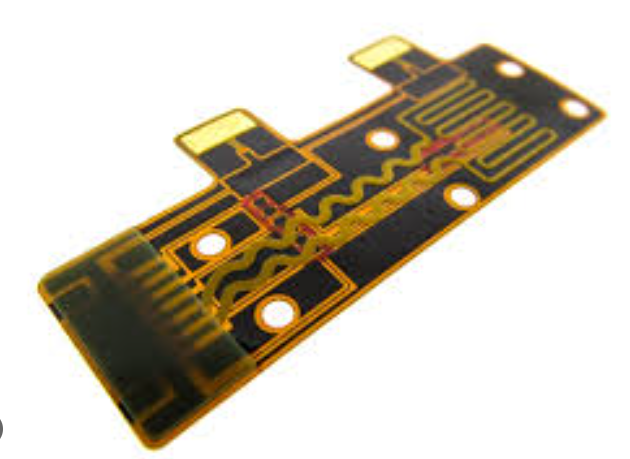
Key Considerations For Effective RF Filter Layout
In the realm of radio frequency (RF) design, the layout of printed circuit boards (PCBs) plays a crucial role in ensuring optimal performance of RF filters. These filters are essential components in a wide array of applications, from telecommunications to consumer electronics, where they serve to selectively pass or attenuate specific frequency bands. As such, understanding the key considerations for effective RF filter layout is paramount for engineers seeking to enhance the functionality and reliability of their designs.
To begin with, one must consider the importance of component placement in RF filter design.
The positioning of components on a PCB can significantly impact the filter’s performance due to parasitic inductance and capacitance. Therefore, it is advisable to place components as close together as possible to minimize these parasitic effects. This proximity helps maintain the integrity of the signal path and reduces the potential for unwanted interference. Moreover, aligning components in a linear fashion can further aid in minimizing signal reflections and losses, thereby enhancing the overall efficiency of the filter.
In addition to component placement, the choice of materials for the PCB substrate is another critical factor.
The dielectric constant of the substrate material can influence the filter’s frequency response and impedance characteristics. Materials with a low dielectric constant are often preferred for high-frequency applications, as they tend to exhibit lower signal loss and better performance. Furthermore, the thermal properties of the substrate should also be considered, as RF filters can generate significant heat during operation. Selecting a material with good thermal conductivity can help dissipate heat more effectively, thereby improving the filter’s reliability and longevity.
Another key consideration is the design of the ground plane, which serves as a reference point for the RF signals.
A well-designed ground plane can help reduce electromagnetic interference (EMI) and improve signal integrity. It is essential to ensure that the ground plane is continuous and free of gaps, as discontinuities can lead to increased inductance and potential signal degradation. Additionally, the use of vias to connect the ground plane to other layers of the PCB can further enhance its effectiveness by providing a low-impedance path for return currents.
Transitioning to the topic of trace routing, it is important to recognize that the layout of traces can have a profound impact on the performance of RF filters.
Traces should be kept as short and direct as possible to minimize inductance and resistance. Furthermore, maintaining consistent trace widths and spacing can help ensure uniform impedance, which is critical for preserving signal integrity. In cases where traces must cross each other, it is advisable to do so at right angles to minimize coupling and crosstalk.
Finally, the use of simulation tools can be invaluable in the design process, allowing engineers to model and analyze the performance of their RF filter layouts before fabrication.
These tools can help identify potential issues such as impedance mismatches or unwanted resonances, enabling designers to make informed adjustments to their layouts. By leveraging simulation software, engineers can optimize their designs for performance and manufacturability, ultimately leading to more effective and reliable RF filters.
In conclusion, the design of RF filter layouts on PCBs requires careful consideration of various factors, including component placement, substrate material selection, ground plane design, and trace routing. By addressing these key considerations and utilizing simulation tools, engineers can enhance the performance and reliability of their RF filters, ensuring they meet the demands of modern applications.
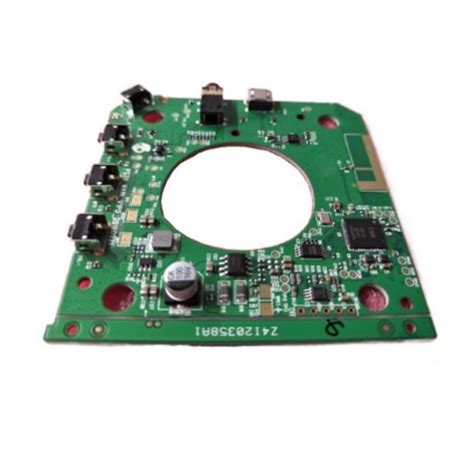
Common Mistakes In PCB RF Filter Design And How To Avoid Them
Designing RF filters on printed circuit boards (PCBs) is a critical task in the development of electronic devices that require precise signal processing. However, even experienced engineers can fall prey to common mistakes that can compromise the performance of these filters. Understanding these pitfalls and learning how to avoid them is essential for ensuring optimal functionality and reliability.
One prevalent mistake in PCB RF filter design is the improper selection of components.
Engineers often overlook the importance of choosing components with the appropriate specifications, such as quality factor (Q factor), tolerance, and temperature stability. Selecting components that do not meet the required specifications can lead to suboptimal filter performance, including increased insertion loss and reduced selectivity. To avoid this, it is crucial to thoroughly evaluate component specifications and ensure they align with the design requirements.
Another common error is inadequate attention to the layout of the PCB.
The physical arrangement of components and traces can significantly impact the performance of RF filters. Poor layout can result in unwanted parasitic inductance and capacitance, which can alter the filter’s frequency response. To mitigate this issue, designers should prioritize minimizing trace lengths and avoiding sharp angles in the layout. Additionally, maintaining a consistent ground plane and using proper grounding techniques can help reduce electromagnetic interference and improve filter performance.
Furthermore, impedance matching is a critical aspect that is often neglected in RF filter design.
Mismatched impedance can lead to signal reflections, resulting in power loss and degraded filter performance. To address this, designers should carefully calculate and match the impedance of the filter with the source and load impedances. Utilizing tools such as Smith charts and network analyzers can aid in achieving proper impedance matching and ensuring efficient signal transfer.
In addition to these technical considerations, thermal management is another area where mistakes frequently occur.
RF filters can generate significant heat during operation, and inadequate thermal management can lead to component failure and reduced reliability. Designers should incorporate effective heat dissipation techniques, such as using thermal vias, heat sinks, and appropriate PCB materials with good thermal conductivity. Conducting thermal simulations during the design phase can also help identify potential hotspots and guide the implementation of effective cooling strategies.
Moreover, neglecting to perform thorough testing and validation is a mistake that can have serious consequences.
Relying solely on simulations without real-world testing can result in filters that do not perform as expected under actual operating conditions. To avoid this, it is essential to conduct comprehensive testing, including measuring the filter’s frequency response, insertion loss, and return loss. This testing should be performed across the expected range of operating conditions to ensure the filter meets the desired specifications.
Finally, communication and collaboration among team members are often underestimated in the design process.
Miscommunication can lead to misunderstandings and errors that compromise the filter’s performance. Encouraging open communication and collaboration among engineers, designers, and other stakeholders can help ensure that all aspects of the design are thoroughly considered and that potential issues are addressed early in the process.
In conclusion, while designing PCB RF filters presents several challenges, being aware of common mistakes and implementing strategies to avoid them can significantly enhance the performance and reliability of these critical components. By carefully selecting components, optimizing layout, ensuring impedance matching, managing thermal issues, conducting thorough testing, and fostering effective communication, engineers can create RF filters that meet the demanding requirements of modern electronic devices.
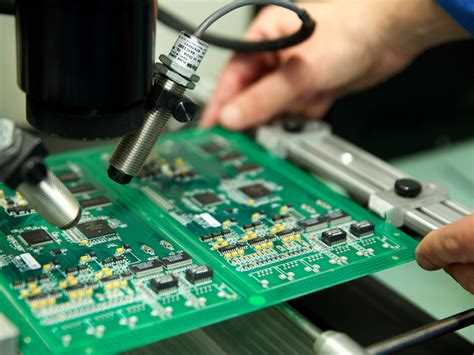
Advanced Techniques For Optimizing RF Filter Performance On PCBs
In the realm of modern electronics, the design of radio frequency (RF) filters on printed circuit boards (PCBs) is a critical task that demands precision and expertise. As devices become more compact and their functionalities more complex, optimizing RF filter performance on PCBs has become increasingly important. This article delves into advanced techniques that can significantly enhance the performance of RF filters, ensuring that they meet the stringent requirements of contemporary applications.
To begin with, understanding the fundamental principles of RF filter design is essential.
RF filters are used to allow certain frequencies to pass while attenuating others, thereby minimizing interference and enhancing signal clarity. The design process involves selecting the appropriate filter topology, such as low-pass, high-pass, band-pass, or band-stop, based on the specific application requirements. However, beyond these basic considerations, advanced techniques can be employed to further optimize performance.
One such technique involves the careful selection of materials. The dielectric constant and loss tangent of the substrate material can significantly impact the filter’s performance. Low-loss materials are preferred as they reduce signal attenuation and improve filter efficiency. Additionally, the choice of conductor material and its surface finish can affect the quality factor (Q-factor) of the filter, which is a measure of its selectivity and bandwidth. By selecting materials with optimal electrical properties, designers can enhance the overall performance of the RF filter.
Moreover, the layout of the PCB plays a crucial role in RF filter performance.
Minimizing parasitic inductance and capacitance is vital, as these can introduce unwanted resonances and degrade filter performance. To achieve this, designers should focus on reducing trace lengths and avoiding sharp corners, which can cause signal reflections. Utilizing ground planes effectively can also help in minimizing electromagnetic interference (EMI) and ensuring signal integrity. By paying close attention to the PCB layout, designers can mitigate potential issues and enhance filter performance.
In addition to material selection and layout considerations, simulation tools are invaluable in optimizing RF filter design.
Advanced electromagnetic simulation software allows designers to model and analyze the behavior of RF filters under various conditions. By simulating different scenarios, designers can identify potential issues and make necessary adjustments before the physical prototype stage. This not only saves time and resources but also ensures that the final design meets the desired specifications.
Furthermore, tuning and testing are integral parts of the optimization process.
Once the RF filter is fabricated, it is essential to perform thorough testing to verify its performance. This involves measuring parameters such as insertion loss, return loss, and bandwidth to ensure they align with the design goals. If discrepancies are found, tuning can be performed to adjust component values and improve performance. This iterative process of testing and tuning is crucial for achieving optimal RF filter performance.
In conclusion, optimizing RF filter performance on PCBs requires a comprehensive approach that encompasses material selection, layout design, simulation, and testing. By employing these advanced techniques, designers can create RF filters that not only meet but exceed the demands of modern electronic applications. As technology continues to evolve, the importance of precise and efficient RF filter design will only grow, making these optimization strategies all the more critical for success in the field.