
Advancements in Circuits Assembly Technologies and Practices
Key Takeaways
In recent years, the field of pcb assembly has witnessed transformative changes driven by technological advancements and innovative methodologies. The integration of pcba technologies has enabled manufacturers to enhance not only the quality but also the efficiency of their production processes. One of the standout innovations in circuits assembly is the adoption of automated assembly techniques that significantly reduce labor costs and increase throughput. Alongside automation, advancements in materials and design software have streamlined workflows, allowing for a more flexible approach to manufacturing.
The implementation of smart technologies, such as real-time monitoring systems, enables manufacturers to quickly adapt to changes and maintain high levels of precision. Additionally, greener practices are taking root within the circuits assembly industry, with strategies aimed at minimizing waste and improving sustainability being increasingly prioritized.
The below table highlights some key advancements in the field:
| Advancement | Description | Impact on Manufacturing |
|---|---|---|
| Automated Assembly | Utilizes machinery for precision placement | Increases production speed |
| Smart Technologies | Real-time monitoring for quality assurance | Enhances product reliability |
| Sustainable Practices | Focus on eco-friendly materials and processes | Reduces overall environmental impact |
These developments are essential not only for meeting current market demands but also for preparing circuits assembly for future challenges. As this sector evolves, staying aware of these emerging trends will prove vital for companies looking to maintain a competitive edge in the world of electronics manufacturing.

Introduction to Circuits Assembly Technologies
In the domain of electronics manufacturing, circuits assembly is pivotal, playing a crucial role in the transformation of innovative ideas into tangible products. The latest advancements in pcb assembly technologies not only enhance quality but also bolster production efficiency. Techniques such as surface mount technology (SMT) have revolutionized the way printed circuit boards (PCBs) are assembled, facilitating the creation of smaller, more powerful devices. Additionally, the integration of automated systems into pcba processes has significantly reduced labor costs while improving precision and consistency. This shift towards automation embodies a broader trend in electronics manufacturing that prioritizes scalability and adaptability, allowing for rapid response to market demands. As these technologies evolve, they continue to set new benchmarks for quality and efficiency within the industry, ensuring that manufacturers can meet the needs of a constantly changing technological landscape. Understanding these advances is essential for professionals engaged in circuits assembly and provides insights into future innovations that will further refine performance across various sectors within electronics manufacturing.

Innovative Techniques in Circuits Assembly
In the rapidly evolving landscape of pcb assembly, a myriad of innovative techniques have emerged to enhance the quality and efficiency of pcba processes. One notable advancement is the integration of surface mount technology (SMT), which allows for more compact and efficient circuitry by enabling components to be mounted directly on the surface of the printed circuit board. This not only maximizes real estate but also improves electrical performance. Additionally, techniques such as automated optical inspection (AOI) have become pivotal in ensuring that each assembly is free from defects, thus maintaining high standards of quality control.
Furthermore, the advent of advanced soldering techniques, such as laser soldering or selective soldering, has revolutionized how components are attached to circuits. These methods provide greater precision and control over the soldering process, resulting in stronger joints and reducing the likelihood of thermal damage to sensitive components. The use of advanced materials during these processes, like no-clean flux or lead-free solder, aligns with industry standards while promoting sustainability.
“Innovation is at the heart of every successful electronics manufacturer; pursuing new techniques can dramatically enhance production efficiency.”
Adopting these innovative approaches not only streamlines assembly workflows but also plays a crucial role in addressing scalability concerns as demand for electronics continues to grow. As manufacturers seek to stay competitive in a crowded market, embracing such advancements in pcb assembly will be instrumental in shaping the future landscape of circuits assembly technologies.
The Role of Automation in Modern Electronics Manufacturing
In the ever-evolving world of electronics manufacturing, automation has emerged as a cornerstone for enhancing the efficiency and quality of pcb assembly processes. By integrating sophisticated machinery and software solutions, companies are able to streamline operations, minimize errors, and significantly reduce production times. The introduction of automated assembly lines has transformed traditional pcba practices, allowing for higher precision in the placement of components on circuit boards. This not only speeds up production but also ensures a consistent level of quality across large volumes, which is critical in meeting the demands of today’s fast-paced market. Furthermore, automation facilitates real-time monitoring and data analysis, enabling manufacturers to quickly identify and address potential issues in the assembly process. As these advancements continue to unfold, the adoption of automation in circuits assembly is likely to become increasingly prevalent, positioning manufacturers to better meet customer expectations while optimizing their resource allocation. Additionally, with ongoing improvements in robotics and AI technology, the future promises even greater innovations that will further enhance the capabilities of pcb assembly operations.
Enhancements in Efficiency for Circuits Assembly Processes
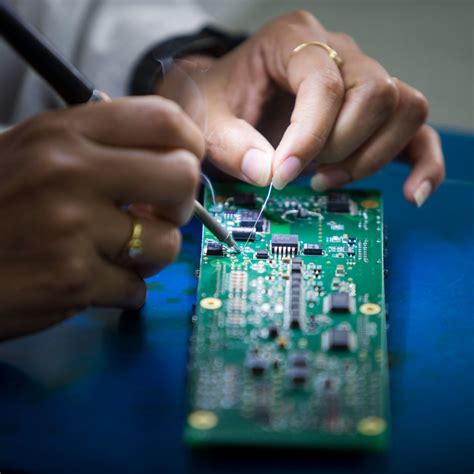
In recent years, the pcb assembly process has seen significant enhancements aimed at improving efficiency and reliability. One of the most notable advancements is the development of advanced inspection technologies that ensure each printed circuit board (PCB) meets stringent quality standards. These innovations are not limited to inspection; they also extend to the assembly techniques themselves. Dependable processes in pcba have been optimized through methods such as solder paste printing and component placement which have been refined to reduce errors and cycle time.
Moreover, the incorporation of smart factory concepts and automation technologies has transformed circuits assembly into a more efficient operation. Automated guided vehicles (AGVs) and robotics are effectively streamlining material handling, enabling components to be delivered to machines with minimal human intervention. This integration not only speeds up production time but also minimizes potential disruptions that can occur during manual handling.
Additionally, the incorporation of real-time data analytics is allowing manufacturers to continuously monitor production lines, leading to quick identification and resolution of bottlenecks. This data-driven approach not only enhances operational efficiency but also fosters a more responsive manufacturing environment, allowing companies to adapt swiftly to changing demands in electronic components.
As these technologies evolve, they pave the way for even higher productivity levels within pcb assembly processes while maintaining quality assurance. Through these enhancements, electronics manufacturers are well-positioned to meet the growing challenges of a competitive landscape that increasingly demands both speed and quality in pcba practices.
Emerging Trends Shaping the Future of Electronics Manufacturing
The landscape of electronics manufacturing is continuously evolving, driven by innovative and advanced techniques in pcb assembly. Companies are now adopting sophisticated methods that not only streamline pcba processes but also enhance the overall quality of electronic components. The integration of advanced materials, such as high-density interconnects and flexible substrates, is allowing for more compact, lightweight, and efficient designs. Furthermore, the shift towards smart manufacturing and Industry 4.0 technologies is fostering greater interoperability among assembly lines, which leads to improved productivity and reduced waste.
One significant trend is the incorporation of automation within circuits assembly. Automated systems are increasingly deployed to perform tasks that were traditionally manual, thereby enhancing speed and accuracy while minimizing errors. These advancements enable manufacturers to meet the rising demand for smaller and more complex electronic devices without compromising quality. Additionally, real-time data analytics from automated processes provide insights that help in optimizing pcb assembly workflows.
The importance of sustainability is another critical emerging trend; manufacturers are exploring eco-friendly materials and processes that reduce environmental impact. Companies are committed to minimizing waste during production by implementing closed-loop systems in the circuit assembly process. This renewed focus on sustainability not only meets regulatory standards but also appeals to environmentally conscious consumers.
Overall, these trends highlight a shift towards a more connected and efficient future in electronics manufacturing, where pcba is not only about assembling components but also about embracing technology for innovation, sustainability, and efficiency.
Case Studies: Successful Implementations of Advanced Assembly Techniques
The evolution of pcb assembly processes has significantly transformed the landscape of electronics manufacturing. Several case studies exemplify the successful integration of advanced assembly techniques that not only enhance operational efficiency but also ensure higher quality outcomes. For instance, a leading manufacturer recently adopted a flexible automation approach in its pcba operations. By implementing state-of-the-art robotic systems, they achieved a remarkable reduction in assembly times and minimized human error, leading to a seamless production workflow. Additionally, another company utilized advanced inspection technologies, such as automated optical inspection (AOI), to maintain stringent quality control standards throughout their pcb assembly processes. This proactive measure resulted in a decrease in defects and an increase in customer satisfaction rates. Collectively, these case studies highlight the significant benefits realized when organizations embrace innovative practices within their circuits assembly operations, ultimately setting a precedent for future advancements in the field.
Challenges and Solutions in Circuits Assembly Practices
In the realm of pcb assembly, the evolving landscape presents numerous challenges that electronics manufacturers must navigate to maintain a competitive edge. Among these challenges, increasing complexity of designs, such as multi-layered pcba configurations, can complicate the assembly process. Additionally, the demand for miniaturization requires precision that surpasses traditional assembly methods. To address these issues, companies are turning towards innovative solutions like enhanced automated systems that streamline the workflow and reduce human error. Utilizing advanced technologies such as robotic arms equipped with vision systems allows for meticulous placement of components on circuit boards. Moreover, implementing real-time quality inspection and feedback loops aids in identifying defects early in the production process, ensuring higher overall efficiency and reliability of assembled products. Manufacturers are also adopting flexible tooling systems to accommodate varying production runs without significant downtime. By embracing these solutions, businesses not only tackle existing challenges but also position themselves strategically in a rapidly advancing market, paving the way for future innovations in circuits assembly practices.
Conclusion: The Future Landscape of Circuits Assembly Technologies
As we look ahead, the future of circuits assembly technologies appears promising, driven by continuous innovation and evolving practices. The integration of automation into the pcb assembly process is set to revolutionize the industry by enhancing precision and reducing production times. Companies are increasingly adopting advanced pcba techniques that leverage machine learning to optimize workflows and adapt to real-time challenges. This shift not only streamlines operational efficiency but also facilitates higher output quality, as automated systems minimize the risk of human error. Emerging trends, such as the use of environmentally friendly materials and sustainable manufacturing practices, further align with global initiatives towards reducing electronic waste. Furthermore, the implementation of data analytics in monitoring performance metrics allows manufacturers to quickly identify areas for improvement. By embracing these advancements, businesses can remain competitive in a rapidly evolving market and meet the burgeoning demand for sophisticated electronic devices that are integral to modern technology. The synergy between innovative techniques and cutting-edge automation heralds a new era for circuits assembly, ensuring that practices keep pace with consumer expectations and technological progress.
Conclusion: The Future Landscape of Circuits Assembly Technologies
As we look ahead in the realm of circuits assembly technologies, it is clear that the landscape is evolving rapidly. Key advancements in pcb assembly techniques and the continuous integration of automation are driving significant improvements in both efficiency and precision. The rise of pcba solutions offers manufacturers enhanced capabilities to meet the growing demands for miniaturization and performance in electronic devices. Moreover, the application of innovative methods such as surface mount technology (SMT) and advanced soldering techniques ensures that components are securely placed on boards, minimizing defects and contributing to overall product reliability. The shift towards automation not only accelerates production timelines but also allows for real-time monitoring and quality assurance throughout the assembly process. As new materials and technologies continue to emerge, industry stakeholders are urged to adapt swiftly to maintain a competitive edge. In essence, the future of circuits assembly will likely be defined by a harmonious blend of innovation, efficiency, and automation, paving the way for smarter manufacturing processes tailored to meet evolving market needs.
FAQs
Q: What is PCB assembly and why is it important?
A: PCB assembly, or printed circuit board assembly, is a critical process in electronics manufacturing that involves the integration of electronic components onto a PCB. This is essential for creating functional electronic devices, influencing performance and reliability.
Q: What innovative techniques are currently used in PCBA?
A: Some of the latest advancements in PCBA include surface mount technology (SMT), which allows for denser component placement, and automated optical inspection (AOI) that enhances quality assurance. These techniques improve both the efficiency and accuracy of the assembly process.
Q: How does automation impact circuits assembly?
A: Automation significantly enhances circuits assembly by reducing production time, increasing output, and minimizing human error. Automated systems can perform complex tasks at high speeds, leading to improved overall efficiency in manufacturing processes.
Q: What are some challenges faced in circuits assembly practices?
A: Key challenges include managing component shortages, ensuring quality control throughout the production process, and adapting to rapidly changing technologies. Addressing these challenges often requires innovative solutions and agile manufacturing practices.
Q: Where can I learn more about advancements in PCB assembly?
A: For more information on pcb assembly, please click here https://www.andwinpcb.com/pcb-assembly/. This resource provides insights into the latest techniques and technologies shaping the future of electronics manufacturing.