
Summary of process technology to improve the lamination quality of multilayer boards
The rapid development of electronic technology has promoted the continuous development of printed circuit technology. PCB boards have developed from single-sided to double-sided to multi-layer, and the proportion of multilayer boards is increasing year by year. Multilayer boards are developing towards two extremes: highprecisionfine*large and small. An important process in the manufacture of multilayer boards is lamination, and the control of lamination quality is becoming more and more important in the manufacture of multilayer boards. Therefore, to ensure the lamination quality of multilayer boards, it is necessary to have a better understanding of the lamination process of multilayer boards. For this reason, based on many years of lamination practice, the following summary is made on how to improve the lamination quality of multilayer boards in terms of process technology:
1.Design an inner core board that meets the lamination requirements.
Due to the gradual development of lamination machine technology, the hot press machine has changed from the previous non-vacuum hot press machine to the current vacuum hot press machine. The hot pressing process is in a closed system, which cannot be seen or touched. Therefore, the inner layer board needs to be reasonably designed before lamination. Here are some reference requirements:
2.The core board thickness should be selected according to the total thickness requirements of the multilayer board.
The core board thickness should be consistent, the deviation should be small, and the warp and weft directions of the cutting materials should be consistent. Especially for multilayer boards with more than 6 layers, the warp and weft directions of each inner core board must be consistent, that is, the warp direction overlaps with the warp direction, and the weft direction overlaps with the weft direction to prevent unnecessary board bending.
3.There should be a certain distance between the outer dimensions of the core board and the effective unit,
that is, the distance from the effective unit to the edge of the board should leave as much space as possible without wasting materials. Generally, the spacing of the four-layer board is required to be greater than 10mm, and the spacing of the six-layer board is required to be greater than 15mm. The higher the number of layers, the larger the spacing.
4.The design of the positioning holes, in order to reduce the deviation between the layers of the multilayer board,
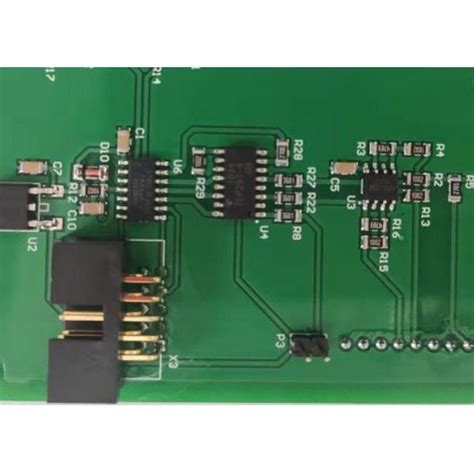
it is necessary to pay attention to the design of the positioning holes of the multilayer board: 4-layer boards only need to design more than 3 positioning holes for drilling. In addition to the positioning holes for drilling, multilayer boards with more than 6 layers also need to design more than 5 overlapping positioning rivet holes between layers and more than 5 positioning holes on the tool plate for rivets. However, the number of holes designed for positioning holes, rivet holes, and tool holes is generally higher with higher layers, and the number of holes designed is correspondingly more, and the position is as close to the edge as possible. The main purpose is to reduce the alignment deviation between layers and leave a larger space for production and manufacturing. The target shape design should try to meet the requirements of the target shooting machine to automatically identify the target shape, and is generally designed as a complete circle or concentric circle.
5.The inner core board requires no open, short, short circuit, no oxidation, clean board surface, and no residual film.
6.Meet the requirements of PCB users and select the appropriate PP and CU foil configuration.
Customers’ requirements for PP are mainly reflected in the requirements of dielectric layer thickness, dielectric constant, characteristic impedance, withstand voltage, and smoothness of laminate surface. Therefore, when choosing PP, you can choose according to the following aspects:
7.Resin can fill the gaps of printed wires during lamination.
- It can fully exclude air and volatiles between laminates during lamination.
- It can provide the necessary dielectric layer thickness for multilayer boards.
- It can ensure bonding strength and smooth appearance.
According to many years of production experience, I personally think that when laminating 4-layer boards, PP can be configured with 7628, 7630, 7628+1080, 7628+2116, etc. For multi-layer boards with more than 6 layers, PP is mainly selected with 1080 or 2116, and 7628 is mainly used as PP to increase the thickness of the dielectric layer. At the same time, PP requires symmetrical placement to ensure the mirror effect and prevent board bending. - CU foil is mainly configured with different models according to the requirements of PCB users, and the quality of CU foil meets IPC standards.
- Inner core board processing process
When laminating multi-layer boards, the inner core board needs to be processed. The processing processes of the inner board include black oxidation processing and browning processing. The oxidation processing is to form a layer of black oxide film on the inner copper foil, and the thickness of the black oxide film is 0.25-4). 50mg/cm2. The browning process (horizontal browning) is to form an organic film on the inner copper foil. The inner layer board treatment process has the following functions:
- Increase the specific surface area of the inner copper foil in contact with the resin, so that the bonding force between the two is enhanced.
- Increase the effective wettability of the molten resin to the copper foil when it flows, so that the flowing resin has sufficient ability to extend into the oxide film and show strong grip after curing.
- Block the decomposition of the curing agent dicyandiamide in the liquid resin at high temperature and the influence of moisture on the copper surface.
- Improve the acid resistance of the multilayer board in the wet process and prevent pink circles. 4. Organic matching of lamination parameters The control of the lamination parameters of the multilayer board mainly refers to the organic matching of the three lamination “temperature, pressure, and time”.
- Temperature. There are several important temperature parameters in the lamination process. That is, the melting temperature of the resin, the curing temperature of the resin, the set temperature of the hot plate, the actual temperature of the material and the change in the speed of heating. The melting temperature is when the temperature rises to 70°C and the resin begins to melt. It is because of the further increase in temperature that the resin further melts and begins to flow. During the period of 70-140℃, the resin is easy to flow. It is precisely because of the flowability of the resin that the filling and wetting of the resin are guaranteed.
As the temperature gradually rises, the fluidity of the resin changes from small to large,
then to small, and finally when the temperature reaches 160-170℃, the fluidity of the resin is 0, and the temperature at this time is called the curing temperature. In order to make the resin fill and wet better, it is very important to control the heating rate. The heating rate is the specific embodiment of the lamination temperature, that is, to control when and how high the temperature rises. The control of the heating rate is an important parameter for the lamination quality of multilayer boards. The heating rate is generally controlled at 2-4℃/MIN. The heating rate is closely related to different PP models and quantities. The heating rate for 7628PP can be faster, that is, 2-4℃/min, and the heating rate for 1080 and 2116PP can be controlled at 1.5-2℃/MIN. At the same time, the number of PP is large and the heating rate cannot be too fast, because if the heating rate is too fast, the wettability of PP is poor, the resin fluidity is large, and the time is short, it is easy to cause sliding, affecting the lamination quality. The temperature of the hot plate mainly depends on the heat transfer of the steel plate, steel plate, leather kraft paper, etc., which is generally 180-200℃.
The pressure and lamination pressure of the multi-layer board are based on whether the resin can fill the interlayer voids and exhaust the interlayer gas and volatiles.
Since the hot press is divided into non-vacuum press and vacuum hot press, there are one-stage pressurization, two-stage pressurization and multi-stage pressurization from the pressure. Generally, non-vacuum presses use general pressurization and two-stage pressurization. Vacuum presses use two-stage pressurization and multi-stage pressurization. Multi-stage pressurization is usually used for high, precise and fine multi-layer boards. The pressure is generally determined according to the pressure parameters provided by the PP supplier, which is generally 15-35kg/cm2.
Time, time parameters are mainly the control of lamination pressurization timing, temperature rise timing, gel time and other aspects
. For two-stage lamination and multi-stage lamination, controlling the timing of the main pressure and determining the conversion time from the initial pressure to the main pressure are the key to controlling the quality of lamination. If the main pressure is applied too early, it will cause too much resin extrusion and glue flow, resulting in poor laminate glue, thin boards, and even skateboards. If the main pressure is applied too late, it will cause defects such as weak lamination bonding interface, voids, or bubbles.
Therefore, how to determine the lamination temperature, pressure, and time software parameters is the key technology for multi-layer board lamination processing.
According to many years of lamination practice experience, the lamination software parameters “temperature, pressure, and time” are organically matched. Only on the basis of the first test pressure OK can the most ideal “temperature, pressure, and time” software parameters be determined. However, the “temperature, pressure, time” parameters can be determined according to different PP combination structures, different PP suppliers, different PP models, and the different characteristics of PP itself to determine the corresponding lamination parameters.